Catholic World Report has a look at the subject through the lens of the University of San Diego cancellation of an appearance by dissident theologian Tina Beattie. Her book is called “God’s Mother, Eve’s Advocate: A Gynocentric Refiguration of Marian Symbolism in Engagement with Luce Irigaray” which is certainly a mouthful or at least full of something.
One of the things I found coming into the Catholic faith is that there had seemed to be a conspiracy against me. Large swaths of history involving the Church were edited out of my education. There was also a bit of self-censorship in the books I choose to read. One of those “conspiracies” against me was keeping G.K. Chesterton from me. I had never heard of him until I kept running into mentions of him while investigating the Catholic faith. There is just so much that is wonderful about now being Catholic and a bonus was thrown in – the writings of G.K. Chesterton. Over the years I have read thousands of articles on the internet and yet I recollect fully the time and place I first read a chapter from Chesterton. It was “The God in the Cave” on PetersNet (now CatholicCulture.org) from “The Everlasting Man.”
Now this conspiracy to deprive me of G.K. Chesterton seems to have been a general conspiracy by academia and the cultural elite to ignore the man. That is why the work of Dale Ahlquist the great Chesterton popularizer and president of the American Chesterton Society is so important. His previous book was In Defense of Sanity: The Best Essays of G.K. Chesterton
Mr. Ahlquist’s new book is The Complete Thinker: The Marvelous Mind of G.K. Chesterton
The book goes on to demonstrate just why G.K. Chesterton was the complete thinker. In this day of over-specialization we come to expect people to have only expertise in one area. It is no surprise that the modern man will refer to someone whose knowledge spans numerous topics as a renaissance man and not a modern man. This concept is one reason I was always attracted to the character of Sherlock Holmes’ brother Mycroft in that he gathered information from multiple disciplines and could see as a whole what the specialists were missing. Chesterton could see the underlying truth in all things and thus was able to talk about all things. Not only have we become accustomed to not seeing the forrest for the trees, but we don’t even see the trees that well. When all truth is relative it is not relative to see the truth.
The chapters of the book cover many areas from the problem of evil, war and peace, sickness and health, abandoning hopelessness, law and lawyers, and many other contrasts. The structure of the topics build on each other and demonstrate all the areas in which Chesterton was more than competent. People are often amazed at how prescient Chesterton was in seeing the roots of problems and where they would lead. The gist of what he says applies equally today because the problems that were evident to Chesterton in his day have only continued.
What this book demonstrated to me is how much to the root of things Chesterton’s vision was. After the recent election and reading again Chesterton’s thoughts on birth control we can see how much the debate has shifted or just plain deconstructed. I was especially intrigued by Chesterton criticism of national health as it was starting in England in his day. His arguments had nothing to do with slippery slope arguments about how such policies can go awry, but cut to the quick about the whole concept in the first place. It is amazing how Chesterton can get you to re-look at something you believed you already understood even when you already agreed with his conclusions.
I thoroughly enjoyed this book and there is also an appendix dealing with the Chesterton/Clarence Darrow debate. While sadly a transcript of the debate does not exists there is some information from those who attended and I thought this appendix was quite worthwhile in itself. It is of interest to note that one of Clarence Darrow’s relatives Leah Darrow now works for Catholic Answers.
Now let me get back to my dog-eared copy of Orthodoxy. I wonder what the equivalent is for ebooks – pixel worn?
Ever notice the inverse proportionality between the words relevance and reverence?

Now I am not totally satisfied of this formulation since the reality is that the Mass is of infinite value. Still I find an interesting correlation in the meaning of these two French words.
Reverence – The virtue that inclines a person to show honor and respect for persons who possess some dignity. There are four forms of reverence, corresponding to four forms of dignity: 1. familial reverence toward one’s parents or those who take the poace of parents; 2. civil reverence toward persons holding civil authority; 3. ecclesiastical reverence toward the Pope, bishops, priests, and others in the service of the Church; 4. religious reverence toward any person, place, or object related to God. (Etym. Latin reverentia, awe, respect.) — Fr. John Hardon’s Modern Catholic Dictionary
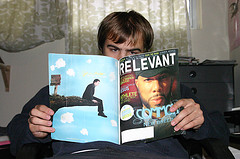 As for “relevance” I use it in the way that some people relate it to the Mass in a modern meaning. That is making it “up-to-date”. Perhaps nothing is more out-of-date than something that has been made up-to-date. Another word used to mean the same idea is also popular – contemporary. It is hard for me to imagine something so out-of-date as hymns accompanied in the folk guitar style. They seem to have concentrated on the wrong “Peter, Paul and Mary.” Yet I have heard this called relevant. I guess when autotuned singers is also a past fad it will also become relevant since there seems to be a time-lag of relevance when it comes to sacred music. Folk music and contemporary worship music of the 80s. Hip Hop Mass must be on the horizon. This asks the question relevant to who? It seems I get more and more left behind by those who would make the Mass more relevant. Relevant to faddy liturgists I guess.
It is certainly not only Catholics who have caught the relevant bug. If anything Protestants are further along in the infection, especially in the Mega-church genre. I have seen church signs advertising relevant or contemporary services. Rock bands and light shows replace “on this rock” and “let their be light.” Though I don’t mean to pick on Protestants it is just that they more fully embrace the “I want to be entertained” pew sitter. The whole movement of the modern liturgy/service is away from God and directing the attention to ourselves. “Here I am Lord” being the anthem of this mindset.
At the same time everything is being made more relevant acts of piety expressing reverence are stamped out or just faded away. Funny how Tebowing can be a trend, but forms of Genuflection at Mass have disappeared for many. I have certainly noticed that hardly anybody genuflects anymore. When Jesus is present in the Tabernacle in the form of the Eucharist and the sanctuary light is lit to indicate this very few people seem to note this fact by genuflecting. Or even in the case when the Tabernacle is not present in the sanctuary do you see a profound bow towards the altar done instead. Perhaps an occasional half-curtsy or a nod of the head. Actual rubrics such as bowing during the Creed’s “by the power of the holy spirit…” have also pretty much disappeared. Or how about:
a) A bow of the head is made when the three Divine Persons are named together and at the names of Jesus, of the Blessed Virgin Mary, and of the Saint in whose honor Mass is being celebrated. –No. 275 of the General Instruction:
It is interesting that one practice has not slipped away. That is crossing yourself with Holy Water before and after the Mass. There is something about the physicality of sacramentals that appeal to us more and is less prone to being diminished. Anybody who has noticed the swell of Mass attendance on Ash Wednesday can attest to this and to a lesser extent the blessing of the throats on the Feast of St. Blaise.
The area of clothing is certainly an area that has fallen victim to relevance over reverence. The Crescat and others have done a fine job of pointing out vestments that tried to be up-to-date. Relevant and ugly in this case seem to be directly proportional. As for clothing worn by the laity I can not make any discernible distinction between what might be worn to Mass and what might be worn to McDonalds. Casual Sunday seems to be the norm.
Now some might say that all of these practices of piety and dress are just accretions and are unimportant to worshipping God. There is certainly a partial truth in this. Practices of piety can be just totally outward and not an indication of the person who is worshiping God. Outward piety is not always the same as inward piety. Still I think these acts of piety are helpful to the worship of God. I think of many of these things as training wheels and I know I still really need these training wheels. These practices help to constantly remind me of their inner meaning (at least occasionally). There can be a temptation to want to appear to be more pious than others and certainly that has to be guarded against. For example I kneel to receive Communion both as an act of worship and a reminder to myself of whom I am receiving. Still there is a slight embarrassment for me in not wanting to appear super-pious and better than the other persons at Mass. Other pious practices also help me such as crossing myself when passing a Catholic Church. This small reminder of the importance of the Eucharist helps to jog my mind at the wonder of it all. A prayer of thanksgiving and crossing myself before meals even when dining out also help to bring me out of myself and to acknowledge what God has done for me.
Now as Father Z. has constantly mentioned “brick by brick” or I might possibly say “rubric by rubric” and there are positive signs in these regards. Importantly as individuals we can maintain these practices and witness even in such a small way to others.
What practices of piety do you engage in that bring your mind to God and to help you to worship him?
2nd photo credit: nathancolquhoun via photopin cc

This is the 38th volume of The Weekly Benedict ebook which is a compilation of the Holy Father’s writings, speeches, etc which I post at Jimmy Akin’s The Weekly Benedict. The post at Jimmy Akin’s site contains a link to each document on the Vatican’s site and does not require an e-reader to use.
This volume covers material released during the last week for 18 October, 2012 – 11 November 2012.
The ebook contains a table of contents and the material is arranged in sections such as Angelus, Speeches, etc in date order. The full index is listed on Jimmy’s site.
The Weekly Benedict – Volume 38 – ePub (supports most readers)
The Weekly Benedict – Volume 38 – Kindle
There is an archive for all of The Weekly Benedict eBook volumes. This page is available via the header of this blog or from here.
There has been much buzz in the last week concerning a teenager who reportedly was denied Confirmation due to his Facebook page supporting same-sex marriage. Like most sensationalized media stories I smelled a rat and held off posting about it without further information. I even saw a headline on a tech site about it and the headline mistakenly stated Communion instead of Confirmation. Well now the priest involved has spoken to LifeSite News:
… Fr. LaMoine, the pastor of Assumption Parish in Barnesville, told LifeSiteNews.com that there were other concerns that contributed to the decision to delay Lennon’s Confirmation, and that the final decision was made by Lennon himself, not the priest.
According to Catholic teaching, Confirmation is a sacrament of initiation that confirms Catholics as “mature” Christians. It is usually administered to young teens.
Fr. LaMoine said that his conversations with the Cihak family began in early October, when he sent a letter to Lennon’s parents, Doug and Shana, encouraging them to start coming to church to support their son.
The priest told LifeSiteNews.com that he only discovered Lennon’s gay marriage post by accident on October 25, the day after having a two-hour meeting with the family. During that meeting the priest had brought up the fact that the Cihaks were not coming to church, as well as “other matters” that the priest said, “I can’t get into here.” No mention was made of Lennon’s views on marriage during that meeting.The following day Fr. LaMoine’s secretary, who is Facebook friends with Lennon, chanced upon the controversial post and alerted the priest to it.
The priest says that he then telephoned Lennon, and in the course of that conversation the boy said he had chosen not to go forward with Confirmation.
Lennon’s post came days before Minnesotans were slated to go to the polls to vote on an amendment to define marriage as between a man and a woman. It showed him holding a pro-marriage sign that he had defaced to express his support for “equal marriage rights.”
The priest admits, however, that once he knew that Lennon supported same-sex marriage, and was unwilling to retract his views, that he would not have been able to confirm him.
“You can’t have people out there saying things that are so contrary to the central teaching and doctrine of the Catholic faith, and going through Confirmation,” he said. “After he put it out in the public, we would have looked like a bunch of hypocrites in confirming him.”
As usual Father James Martin S.J. who is always willing to jump in on any story involving same-sex marriage or same-sex acts before all the facts are in said:
Deeply disturbing. Denying confirmation to a teenager because of a Facebook post on same-sex marriage is shortsighted. To have the family feel unwelcome in the parish is worse. To have the mother feel permanently estranged from the church is even worse. How many teenagers are denied confirmation because they are spiteful or do not forgive?
Typical moral equivalence. I wonder if Fr. Martin was a parish priest exactly how much denial of the Catholic faith would be acceptable before he could not confirm someone?
I know at one time for those being confirmed they were trained and then later asked questions before being confirmed. If a bishop or priest thought they were not yet prepared the confirmation would be delayed. Like many things in the Church today people’s experience with this will probably widely vary by location.
Though I would like to look at one of Fr. LaMoine replies regarding looking like a bunch of hypocrites if he was Confirmed. I think the main concern should be with the young man. If he had wanted to go ahead with Confirmation he would have been affirming what he didn’t believe in the Baptismal promises regarding the “holy Catholic Church.” Pastorally this is quite a difficult problem since same-sex marriage support among the young is fairly high and no doubt there are many receiving Confirmation who have an inadequate understanding of what the Church teaches which is in contradiction to the messages they are being bombarded with. Mostly we need to pray for this young man.
The news media once again is trying to apply the Communion wars narrative down to a Confirmation war narrative. Any stick will do. That this story went forward without anyone speaking to the parish priest says a lot about the media. Another of the media memes I have been reading more an more lately was “Jesus didn’t deny Judas the Eucharist.” We should always accept theological opinions from the media that mostly denies both Jesus and the Eucharist – well maybe not. There is certainly some questions as to whether Judas did indeed receive the Eucharist. Regardless the distinction between a private sin and a public sin is more at the root of the matter regarding Canon law. Canonist Ed Peters looks at Confirmation and advocacy of ‘gay marriage’ regarding proper disposition.
The picture of the young man with a defaced yard sign that supported traditional marriage has also been all over the media. I do wonder how a photo on his Facebook page got released to the public and whether this was done with his permission?
Fr. Longenecker was kind enough to ask me to write a guest post on his blog “Standing on my Head” dealing with humor. You can read it here.

Many people are probably aware of the social media service “foursquare”, for those not in the know Wikipedia says:
Foursquare is a location-based social networking website for mobile devices, such as smartphones. Users “check in” at venues using a mobile website, text messaging or a device-specific application by selecting from a list of venues the application locates nearby.[3] Location is based on GPS hardware in the mobile device or network location provided by the application. Each check-in awards the user points and sometimes “badges”.
Now I have never used this service since even rocks call me sedentary in my ways. When I am not working in front of a computer monitor, I am likely to be behind a book and so my check-in history would be rather repetitive and extremely boring.
This social networking service does make me wish for a different type of service that would be more useful than letting your friends know what store or restaurant you are currently are visiting.
What I would like to see a service called;

But of course with a logo that doesn’t suck.
Now I would envision prayersquare as the place to check-in with your private and liturgical prayers. You could then follow the prayer activity of fellow members of the body of Christ and have events such as:
- Praying the Sorrowful mysteries.
- Attending daily Mass.
- Reading the Office of Reading in the Liturgy of the Hours.
- Praying for the repose of the soul of my loved ones.
- Prayerfully preparing for the Sacrament of Confession.
- Praying before the Blessed Sacrament.
Though this would have to be social networking with a twist. Your prayersquare account would have to be totally anonymous to discourage people bragging about how pious they are. Not much point in bragging like the Pharisees about how much they contributed to the Temple. Seeing the prayer activity of others would help encourage people to join in and pray themselves.
I can also envision some cutting edge technological integration to make checking in of prayer easier.
- Mobile phone Liturgy of the Hours apps such as iBreviary and Unversalis could have prayersquare integration and as you read through the various hours it posts your prayer check-in.
- Wi-Fi enabled and touch sensitive Rosaries could check in after a decade or a set of mysteries.
- Location aware phone apps could check you in when you go to your parish.
- Logos bible software integration.
- Phone personal assistant applications like Siri could detect prayer ejaculations and check them in. Though it would have to have a “Jesus prayer” filter so as not to check-in every utterance of this prayer so as to not clog up the prayersquare timeline.
Like foursquare there could also be achievements. For example:
- Volunteered for 3 AM adoration in the Blessed Sacrament chapel.
- Found a priest giving confession out of the hours of 5 to 5:30 PM on Saturday.
- Graduated from the purgative way to the illuminative way.
- Found a spiritual directory that doesn’t believe in that anonymous Christian crap.
- Read the Catechism in a Year via flocknote.
- Actually “prayed attention” during Mass.
Now if the the person is experiencing the Dark Night of the Social Media, than all achievements are taken away and the person comes to rely totally on God and not badges, achievements, and other forms of point scoring.
Now I am not so sure of Mayorship where a user has checked-in to a prayer event on more days than anyone else in the past 60 day. Or maybe it is the term “Mayorship” that doesn’t apply and is jus too prideful. Really maybe the term “Servant” applies since “We are unworthy servants; we have only done our duty.”
Now of course this post is firmly tongue-in-cheek, but really I wish a service like this existed.
Via Ed Peters:
Cardinal Tim Dolan just delivered an excellent address to the USCCB. It needs to be read, and even listened to, in its entirety. Here I’ll underscore just one of his points: “The work of our Conference during the coming year includes reflections on re-embracing Friday as a particular day of penance, including the possible re-institution of abstinence on all Fridays of the year, not just during Lent” (my emphasis).
For what it’s worth, I unequivocally endorse the re-institution of Friday abstinence in the US. This decision lies quite within the authority of the USCCB (see 1983 CIC 455, and 1249-1253) and, among other things, would render moot, once and for all, nagging questions about whether the episcopal conference ever really got around to substituting “other forms of penance” for abstinence from meat back in 1966, or 1983/1984, or whenever.
Still I can hear it now: “Okay, Peters, if you’re so gung-ho in Friday abstinence, do you abstain from meat on Fridays now, and even if you do, why should it be made a law for everybody?” Fair enough.
First, I don’t abstain on most Fridays now. Most times I simply forget; moreover, I’m pretty good at talking myself out of inconvenient observances if they are largely personal. I need the directives toward goods (like penance) and away from evils (like presumption) that law by its very nature offers. Second, abstaining from meat on Fridays would not be to introduce a new rule, but rather, to eliminate a variance on or exception to the common (and ancient*) rule of abstinence that is already set out in canon law, above. Third, the corporate example of all Catholics engaging in some sort of common religious exercise outside of Sunday morning is, I think, desperately needed in a world that wants to relegate religious observances to a six-hour window once a week.
Ex labiis Cardinalis Dolan ad aures episcoporum nostrorum!
If the bishops of the England and Wales could reinstate Friday Abstinence than we certainly can. Maybe we could have a piety war with England and see which country could out piety the other.
On the personal side to answer the same question Mr. Peter’s answered, my selected Friday penance is to fast by only eating one meal on Friday’s. I would gladly (if forced) mix that with mandatory abstinence and for me eating fish is a bit of a penance.
The previous action of the predecessor of the USCCB not to specify a form of penances has meant that hardly anybody choose to perform any penance at all. I think this was a serious mistake and followed up by another mistake. It is one thing not to specify the penance, it is quite another to put no effort into educating Catholics that they “must perform an alternative penance.” Ask a Catholic what form of penance they are performing on Fridays and it is almost guaranteed that you will get a blank stare instead of an answer.
I know fasting on Friday’s really helps me to focus more on Good Friday and the reasons I need a savior in the first place. I must admit though that I really like the “Solemnity Loophole” where when a Solemnity occurs on Friday you should not be doing any penance. People have learned the “Solemnity Loophole” when the Feast of St. Joseph occurs on Fridays during Lent and this gives you something to look forward to throughout the year. Food tastes extra good on Solemnities. Some people might take on an extra penance of eating a Fish Filet sandwich at McDonalds.
So I guess I will be ironically fasting and praying for a return of Friday Abstinence.
Here is a nice overview of some of the proposed changes to the Divine Office put forward during the semi-annual meeting of the USCCB.
Now since I am already using the Revised Grail Psalms for the Liturgy of the Hours via an iPad app it won’t be too major of a change for me. Regardless I hope they do address the “Glory Be.” I have heard questions about the “World without end” many many times on Catholic radio so I would certainly like to see a better translation of “In saecula saeculorum.”
This is the 37th volume of The Weekly Benedict ebook which is a compilation of the Holy Father’s writings, speeches, etc which I post at Jimmy Akin’s The Weekly Benedict. This volume covers material released during the last week for 12 October, 2012 – 9 November 2012.
The ebook contains a table of contents and the material is arranged in sections such as Angelus, Speeches, etc in date order. The full index is listed on Jimmy’s site.
The Weekly Benedict – Volume 37 – ePub (supports most readers)
The Weekly Benedict – Volume 37 – Kindle
There is an archive for all of The Weekly Benedict eBook volumes. This page is available via the header of this blog or from here.