Jun 062013
 

The state of commentary on the works of Shakespeare shares a lot with the sad state of affairs concerning scripture scholarship. In both cases instead of exegesis and drawing out of the text, we get eisegesis and a reading into the text. interpretations that say more about the commentator than the text. Just like “the Real Jesus” there is also “the Real Shakespeare” where Shakespeare wasn’t really Shakespeare and didn’t really write the works attributed to him.

The state of so much Shakespeare scholarship reminds me of G.K. Chesterton’s quip:

“And though St. John the Evangelist saw many strange monsters in his vision, he saw no creature so wild as one of his own commentators.”

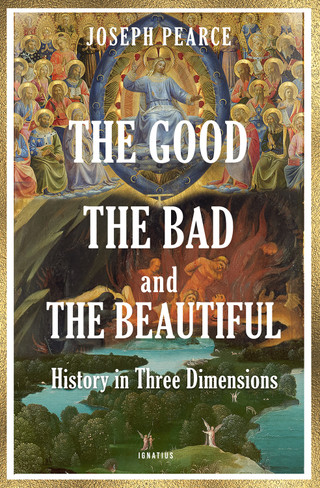
Thankfully there is scholarship out there well-worth reading. Case in point Joseph Pearce’s new book. Shakespeare on Love: Seeing the Catholic Presence in Romeo and Juliet. Pearce once a skeptic regarding Shakespeare being Catholic has now written his third book regarding this following The Quest for Shakespeare and Through Shakespeare’s Eyes.

I am a big fan of the way Joseph Pearce makes literary scholarship fascinating and how he draws out the deeper meaning of what he covers. The same is certainly true of his latest book.

Matthew at Creative Minority Report

It’s awesome. I feel smart for having read it and that takes a lot for a guy like me. I’ve read Romeo and Juliet a few times and always felt that there was something missing from the interpretations I’ve read. I mean, I always knew that Shakespeare wasn’t holding them up as models of great love. But Joseph Pearce brilliantly points out what I’ve been missing. Heck, not only me but pretty much most modern interpretations of the play.

With Matthew I totally agree and do feel smarter for having read this book, along with other of his works. I had a pretty narrow and superficial understanding of the play Romeo and Juliet and greatly appreciates how he goes into the deep using the key of Shakespeare’s Catholicism. The exploration of the lack of prudence and rashness of all the main characters is explored. Another key used was an examination of some elements of “The Merchant of Venice” which was written at roughly the same time along with some of the underlying themes and theology of “Hamlet.”

The appendix at the end of the book was also intriguing and enlightening regarding some of Shakespeare’s thoughts and motivation during the writing of some of his works during this time period. Pearce shows how Saint Robert Southwell probably influenced aspects of this play and other writings. Southwell was a distant cousin of Shakespeare and they knew each other corresponded. Southwell a Jesuit was hanged, drawn and quartered at Tyburn. Whether Shakespeare wrote this play before or after his martyrdom is not known, but Pearce shows many correlations between Southwell’s poetry and the prose of this play. Letters they both wrote seem to bear this out and Pearce’s evidence seems to point to this direct influence. Southwell’s influence on Shakespeare is not just something that Pearce points to. I was already aware of other scholars who had dived into this connection as a key to some of his works.

I found this so interesting that it reminds me I need to get the Ignatius Critical Edition of Hamlet along with the Study Guide by Joseph Pearce.

Submit to reddit
May 292013
 

The Ear of the Heart: An Actress’ Journey from Hollywood to Holy Vows is the new biography written by Mother Dolores Hart and Richard DeNeut.

Much has been made of the actress who was Elvis’ first kiss in a film that went on to enter a Benedicine monastery. Yet the Elvis aspect is probably the least interesting part of her story.

The format of this biography is a bit different in that her lifelong friend and Hollywood writer Richard DeNeut mostly tells the story along with her own comments and remembrances interjected throughout (especially in the second half of the book). Included are also direct stories from those who know her. These multiple contributors give this book more depth, but also at times leaves you confused about who is writing at the time.

The first half of the book looks back at her childhood and family life including her acting career. The term dysfunctional family is often over used, but this is quite accurate here. Her parents troubled mariage, divorces, and remarriages was a backdrop to her life. Often I was reminded of Mother Angelica’s story, although while different in many aspects, had a common thread. Her family was non-religious and yet her path led her to join the Catholic Church at a young age while she was attending a Catholic school for the education.

While she had a difficult relationship with her mother and often vacant father, there is frustration but not bitterness concerning these parts of the biography. Her parents are painted warts and all without being a one-dimensional portrait. The stories of her grandmother, who was quite a character, are also rather fun. She spent time shifting between living with mother and her grandparents.

It was rather amazing that despite these problems her entrance into Hollywood and also Broadway did not go down the paths that are so familiar. She describes Elvis as a total gentleman and this is mostly true regarding most of the men she worked with. The exception being Peter Sellers and the story she tells regarding him is worth the price of the book in how she handled this situation.

I quite enjoyed her reflections on this time of her life in Hollywood and Broadway and the people she got to work with who she so admired. Many of these friendships continued on after she entered the Benedictine Abbey of Regina Laudis in Bethlehem, Connecticut. There is much of interest in this period of her life and her friends and acquaintances including the period where she was engaged to be married.

As interesting as this period of her life was, what really draws you in is how she first learned of Regina Laudis and what kept drawing her back there despite here career being in full swing. The period of discernment and the acceptance of her vocation to the religious life was not a straight path, but a path we often hear of regarding such discernment. It is easy to imagine the reaction by those her knew her who could not understand this choice.

The second half of the book deals with her life in Regina Laudis. Parts of it could seem to come right out of a novel or screenplay. The young nun who adjusts to life in a strict monastery and the communication clashes they entail could seem like a setup. Yet this was a case where under obedience she learned and responded and was able to contribute with her own gifts regarding these communication clashes. I’ve read enough about religious life to have no idealized vision of religious life and the difficulites are certainly shown.

Mother Dorcas Roselund, in describing the pitfalls of monastic life, summed it up another way. A gastroenterologist before she entered Regina Laudis, she is now the Community’s baker. Life in a monastery is “the new martyrdom”, she said. “they used to throw Christians to the lions. Now they make us live together.”

An aspect of the second half of the book that I really liked was the portraits of the other nuns and their widely varied experiences and contributions they made to the monastery. They were encouraged to take what professional skills they had into community. I also found it fascinating that in the wake of the Second Vatican Council and the turbulence in so many religious orders, that there were smaller ripples at Regina Laudis. This was a monastery that did not just throw everything away, but also did not stagnate. There was an openness to new ideas, but evaluated in context of their Benedictine tradition. Their obedience provided an anchor that so many other orders had cast off.

This book just engaged me on many levels beyond the straight biographical storyline. There is a gentle humor throughout and an obvious attempt by Mother Deloris Hart to not airbrush out her own difficulties. I would have liked to have more details on Mother Deloris Hart spiritual life, but it is an area touched on at times and you do see the fruits of it. There are just so many stories packed in this book and while close to 500 pages there are not wasted pages.

Submit to reddit
May 012013
 

I am usually rather delighted whenever I find a book to review in my mailbox. When I received American Church: The Remarkable Rise, Meteoric Fall, and Uncertain Future of Catholicism in America I was certainly eager to read it. This new release by Russell Shaw is put out by Ignatius Press.

It seems book subtitles are becoming much like news headlines as a kind of summary meant to bring you in. Although news headlines often do not have much to do with the actual story. The subtitle in this case is actually quite indicative of the contents. Although the title “American Church” did not thrill me and when I discovered that the original title was “The Gibbons Legacy.” I prefer the original title.

There are a couple themes in this book regarding the history and the future of the Church in America. One is the contrast between the views of Orestes Augustus Brownson and his friend Isaac Thomas Hecker. Orestes Brownson a convert to the Church was rather pessimistic on future of the Catholic Church in America. Isaac Heckler was the founder of the Paulist Fathers and is now a Servant of God. Heckler had a very optimistic view of the Church in America and thought the two fit together perfectly. The other theme regards the 1950’s best selling book “The Cardinal” by Henry Morton Robinson which had a view much akin to Isaac Heckler’s. The book partly based on the career of Cardinal Spellman was also made into a movie directed by Otto Preminger.

These themes help in part to explore the history of the Catholic Church in America. Considering that while there were some prominent Catholics at the founding of this country such as Daniel Carroll, for the most part Catholics were a very small minority. It was only after later immigration that Catholics became a more sizable minority. An anti-Catholic bias was there from the beginning for a variety of reasons, but partly concerning the doubt that Catholics could be good Americans with their “allegiance” to Rome. The Know-Nothing Party was on the extreme side of this bias, but it was prevalent in a largely Protestant populace.

Cardinal James Gibbons (July 23, 1834 – March 24, 1921) who was the Archbishop of Baltimore was a pivotal figure for Catholics in America. He was also quite optimistic on the Church in America and that not only could Catholics be good Americans but that America was ideally suited for Catholicism. As an Americanizer his view, actions, and influence certainly shaped the Catholic Church here in some regards. His view was also not a minority opinion among Catholics and really exists to this day. That the Church fits hand in glove with America. Although really more common now is the false idea that the Catholic Church fits perfectly with one polical party or another.

With this basic setup Russell Shaw explores the history of the Church in America, where we are now, and what portends fo the future. There were so many things I found excellent about this book. I already knew Mr. Shaw was a fine writer and I was really liked the way he explored the history and raised questions. I think it was evident Mr. Shaw had the more skeptical view of a Orestes Brownson, but he also did not let that get in the way. I enjoyed the balance of looking at the various questions and putting forth how others have weighed in on both sides. He presented information without trying to move you into specific conclusions regarding it.

The history of the Church in America makes for a absorbing study and covers the growth of the Church and the prominent historical markers. The failed presidential candidacy of Al Smith and later the election of John F. Kennedy. The Catholic culture of the first half of the 20th century and the tumultuous years during and after the Second Vatican Council. He pulls out detailed information and my copy of the book is heavily highlighted as time and again I found much to think about and want to come back to. A good book of this type can present you with an array of information. This one goes beyond that and has filled my mind with much to reflect upon. I also really admired the way he brought the history alive and I could almost picture the reaction of Cardinal Gibbons when Pope Leo the XIII released Testem Benevolentiae Nostrae an encyclical condemning the heresy of Americanism.

The latter part of the book deals with many of the facts of American Catholic culture as it stands now. The collapse of recognizing vocations to the priesthood and religious life. The sad state of Catholic education. The fact that Catholics are pretty much identical in almost every statistic compared to other Americans regarding divorce, abortion, contraception, and the support of other grave evils. This is not presented as doom and gloom, but as a realistic assessment of the problems we face. He also does not make the mistake of presenting some kind of Catholic golden age in America and in fact shows how from the beginning there have been flaws that in part led to the current state. When I had found Ross Douthat’s Bad Religion: How We Became a Nation of Heretics a fascinating look at the history of religion in America and Russell Shaw’s book gives a more in-depth look at the Catholic side of it.

I could really go on and on about this book. By nature I am a pessimistic-optimist and this book feed both sides of my own divide. I really need to write a separate blog post regarding some of my thoughts this book has sparked.

Submit to reddit
Apr 232013
 

Pope Francis: The Pope From the End of the Earth by Thomas J. Craughwell is the latest entry in the biographies of Pope Francis pushed out. This one is put out by Saint Benedict Press.

Having read some of Mr. Craughwell’s other books I was not surprised to find it nicely researched and well written. This book offers a fine balance of standard biographical information while also being peppered with personal stories from those who knew him. The three biographies on Pope Francis I have read all have a similar three chapter start with Pope Benedict XVI;s resignation, the conclave, and the papal election (not necessarily in that order). The focus then turns to the early years and up through his years as Cardinal of Buenos Aires.

What really sets this book apart from the others I have read is the inclusion of color photographs. This really adds to the book and there are plenty of wonderful pictures. Even better are the pictures of him as a boy with his family and then samplings of other points in his life. The photographs mixed in with the events covered really added to the content. The pictures in the book will certainly have me coming back to it. Although this is much more than a coffee table book as the content itself is a solid introduction and a bit more regarding the life of Pope Francis.

The Hardcover version of this book is available for pre-order. The ebook versions are already available and look good if you have a color e-reading device such as an iPad.

Submit to reddit
Apr 222013
 

The prolific philosopher Peter Kreeft has a new book out titled: “Jacob’s Ladder: Ten Steps to Truth

Like some of his previous books it is set around a dialogue between two characters. This time both characters are fully fictional and set in the year 1977. Libby Rawls is a young women that is a nominal Christian and a skeptic. The other is “Mother” an older mixed-race women who is willing to lead Libby along these steps of a Jacob’s Ladder. Each day they discuss a subject where the subjects build on each other leading to further truth. These two characters are also involved in his novel “An Ocean Full of Angels.”

This book takes a building block approach to understanding the faith and starts at what might seem to be an odd first step of “passion.” While common philosophical ideas are discussed it is also not standard apologetic fare and mostly deals with natural theology. The conversational dialogue mostly adds to the book and the back and forth between the two women helps to illustrate points. Some of the use of coincidences in the book are a bit heavy-handed at times. Also evident is Kreeft’s playful humor which was used at times and contributed to the banter between the two women.

There is also a both/and approach in these steps climbing the ladder appealing to both reason and heart. Of building on what we know instinctively. I was reminded of Blaise Pascal’s “The heart has its reasons which reason knows nothing of …” I don’t remember if he referred to this specifically, but certainly parts of the Pensées were quoted within. The combination of head knowledge and heart knowledge is certainly an approached used before such as with C.S. Lewis and there are echoes of Lewis’ approach here.

As the Ignatius Press site references here are some of the topics discussed.

  • Do you have the passion to know?
  • Does truth exist?
  • What is the meaning of life?
  • What is love, and why is it so important for our lives?
  • If there is a God, what proof is there for his existence?
  • Has God revealed himself to us in a personal way?

As you would expect the character is taken through all the common philosophical errors that are so prevalent. The refutations of these common arguments and world views flowed quite well and even within these ten steps there are plenty of mini-steps being taken. I found almost all of the chapters to be quite strong and worthwhile. Although the chapter on God did not satisfy me as much as the other chapters.

So what is the target audience for this book? The light conversational tone with serious answers appealing to reason might make it useful for a skeptic working through the idea of faith. The idea framework of the book also makes it a good apologetics approach when you are dealing with the big questions with someone.

Two of Mr. Kreeft’s books really helped me out at the beginning of my investigation of the Church. Handbook of Catholic Apologetics: Reasoned Answers to Questions of Faith and Yes or No?: Straight Answers to Tough Questions about Christianity. This book incorporates aspects of both of these books while presenting it in a way that might be more appealing for some.

Submit to reddit
Apr 152013
 

I am an admitted book stalker of Julie Davis and became interested in Save Send Delete by Danusha Goska as she was posting about it at Goodreads.

Her 5 star review of the book sealed the deal for me as I know she does not max out stars lightly.

When I first read the summary of the book I thought it might be a bit like The Loser Letters by Mary Eberstadt. As I really liked that book as it was funny while making some great points. Very pointed satire.

There are points of contact between The Loser Letters and Save Send Delete especially as one is a series of letters to a “spokesmen of the New Atheism” and the the later is a series of emails to a Richard Dawkins type.

The premise of this book is that it details a series of emails to a famous atheist. Mira after having seen this famous atheist on a Bill Moyer’s show on PBS decides to email him. As Julie describes:

She sends him a long, forceful, clever email that she knows will never get past his secretary. Except that he answers. And he won’t let her off the hook with a polite apology.

The book goes on where you only see her emails to this famous atheist intermixed with some to her friend. The “Save Send Delete” refers to the end of each email where one of these words is bolded. This is a rather clever idea and you get an idea of a thought process of initial reaction, revising, changing your mind about what you said, or committing to reply. But this goes on beyond just being clever as it really adding to the narrative of the story. See Julie’s review for a sample of these letters.

The often long emails that take so many divergent paths are a wonder to read. They are so funny, pointed, and filled with the realities of life. Political correctness has not only taken a vacation, but I think had run away in alarm. This is not common apologist fare, but a look at the reality of the faith. The “famous atheist” replies (as we draw from context) some of the standard objections and she calls him on the vapidness of some of these arguments. For example the “Your Catholic because you were raised that way and plus you don’t know other faiths” argument. Sometimes in more dissenting publications you see an argument of “Lived experience” as if it was a trump card to the truth. Yet here Mira’s “lived experience” is an argument for the faith and the life she has lived across the world. It also draws from a wealth of information culturally and historically. Strangely at times it even reminded me of Fr. George Rutler and the wealth of information he draws from when he writes, that is is Fr. Rutler was a bit coarser and swore.

These series of letters are just a wonder to read on so many levels. I was so drawn into the book that time and time again I forgot that Mira was a character in the story. Sure a good novel draws you in, but this was beyond that. In just so many ways this novel is brilliant. The relationship between Mira and “Rand” the atheist goes from back and froth from adversarial to common ground respect. What also adds to this novel is that while Mira is arguing for the faith, she has her own difficulties and fallenness. She struggles in her faith while knowing it is true. Her correspondence with “Rand” brings out the desire to be a better Christian.

“Inhale as a believer, exhale as an atheist”

Mira’s struggles are indicative of this phrase she uses. In some ways this is a theme of the book, but not without hope. It brought to my mind the quote “Be pitiful, for every man is fighting a hard battle,.” There is a inner battle going on in both Mia and Rand. The novel also really brought to mind the reality of that quote to something more palpable to me. Are intellects can apprehend a truth while still not fully taking it in.

There are aspects of this book that would have annoyed me if this was a lesser novel. Mia is not the perfectly faithful Catholic as she alludes once to supporting women’s ordination and seemingly homosexual acts. Again I had totally forgotten that Mia was a character in a book. But even this was I think a part of the “Inhale as a believer, exhale as an atheist.”

I wish I had the skill to describe how good this book is and it has been one that gave me a lot to reflect upon. It is not the type of book you just put down after finishing it, because you are just not done digesting it yet. While I have very little impact on what books get better known, I can hardly think of a book that I want to have better known. It deserves all the attention it can get.

Submit to reddit
Apr 092013
 

Earlier this week Pope Francis written by Matthew Bunson and published by Our Sunday Visitor was released. As I had written when reviewing Francis: Pope of a New World is that you expect some flaws and lack of depth for a book that quickly comes to market. In many ways this book gets passed some of those problems and is also a bit fuller when it comes to the life of Jorge Mario Bergoglio.

This book provides a detailed snapshot of the time leading up to the election along with the necessary coverage of Pope Emeritus Benedict XVI resignation. The first chapters are rather detailed with both historical information, but also containing the full texts that the Pope Francis delivered. The rest of the book takes a deeper look at his roots and his years as a Priest, Bishop, Archbishop and then Cardinal.

I had heard the author of this book being interviewed concerning it and as I remember he said that one of his goals was to provide context concerning the life of our new Pope. I believe he succeeded at this since you get a much better sense of Argentina with its founding history and specifically the history of Argentina during the life of Jorge Mario Bergoglio. The context of his priestly vocation lived out in those years also gets a bit more depth than I have read before. Going beyond just the highlights that have been concentrated on to more of the concrete ways he lived his vocation and dealt with difficulties. This book also takes a look at the homilies he preached as the Cardinal of Buenos Aires and the responses to events that often informed them. You can clearly see the Pope’s style of a directness that punctuates while coming back to the central theme repeatedly.

I enjoyed the background information that provided the context and put into perspective strings of events reported on in recent weeks. So while this book excelled at background perspective and a more detailed look at his life, if fell short when it comes to personal stories about those years in Buenos Aires. Lacking was any idea of the Pope’s sense of humor or descriptions about him from those who knew him. I liked Francis: Pope of a New World because there were some great personal stories regarding him. Although the source of many of these stories were pulled from “El Jesuita” by journalists Sergio Rubin and Francesca Ambrogetti and the book “Pope Francis” only references this other book once.

Really I found both of these books to be nice companions to the other where each book had different strengths and they nicely balanced each other’s weaknesses.

Submit to reddit
Apr 072013
 

Not Peace but a Sword- The Great Chasm between Christianity and Islam is the new book published by Catholic Answers written by Robert Spencer.

As the title suggests this is not a soft look at Islam, but it is also not a diatribe against Muslims and a recitation of acts of evil committed by individuals or groups of Muslims. There is a very common idea that Muslims, Jews, and Christians being “People of the book” have many foundational ideas in common. There is certainly some truth to this, but when it comes to Islam there is much thought to be in common that actually isn’t. Robert Spencer also does not set out to say that we can’t have common cause with Muslims in some areas, but that we should be aware how far that common cause actually goes. For example he talks about how for example working with Muslim countries in the United Nations in regard to abortion has certainly been helpful to keep or delay more odious abortion rights language. Yet at the same time this alliance was not all that we would want.

The Muslim representatives agreed to the language ruling out the use of abortion as a means of family planning but opposed Vatican efforts to call for an end to it in all circumstances. For Islamic law, unlike Church teaching and contrary to widespread belief, does not forbid abortion in every case.

This and many other examples he gives us shows that many terms and ideas we might think we have in common often have many caveats attached to them. This becomes even more apparent when we look at basic philosophical and theological ideas that ground Christian influenced Western thought that is just missing in Islam.

Robert Spencer does a lot of quoting from the Qur’an and some would object that you can find calls to violence in the Bible also. The problem with this is that Muslims have a totally different view of their scripture compared to how Catholic view scripture such as detailed in the Second Vatican Council’s Dei Verbum. Muslim’s consider the “Qur’an was dictated by Allah word for word, miraculously protected from scribal error, and contains no human element whatsoever.”

While on the other hand regarding Holy Scripture Dei Verbum says:

(1) In composing the sacred books, God chose men and while employed by Him (2) they made use of their powers and abilities, so that with Him acting in them and through them, (3) they, as true authors, consigned to writing everything and only those things which He wanted. (4) Therefore, since everything asserted by the inspired authors or sacred writers must be held to be asserted by the Holy Spirit, it follows that the books of Scripture must be acknowledged as teaching solidly, faithfully and without error that truth which God wanted put into sacred writings (5) for the sake of salvation. Therefore “all Scripture is divinely inspired and has its use for teaching the truth and refuting error, for reformation of manners and discipline in right living, so that the man who belongs to God may be efficient and equipped for good work of every kind” (2 Tim. 3:16–17, Greek text).

This contrasting view provides a very different view concerning how Muslim read the Qur’an and how the various semi-official schools of interpretation view the Qur’an in general and specifically what we would call the difficult passages. Adding to that those vary same passages which usually occur later in the Qur’an are given more weight over earlier less violent ones.

The biggest problem in understanding Islam as one of the Abrahamic faiths is that what we seem to have in common can be seen as completely different. We might think we are looking at the same basic story in the Old Testament, but while there might be commonalities in the Qur’an there are also vast differences. This comes about because of the way the Qur’an came about in the first place. Maybe this analogy is off-base, but it seems to me to be kind of like fan-fiction. Somebody takes a story they like and writes another story in that same universe. They also might reboot the story to be in a similar framework, but with some diferences. You can even have a case of one fan-fiction writer writing a story like the latter and then another writer taking off on that story. The Qur’an to me seems to be an awful lot like that as you have some similar biblical stories, but there are major differences such as Abraham attempting to sacrifice Ishmael instead. There are also obvious Gnostic Christian influences along with examples of other early Christian heresies.

Much is made of Jesus and Mary being in the Qur’an and yet where we think we have something in common, we really don’t. It would be like two people talking about President Lincoln where one is talking about the historic Abraham Lincoln and the other one talking about the Vampire Killer Abraham Lincoln. The Jesus in the Qur’an is really a sock puppet mainly used to deny that he is the son of God. A rebooted Jesus used to proclaim Islam. A major reboot happens where Jesus at the end of time is going to come back to break all the crosses and kill all the pigs. As annoyed by reboot story arcs found in Marvel and D.C. Comics are, they have nothing on the author or authors of the Qur’an.

Another major underpinning that we don’t share with Islam is the view that we were created in the Image of God and that we are merely “Allah’s slave.” The lack of the Imago Dei and the lack of the concept of original sin leads to many distortions that are evident in historical and modern-day Islam. A view of predestination that might even make Calvin cringe. This flawed anthropology concerning the human person means that the dignity of the human person as understood in Christianity is not reciprocated in Islam.

Knowing all this is important when dealing with the individual Muslim so that we don’t assume more than is evident. That when we enter into common cause we understand the limit of it. That when we evangelize that we don’t forget that we often mean very different things when it comes to referring to the Old Testament. There view like so many religions that appeared after Christianity is that the texts we have today are totally corrupted and that goes for both Testaments of the Bible. When the Qur’an refers to the “Gospel”, they refer not to the New Testament, but a lost Gospel of Jesus. Or at least that is the interpretation Muslim theologians give these passages referring to the Gospel as a source of knowledge.

I found this book quite worthwhile as it gave me a better understanding of what it actually means to be a “People of the book” and that it does not mean as much as I thought. If we are not going to talk passed each other and to be able to talk with each other we have to have some common understanding. While many might think that this would be a rather polemical book, I did not find this to be true. As the author wrote “The object of these explorations is to generate more light than heat.” Still just pointing out the underlying philosophical and theological problems is something many people would rather ignore. A view that charity means pretending there are no differences. This is a critique of Islam not the lives of individual Muslims. Often there is a disparity between the two. I learned a good bit concerning this in The Monks of Tibhirine: Faith, Love, and Terror in Algeria which was the basis for the great movie “Of God’s and Men.” That book nicely detailed the lives of these monks and there relationship with the Muslim village they served and had deep friendships with.

The book ends with a transcript of a debate with Peter Kreeft and Robert Spencer. I had previously seen the debate on YouTube and greatly enjoyed it. For one I wish all debates could be so free of contention. Peter Kreeft is on the side of even greater common cause. Yet while he basically disagreed with Spencer’s conclusions, there was little disagreement if any with the fact presented.

Submit to reddit
Apr 032013
 

Right now for free on Amazon you can download a selected short story collection as part of the “2012 Tuscany Prize for Catholic Fiction.”

I haven’t read them myself yet.

“… a new Catholic culture has gradually emerged in the United States, ….The establishment of the Tuscany Prize for Catholic Fiction has called forth that art, allowing readers to discern the new Catholic cultural flowering. And if this year’s prizewinning short stories are any guide, Catholic art in America is headed, once again, toward great things.”

—Joseph Bottum, author of The Christmas Plains, Essayist and Poet

The editor is Joseph O’Brien and if this is the same person who did Cover to Cover over at Catholic Radio International I have high hopes for the selected stories.

I really miss the show “Cover to Cover” as they use to have episodes three times a week where they provided audio episodes of books. They really had some quite excellent books and the production value and narration was quite excellent. You can still download some of the books they did and I came upon this archive of their mp3’s some time ago (some detective work required to figure what is what). Although “Atticus” by Rob Hansen was never completed. Which is too bad since I really loved it when I read it and really wanted to hear their audio version.

Submit to reddit
Mar 302013
 

Francis: Pope of a New World is a book on Pope Francis that was just released as an ebook with the Hardcover coming in the next two days. This was written by the fairly well-known Vaticanista Andrea Tornielli. The writer who I keep forgetting is a man.

This book has the flaws you would expect from a book on a new Pope released just two weeks after his election. This is certainly not going to be the definitive biography and that is not what you would expect anyway. As a buyer what I was hoping for was a book that would flesh out his childhood, vocation to the priesthood, and to his years as the Cardinal of Bueno Aires.

The fact that Andrea Tornielli was a friend of Cardinal Jorge Mario Bergoglio helps to make this book more than just put a pope on it marketing. The caveat would be that while the author had a light friendship with the Cardinal, Bergoglio spent as little time in Rome as he had to. Still he is able to give some insight to the man and tell some intriguing stories.

It does take a couple chapters for the book to get really worthwhile. The book is setup with the time of the Conclave and the election of the Pope. There is some of interest here, but those familiar with much of the news in the last weeks will find nothing really knew here except for some possibly leaked news to how the voting went. Mention was also made regarding some of the scandals in recent years such as the so-called “Vaticanleaks” and Cardinal O’Brien’s resignation. Also mentioned was Cardinal Mahony and the pressure for him not to attend. In regards to this I thought the author rather minimized the extent of what Cardinal Mahony did in the coverup of abuse. I was also annoyed by the blanket term of “pedophile” used throughout as this is not a very helpful term as it is often inaccurate, but I guess ephepophile does not roll of the tongue as well.

The following chapter concerns Pope Emeritus Benedict XVI and his resignation. There is as you would expect a historical overview of Popes who have resigned, but what I found worthwhile was information about Pope’s from Pope Piux XII on who had considered resigning. I have seen bits and pieces about this before, but it was nice having it all together to give perspective. One thing I found annoying was that twice Pope Benedict XVI was referred to as Pope Ratzinger. I am not sure whether this is a custom that varies, but it was not one I was use to.

The rest of the book though was really what I wanted as it gave me much more sense of the man and his family life and background. The story of his vocation was much more filled out than what I have read before and it is rather an interesting story. Especially since it came about a point in his life when he was considering a proposal for marriage and a sudden decision to go to confession rather than to go with his friends as planned. His sister weighing in on this was also rather enjoyable. I also found fascinating the different reactions from his parents to his pursuing the priesthood which was inverted from the norm since his Mother was against it and his Father for it. There is one story regarding this with his mother that I thought rather funny since it was so Jesuitical. Jesuitical while also being rather heart-warming in an odd way.

I had also already gotten some sense that the new Pope had a good sense of humor and there were several stories throughout that confirmed this. Just to give you a recent example, the then-Cardinal when arriving a the airport came in at the same time as two other Cardinals one being the Cardinal from Manilla who was dressed in civilian clothes.

They respect one another. They greet one another. The next day, in the Sala Clementina, when Padre Bergoglio meets Cardinal Tagle dressed in a regulation black cassock with red trimmings, red cape, and zucchetto, he tells him jokingly, “You know, yesterday at the airport there was a boy who looked a lot like you . . .”

One of the aspects of Pope Francis most commented on is his style which gets cast as humility. In some ways this is both endearing and off-putting. It can easily be misread as a theatrical humility which of course would be no humility at all. I confess to wondering about this myself at times, but I don’t believe this at all now. What the book really shows is that this Franciscan simpleness has always been an integral part of his life from the earliest days. Growing up in a semi-poor family provided some of the roots of his sensibility, but it seems to go beyond that. That this was a man always willing to be in service to others. That he was so focused on others seeing the individual, that he had no desire to puff himself up. We have all heard the stories of him riding on the bus, but the examples multiply as for example cooking for others. Impressive to me though was what he did to remove barriers from himself to others. His style seems to be all about removing barriers such as not having a secretary and installing a phone so priests could call him directly anytime. It will certainly be captivating in the years ahead how this direct style will be played out in his Petrine ministry.

We have already seen signs that God’s mercy will be a major theme in his pontificate as it has been a theme throughout his priestly ministry. A major theme throughout the papacy and certainly emphasized by Blessed John Paul II and Pope Emeritus Benedict XVI.

From this insight, Bergoglio derives also a bit of advice for confessors. He asks them, when they go into the confessional, to be neither rigorists nor laxists. “The rigorist is someone who applies the norm and nothing else: the law is the law, period. Basta The laxist “sets it aside: it is not important, nothing will happen … just go on that way.” The problem, explains the future pope, “is that neither one cares about the person in front of him”. And so, what should confessors do? “Be merciful.”

The author of the book takes this theme of rigorism and laxity up at certain point when relating stories. This narrative makes it hard at times to see the details of something and was rather confusing regarding the Cardinal and the baptizing of children of parents who were not living the faith. Of course “founded hope that the child will be raised Catholic” is a canonical question and outside of the scope of the book to address. Still it raises the question of whether following canon law is seen as being a rigorist. I don’t want to make a big deal here about what we have so little information on regarding the new Pope’s views, still it was something I wanted to know more about.

The book also deals with some of the slanders that have come out against him regarding the kidnapping of two of his priests during the dirty war. This is fairly well covered and detailed. The book-length interview in “El Jesuita” by journalists Sergio Rubin and Francesca Ambrogetti provided many details used in this book. The authors familiarly with this book and other sources really helped this book to provide some of the details you would want. The book mostly succeeds at giving you more of an idea of the man. Although there is a lot more information I would like to know more about such as his years as a priest, his time as the Jesuit provincial in Argentina, and his being the Ordinary for Eastern-rite faithful in Argentina which was not mentioned at all. There are certainly plenty of gaps regarding the life of Jorge Mario Bergoglio and no mention of all regarding his actions against liberation theology.

The book certainly left me yearning for more information, but while not sated by the information in this book I was satisfied that it more than met my expectation for a short-turnaround book on the new Pope. Certainly well-worth reading. I did not intend to write a book review almost as long as the book, but there you have it.

By the way the ebook is currently available at Ignatius Press to buy and download. It is also available on Amazon and other sellers at a price a couple of bucks lowers. Still I bought it at Ignatius Press since I wanted both to support them directly and the fact that their downloads contain no Digital Rights Management and you are able to easily read them on any device without hassle.

Submit to reddit