The Curt Jester
  • Home
  • About
  • Rome Depot
  • WikiCatechism
  • Free Catholic eBooks
  • Home
  • About
  • Rome Depot
  • WikiCatechism
  • Free Catholic eBooks

The Curt Jester

"It is the test of a good religion whether you can joke about it." GKC

Punditry

Configuration to Christ

by Jeffrey Miller April 5, 2012
written by Jeffrey Miller

Seeing the headlines today:

Pope Assails ‘Disobedience’ Among Priests‎ New York Times
Pope Denounces Priests Who Question Catholic Teachings On Celibacy …‎ Huffington Post
Pope slams reformists’ calls to ordain women‎ Kansas City Star

So what he actually said:

Pope Benedict XVI Chrism Mass

Here is the Homily in full, from Vatican Radio:

“Dear Brothers and Sisters,

At this Holy Mass our thoughts go back to that moment when, through prayer and the laying on of hands, the bishop made us sharers in the priesthood of Jesus Christ, so that we might be “consecrated in truth” (Jn 17:19), as Jesus besought the Father for us in his high-priestly prayer. He himself is the truth.

He has consecrated us, that is to say, handed us over to God for ever, so that we can offer men and women a service that comes from God and leads to him. But does our consecration extend to the daily reality of our lives – do we operate as men of God in fellowship with Jesus Christ? This question places the Lord before us and us before him. “Are you resolved to be more united with the Lord Jesus and more closely conformed to him, denying yourselves and confirming those promises about sacred duties towards Christ’s Church which, prompted by love of him, you willingly and joyfully pledged on the day of your priestly ordination?”

After this homily, I shall be addressing that question to each of you here and to myself as well. Two things, above all, are asked of us: there is a need for an interior bond, a configuration to Christ, and at the same time there has to be a transcending of ourselves, a renunciation of what is simply our own, of the much-vaunted self-fulfilment.

We need, I need, not to claim my life as my own, but to place it at the disposal of another – of Christ. I should be asking not what I stand to gain, but what I can give for him and so for others. Or to put it more specifically, this configuration to Christ, who came not to be served but to serve, who does not take, but rather gives – what form does it take in the often dramatic situation of the Church today?

Recently a group of priests from a European country issued a summons to disobedience, and at the same time gave concrete examples of the forms this disobedience might take, even to the point of disregarding definitive decisions of the Church’s Magisterium, such as the question of women’s ordination, for which Blessed Pope John Paul II stated irrevocably that the Church has received no authority from the Lord.

Is disobedience a path of renewal for the Church? We would like to believe that the authors of this summons are motivated by concern for the Church, that they are convinced that the slow pace of institutions has to be overcome by drastic measures, in order to open up new paths and to bring the Church up to date. But is disobedience really a way to do this? Do we sense here anything of that configuration to Christ which is the precondition for true renewal, or do we merely sense a desperate push to do something to change the Church in accordance with one’s own preferences and ideas?

But let us not oversimplify matters. Surely Christ himself corrected human traditions which threatened to stifle the word and the will of God? Indeed he did, so as to rekindle obedience to the true will of God, to his ever enduring word. His concern was for true obedience, as opposed to human caprice. Nor must we forget: he was the Son, possessed of singular authority and responsibility to reveal the authentic will of God, so as to open up the path for God’s word to the world of the nations. And finally: he lived out his task with obedience and humility all the way to the Cross, and so gave credibility to his mission. Not my will, but thine be done: these words reveal to us the Son, in his humility and his divinity, and they show us the true path.

Let us ask again: do not such reflections serve simply to defend inertia, the fossilization of traditions? No. Anyone who considers the history of the post-conciliar era can recognize the process of true renewal, which often took unexpected forms in living movements and made almost tangible the inexhaustible vitality of holy Church, the presence and effectiveness of the Holy Spirit. And if we look at the people from whom these fresh currents of life burst forth and continue to burst forth, then we see that this new fruitfulness requires being filled with the joy of faith, the radicalism of obedience, the dynamic of hope and the power of love.

Dear friends, it is clear that configuration to Christ is the precondition and the basis for all renewal. But perhaps at times the figure of Jesus Christ seems too lofty and too great for us to dare to measure ourselves by him. The Lord knows this. So he has provided “translations” on a scale that is more accessible and closer to us. For this same reason, Saint Paul did not hesitate to say to his communities: Be imitators of me, as I am of Christ.

For his disciples, he was a “translation” of Christ’s manner of life that they could see and identify with. Ever since Paul’s time, history has furnished a constant flow of other such “translations” of Jesus’ way into historical figures. We priests can call to mind a great throng of holy priests who have gone before us and shown us the way: from Polycarp of Smyrna and Ignatius of Antioch, from the great pastors Ambrose, Augustine and Gregory the Great, through to Ignatius of Loyola, Charles Borromeo, John Mary Vianney and the priest-martyrs of the 20th century, and finally Pope John Paul II, who gave us an example, through his activity and his suffering, of configuration to Christ as “gift and mystery”. The saints show us how renewal works and how we can place ourselves at its service. And they help us realize that God is not concerned so much with great numbers and with outward successes, but achieves his victories under the humble sign of the mustard seed.

Dear friends, I would like briefly to touch on two more key phrases from the renewal of ordination promises, which should cause us to reflect at this time in the Church’s life and in our own lives. Firstly, the reminder that – as Saint Paul put it – we are “stewards of the mysteries of God” (1 Cor 4:1) and we are charged with the ministry of teaching (munus docendi), which forms a part of this stewardship of God’s mysteries, through which he shows us his face and his heart, in order to give us himself.

At the meeting of Cardinals on the occasion of the recent Consistory, several of the pastors of the Church spoke, from experience, of the growing religious illiteracy found in the midst of our sophisticated society. The foundations of faith, which at one time every child knew, are now known less and less. But if we are to live and love our faith, if we are to love God and to hear him aright, we need to know what God has said to us – our minds and hearts must be touched by his word.

The Year of Faith, commemorating the opening of the Second Vatican Council fifty years ago, should provide us with an occasion to proclaim the message of faith with new enthusiasm and new joy. We find it of course first and foremost in sacred Scripture, which we can never read and ponder enough. Yet at the same time we all experience the need for help in accurately expounding it in the present day, if it is truly to touch our hearts. This help we find first of all in the words of the teaching Church: the texts of the Second Vatican Council and the Catechism of the Catholic Church are essential tools which serve as an authentic guide to what the Church believes on the basis of God’s word. And of course this also includes the whole wealth of documents given to us by Pope John Paul II, still far from being fully explored.

All our preaching must measure itself against the saying of Jesus Christ: “My teaching is not mine” (Jn 7:16). We preach not private theories and opinions, but the faith of the Church, whose servants we are. Naturally this should not be taken to mean that I am not completely supportive of this teaching, or solidly anchored in it. In this regard I am always reminded of the words of Saint Augustine: what is so much mine as myself? And what is so little mine as myself? I do not own myself, and I become myself by the very fact that I transcend myself, and thereby become a part of Christ, a part of his body the Church. If we do not preach ourselves, and if we are inwardly so completely one with him who called us to be his ambassadors, that we are shaped by faith and live it, then our preaching will be credible. I do not seek to win people for myself, but I give myself. The Curé of Ars was no scholar, no intellectual, we know that. But his preaching touched people’s hearts because his own heart had been touched.

The last keyword that I should like to consider is “zeal for souls”: animarum zelus. It is an old-fashioned expression, not much used these days. In some circles, the word “soul” is virtually banned because – ostensibly – it expresses a body-soul dualism that wrongly compartmentalizes the human being.

Of course the human person is a unity, destined for eternity as body and soul. And yet that cannot mean that we no longer have a soul, a constituent principle guaranteeing our unity in this life and beyond earthly death. And as priests, of course, we are concerned for the whole person, including his or her physical needs – we care for the hungry, the sick, the homeless. And yet we are concerned not only with the body, but also with the needs of the soul: with those who suffer from the violation of their rights or from destroyed love, with those unable to perceive the truth, those who suffer for lack of truth and love. We are concerned with the salvation of men and women in body and soul.

And as priests of Jesus Christ we carry out our task with enthusiasm.No one should ever have the impression that we work conscientiously when on duty, but before and after hours we belong only to ourselves. A priest never belongs to himself. People must sense our zeal, through which we bear credible witness to the Gospel of Jesus Christ. Let us ask the Lord to fill us with joy in his message, so that we may serve his truth and his love with joyful zeal. Amen.

The Pope is just so awesome. He can talk on the issue of disobedience and ask questions like “Is disobedience a path of renewal for the Church?” and make distinctions about true reform. We hear so often of dialogue and the Pope truly uses his gifts in this way not to simply condemn, but put forth the truth and ask questions along the way.  Not  much in the way of “slam”ing or “assailing” as the headlines would claim.
April 5, 2012 5 comments
0 FacebookTwitterGoogle +Pinterest
Pro-lifePunditry

The Fetus Games

by Jeffrey Miller April 3, 2012April 3, 2012
written by Jeffrey Miller

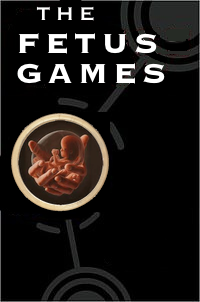
Dystopian novels seem to be the hot thing right now considering The Hunger Games trilogy.

Though I have to wonder why we have to go to fictional stories to get our dystopian fill?  Imagine If fifty years ago somebody had written a novel of a future where we killed over a millions unborn each each year, judges overriding the people to institute same-sex marriage, Catholics loosing first amendment rights in the name of reproductive “rights”, a growing number of states  with assisted-suicide, increasing number of cases involving euthanasia where a blind-eye is turned, increased divorce rates and declining marriage rates along with sub-replacement population rates?  How would that novel have been received?  Probably would have been seen as imaginative fiction and as an unlikely dystopia. Slippery slope arguments becoming absurd.

Yet we are living in that dystopia also known as the Culture of Death.

So maybe we like dystopian novels that remind us of a different dystopia then the one we are living in?  The Hunger Games trilogy in some ways reminds me of the culture of death and involves some of the same attitudes.

In The Hunger Games kids are killing kids and not only it is alright according to the government, it is required.  We also have kids killing kids.  Many teenage mothers decide the only solution is to abort their children.  The government does not have a problem with this and they declare it as a right that must be supported by the taxpayer in the case of abortion-inducing drugs.  While The Hunger Games allows one of 24 tributes to survive, we have a much smaller percentage surviving the million-plus surgical abortions each year.

We also have our form of gladiatorial combat known as IVF.  When multiple embryos are implanted it is hoped that one will survive.  So there are plenty of “tributes” selected hoping that one will survive, if not just select some more “tributes” and try again. Or how about so-called pregnancy reductions? Again one is picked to survive the arena. Talk about Hunger Games, drugs making implantation difficult cause the embryo to starve to death.

In The Hunger Games we have the cruel President Coriolanus Snow wants to keep the status quo of gladiatorial combat among children.  In the dystopia we live in we also have a president who wants to keep the status quo of murdering children and not only voted for infanticide, but has been the greatest advocate of abortion to ever sit in the Oval Office.

We can look at The Hunger Games and be outraged by this future society, just as long as we don’t look too closely at our own.

While The Hunger Games trilogy is rather dark and gets darker as it goes, it is not without hope and the plot involves overcoming of the culture that generated the games.  We are also never without hope despite the darkness of our own culture.  God can bring good out of evil.  There should be a lot of good coming because we are certainly producing a lot of raw materials of evil for God to work with.  Thankfully though we are not living in the dystopian that would have resulted without grace.

April 3, 2012April 3, 2012 4 comments
0 FacebookTwitterGoogle +Pinterest
Book Review

The Catholics Next Door – Book Review

by Jeffrey Miller April 1, 2012April 2, 2012
written by Jeffrey Miller

Greg and Jennifer Willits of the radio show “The Catholics Next Door” have a book out called not-suprisingly The Catholics Next Door: Adventures in Imperfect Living.

This book, much like their show, gives inner glimpses into a Catholic family living their faith. Sections in the various chapters are alternatively written by Greg and Jennifer and each section gives their view of the topic and chapter at hand.  This is not a book written predominately to tell their conversion/reconversion stories or the history of their various apostolates, but to write about those daily conversion involved in marriage and family.  As Greg mentions at one point you can’t learn parenthood from a book, and they don’t attempt to do it themselves — but provide their experience  in growing in faithfulness and struggling on the path of holiness.

Considering the HHS mandate their chapter discussing contraception is quite timely.  We constantly hear how contraception is never mentioned in homilies, yet it was a homily they heard on contraception from a Deacon that started them on the road to rejecting what is seen as wisdom by the culture of death.  They managed to persevere in seeing contraception as a sin despite being told by a priest who gave them the standard Jiminy Cricket response. They were also very open in regards the struggles in accepting what the Church teaches as both their hearts and intellects came to the truth.

What I enjoyed most about the book is its good humor and honesty about living the faith.  There are many fun and instructive stories along the way and I think the book is very good for both the audience of those who have come to accept Church teaching and for those also who are struggling in believing what the Church teaches.  Their writing style invokes the conversational tone they have on the show and you do feel as reading the book to be involved in a form of conversation. Recommended.

April 1, 2012April 2, 2012 6 comments
0 FacebookTwitterGoogle +Pinterest
Book Review

Lenten Devotional Reading

by Jeffrey Miller April 1, 2012
written by Jeffrey Miller

For this Lent I started out with the daily meditations from St. Thomas Aquinas named appropriately Meditations For Lent.  They are as good as you would expect them to be with many very interesting theological reflections.

Halfway through Lent I became aware of Amy Welborn’s  Reconciled to God – Daily Lenten Devotions. At .99 cents at Amazon for the Kindle version this is the best .99 cents I have ever spent and while these are short reflections for each day of lent they pack a lot.  I especially enjoyed how she tied everyday common events to the daily readings and unfolds things in such a way to cause a greater impact.  Written this way they seem to permeate into you better than so many pious devotionals that just don’t sink into your daily experience as these do.  Just brilliantly written.  So while it is very late in Lent now, do yourself a favor and get these for the next Lent.  I know I will be using them again alongside of Aquinas’ meditations.  The two go together quite synergistically despite being quite different.

Meditations for Lent @ Aquinas & More

April 1, 2012 1 comment
0 FacebookTwitterGoogle +Pinterest
HumorLink

Pope to Blogosphere: See you in the combox!

by Jeffrey Miller April 1, 2012
written by Jeffrey Miller

Well played Brandon, well played.

April 1, 2012 0 comment
0 FacebookTwitterGoogle +Pinterest
Podcast

Diocesan podcasts

by Jeffrey Miller March 29, 2012
written by Jeffrey Miller

Over the years there has been a lot of talk about Catholics use of the new media and the poor quality of certain segments of this.  For example Catholic parishes have notoriously poor web sites, and while there have been some general improvements there is plenty of room to grow in this regard.

The same goes for diocesan websites, though they are generally of better quality than parish ones since money is being spent is this regard.

One area of the new media that has been much ignored by most diocese is podcasting with very few diocese getting involved in this.  I would like to highlight one example of the effective use of podcasting by a diocese which I think should be a model for other diocese.

The Archdiocese of Boston produces The Good Catholic Life, an hour long show scheduled Monday through Fridays.  The production values are very good  and the host Scot Landry is top notch in moving the show along and doing interviews.  This is a quality show that focuses on local news for the diocese along with news that affects all Catholics. So Catholics in the diocese who listen to it are kept well aware of what is going on in the dioceses along with hearing personal stories of other in the diocese.

I would love to have a similar podcast in my own diocese to learn more about the priests and people in my diocese to build up a real sense of community that is often lacking in today’s parish life.

They also simulcast the show on their local Catholic radio station which is also an ideal way to build up an audience.

No doubt producing such a podcast is time intensive and requires real resources to pull off right, but I think it is something well worth doing.

March 29, 2012 5 comments
0 FacebookTwitterGoogle +Pinterest
Book Review

The Prospero’s Daughter Trilogy

by Jeffrey Miller March 28, 2012March 28, 2012
written by Jeffrey Miller

I usually confine my non-Catholic book related reviews to Goodreads, but there is enough intersection here to make an exception.

Being a dutiful and loyal fanboy of John C. Wright when I read that his wife had her own published books I was suitably enough impressed by the reviews to add them to my wish list.  Being that my wish list is much like an infinite number set I finally just got around to reading the three books in the trilogy.  In fact only the first book was released when I added it.

The books I am referring to are by L. Jagi Lamplighter and include Prospero Lost, Prospero in Hell, and Prospero Regained .

The books take their cue from Shakespeare’s The Tempest and  include  the characters of the sorcerer Prospero, his daughter Miranda, the foul traitor Antonio along with some of the  airy spirits.  The events take place in more modern days and Prospero has gone on to have other children who because of the water of life live on to this day.  While the outline of the events in The Tempest provide a grounding for the plot it goes onto include the blending of other myths into an intriguing outline that gives it a lot of scope.  Some of these blending of myths was beautifully done and one intersection of this happening in the first book still makes me smile when I think of it.

As the titles suggest something has happened to their father the “dread magician” Prospero and Miranda must gather up the family forces to rescue him.  The family though over the last century had started to go their own ways with competing interests and various sibling rivalries. The brothers and sisters range as a cast of characters and includes one similar to Circe , one who had been Pope twice, and another one who is rather scatterbrain, but quite fun. So while you have your basic quest story nowhere along the way do you feel you are following an already well-traveled path.  There are plenty of mysteries and suppositions that get made throughout as the band of brothers and sisters and and characters discover they are not quite sure what their father was  up to. The airy spirit that looks remarkably like Sam Spade acts as a detective and helps Miranda to find her brothers and sisters and the various clues of what happened to her father.

I really enjoyed the first book which had my full attention throughout and was happy to find that the following books got even better.  I just so enjoyed the interplay of the characters and there was just so much to keep you guessing as to how everything is going to resolve.  The world building with Elves, Fairies, Angels and Demons is quite consistent and much attention is also given to the moral quality of acts along with a theological worldview partly Christian with a Pagan tint to it.   Like many books that as part of them involve the rescuing of someone in Hell their is a view that those in Hell can be redeemed.  That view was involved here, but not in the ham-handed way it is usually done and involves an interesting solution reminiscent of Hans Urs von Balthasar with its own twist.  I certainly don’t expect fantasy novels to be theologically perfect, but this one within the confines of the plot has some Christian theological sensitivity.  There are certainly some Catholic elements involved.

A very satisfying  story from beginning to end and when she comes out with another book I am not going to add it to my wish list limbo, but acquire it right away.

March 28, 2012March 28, 2012 1 comment
0 FacebookTwitterGoogle +Pinterest
Punditry

The Pope meets Fidel

by Jeffrey Miller March 28, 2012
written by Jeffrey Miller

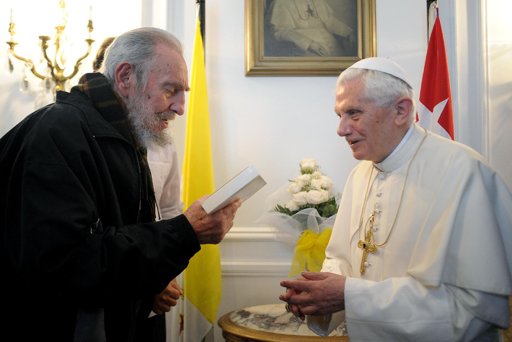
Pope Benedict XVI with Fidel Castro

When the Pope arrived in Cuba in part he said:

We can no longer continue in the same cultural and moral direction which has caused the painful situation that many suffer. On the other hand, real progress calls for an ethics which focuses on the human person and takes account of the most profound human needs, especially man’s spiritual and religious dimension. In the hearts and minds of many, the way is thus opening to an ever greater certainty that the rebirth of society demands upright men and women of firm moral convictions, with noble and strong values who will not be manipulated by dubious interests and who are respectful of the unchanging and transcendent nature of the human person.

Though meanwhile:

So, Cuban state security has sent pro-democracy activists a text message: “As soon as the Pope leaves, we are going to disappear you all.” (“Tan pronto como se vaya el #PapaCuba los vamos a desaparecer a todos ustedes.”) [Source]

March 28, 2012 3 comments
0 FacebookTwitterGoogle +Pinterest
Punditry

High Priests of Atheism

by Jeffrey Miller March 27, 2012
written by Jeffrey Miller

I remember reading ahead of time about the ‘Reason Rally’ that was held on March 24th in Washington, D.C.  It was not something that much interested me in that the free assembly of atheists is something I would support.  The freedom of religion really includes the freedom of non-religion.  Though even when I was an atheist the rally is not something that would have much interested me as far as wanting to attend other then well-wishing the assemblage as a sign of right-thinking.

I was thinking tangentially on a related subject on how atheism has it’s own form of clericalism. The high priests of atheism are often scientists such as Richard Dawkins, P.Z. Myers, Stephen Hawkins, along with the late Carl Sagan and  Stephen Gould.  Though while not all the so-called new atheists are scientists, scientists are given an elevated level of respect.  Speaking for myself at one time I would not have desired a Philosopher-King, but a Scientist-King so that we could all live under a rule of reason.  That the philosophy of scientism permeates these high priests of atheists is no surprise since when the only tool you have in your toolbox is science you hit everything with it.  They ignore the limits of science and try to make every question a “how” which at the same time is suppose to explain the “why.”   That explaining chemical and electrical actions in our brains is suppose to explains everything about the brain.

As Blessed John Paul II wrote in “Fides Et Ratio”:

88. Another threat to be reckoned with is scientism. This is the philosophical notion which refuses to admit the validity of forms of knowledge other than those of the positive sciences; and it relegates religious, theological, ethical and aesthetic knowledge to the realm of mere fantasy.

This is why a “Reason Rally” starts off crippled and returning to Fides Et Ratio again.

Faith and reason are like two wings on which the human spirit rises to the contemplation of truth; and God has placed in the human heart a desire to know the truth—in a word, to know himself—so that, by knowing and loving God, men and women may also come to the fullness of truth about themselves (cf. Ex 33:18; Ps 27:8-9; 63:2-3; Jn 14:8; 1 Jn 3:2).

There has been some coverage on what Richard Dawkins said at the rally:

WASHINGTON D.C., March 27 (CNA) .- At the March 24 ‘Reason Rally’ in Washington, D.C., an estimated 20,000 atheists and agnostics heard author and activist Richard Dawkins encourage mockery of Catholic beliefs and those of other religions.

‘Don’t fall for the convention that we’re all ‘too polite’ to talk about religion,’ Dawkins said, before urging rally attendees to ridicule Catholics’ faith in the Eucharist.

‘Religion makes specific claims about the universe which need to be substantiated, and need to be challenged ‘ and if necessary, need to be ridiculed with contempt,’ he told the cheering crowd on the National Mall.

‘For example, if they say they’re Catholic: Do you really believe, that when a priest blesses a wafer, it turns into the body of Christ? Are you seriously telling me you believe that? Are you seriously saying that wine turns into blood?’

If the answer is yes, Dawkins suggested atheists should show contempt for believers instead of ignoring the issue or feigning respect.

‘Mock them,’ he told the crowd. ‘Ridicule them! In public!’

Once again Dawkins gives the Church a back-handed compliment. Like most atheists the foil is almost always Christianity and often specifically Catholicism. Also interesting the focus on the Eucharist and how it is something that should be mocked. Well Jesus was mocked and scourged before so there is nothing new under the sun here. Though I can’t really blame atheists in how the doctrine of the Eucharist is so outrageous. Really it is outrageous in that is is shocking, bold, and startling. We should all be so startled out of any bland reception of the Eucharist. The mocking of the Eucharist has certainly been a focus as the case of the desecration of the Eucharist by P.Z. Myers shows. He certainly followed Dawkins template of “ridicule and contempt.”

So Dawkins has an atheist paraphrase for the quote falsely attributed to St. Francis.

“Preach Darwinism at all times and if necessary use ridicule and contempt.”

[Source]

March 27, 2012 6 comments
0 FacebookTwitterGoogle +Pinterest
Punditry

Marriage equality

by Jeffrey Miller March 25, 2012
written by Jeffrey Miller

“Marriage equality” has become a buzz-phrase in the advocacy of same-sex marriage in the latest use of relativism to equate what can’t be equated. Equality as a word has been repeatedly used in various advocacies as if it was an argument that can’t be refuted. I mean who can be against equality? Equality is seen as a basic form of justice as any kind of unfairness we naturally respond to. The problem is you just can’t put anything on either side of the equals sign and make the resulting equation true.

Really though the problem with same-sex marriage is with equality itself – it is too equal in fact. The fundamental reality of marriage is not based on equality but that that men and women have complementary natures. It is no coincidence that the growing acceptance of same-sex marriage followed the feminist advocacy of what comes down to making men and women equal via contraception and abortion. Once you render one of the ends of sex null than same-sex sexual activity seems to be as equal as contraceptive opposite-sex activity.

The equality of men and women is based on their personhood. “God created man in his image; in the divine image he created him, male and female he created them” (Gen. 1:27). God command to “be fertile and multiply” (Gen 1.28) can only be met because of the complementarity of men and women. Same-sex marriage or same-sex relationships can never be fecund because men and men or women and women are too equal both physically and psychologically.

228. Connected with de facto unions is the particular problem concerning demands for the legal recognition of unions between homosexual persons, which is increasingly the topic of public debate. Only an anthropology corresponding to the full truth of the human person can give an appropriate response to this problem with its different aspects on both the societal and ecclesial levels[503]. The light of such anthropology reveals “how incongruous is the demand to accord ‘marital’ status to unions between persons of the same sex. It is opposed, first of all, by the objective impossibility of making the partnership fruitful through the transmission of life according to the plan inscribed by God in the very structure of the human being. Another obstacle is the absence of the conditions for that interpersonal complementarity between male and female willed by the Creator at both the physical-biological and the eminently psychological levels. It is only in the union of two sexually different persons that the individual can achieve perfection in a synthesis of unity and mutual psychophysical completion”[504].

Homosexual persons are to be fully respected in their human dignity [505] and encouraged to follow God’s plan with particular attention in the exercise of chastity[506]. This duty calling for respect does not justify the legitimization of behaviour that is not consistent with moral law, even less does it justify the recognition of a right to marriage between persons of the same sex and its being considered equivalent to the family[507].

“If, from the legal standpoint, marriage between a man and a woman were to be considered just one possible form of marriage, the concept of marriage would undergo a radical transformation, with grave detriment to the common good. By putting homosexual unions on a legal plane analogous to that of marriage and the family, the State acts arbitrarily and in contradiction with its duties”[508]. (Compendium of the Social Doctrine of the Church)

March 25, 2012 1 comment
0 FacebookTwitterGoogle +Pinterest
Newer Posts
Older Posts

About Me

Jeff Miller is a former atheist who after spending forty years in the wilderness finds himself with both astonishment and joy a member of the Catholic Church. This award-winning blog presents my hopefully humorous and sometimes serious take on things religious, political, and whatever else crosses my mind.

Conversion story

  • Catholic Answers Magazine
  • Coming Home Network

Appearances on:

  • The Journey Home
  • Hands On Apologetics (YouTube)
  • Catholic RE.CON.

Blogging since July 2002

Recent Posts

  • The Weekly Leo

  • A Litany of Gratitude

  • The Spiritual Life and Memes

  • What is your distance from Jesus on the Cross?

  • Feast of St. Thomas, Apostle

  • Gratitude and Generosity

  • “The Heart and Center of Catholicism”

  • Post-Lent Report

  • Stay in your lane

  • Echoing through creation

  • Another Heaven

  • My Year in Books – 2024 Edition

  • I Have a Confession to Make

  • A Mandatory Take

  • Everybody is ignorant

  • Sacramental Disposal, LLC

  • TL;DH (Too Long;Didn’t Hear)

  • A Shop Mark Would Like

  • The Narrow Way Through the Sacred Heart of Jesus

  • Time Travel and Fixing Up Our Past

  • The Weekly Leo

  • The Weekly Leo

  • The Weekly Leo

  • The Weekly Leo

Meta

I also blog at Happy Catholic Bookshelf Entries RSS
Entries ATOM
Comments RSS
Email: curtjester@gmail.com

What I'm currently reading

Subscribe to The Curt Jester by Email

Endorsements

  • The Curt Jester: Disturbingly Funny --Mark Shea
  • EX-cellent blog --Jimmy Akin
  • One wag has even posted a list of the Top Ten signs that someone is in the grip of "motu-mania," -- John Allen Jr.
  • Brilliance abounds --Victor Lams
  • The Curt Jester is a blog of wise-ass musings on the media, politics, and things "Papist." The Revealer

Archives

About Me

Jeff Miller is a former atheist who after spending forty years in the wilderness finds himself with both astonishment and joy a member of the Catholic Church. This award winning blog presents my hopefully humorous and sometimes serious take on things religious, political, and whatever else crosses my mind.
My conversion story
  • The Curt Jester: Disturbingly Funny --Mark Shea
  • EX-cellent blog --Jimmy Akin
  • One wag has even posted a list of the Top Ten signs that someone is in the grip of "motu-mania," -- John Allen Jr.
  • Brilliance abounds --Victor Lams
  • The Curt Jester is a blog of wise-ass musings on the media, politics, and things "Papist." The Revealer

Meta

I also blog at Happy Catholic Bookshelf Twitter
Facebook
Entries RSS
Entries ATOM
Comments RSS 2.0" >RSS
Email: curtjester@gmail.com

What I'm currently reading

Subscribe to The Curt Jester by Email

Commercial Interuption

Podcasts

•Catholic Answers Live Subscribe to Podcast RSS
•Catholic Underground Subscribe to Podcast RSS
•Catholic Vitamins Subscribe to Podcast RSS
•EWTN (Multiple Podcasts) Subscribe to Podcast RSS
•Forgotten Classics Subscribe to Podcast RSS
•Kresta in the Afternoon Subscribe to Podcast RSS
•SQPN - Tons of great Catholic podcasts Subscribe to Podcast RSS
•The Catholic Hack Subscribe to Podcast RSS
•The Catholic Laboratory Subscribe to Podcast RSS
•The Catholics Next Door Subscribe to Podcast RSS
•What does the prayer really say? Subscribe to Podcast RSS

Archives

Catholic Sites

  • Big Pulpit
  • Capuchin Friars
  • Catholic Answers
  • Catholic Lane
  • Crisis Magazine
  • New Evangelizers
  • Waking Up Catholic

Ministerial Bloghood

  • A Jesuit’s Journey
  • A Shepherd’s Voice
  • Ad Majorem Dei Gloriam
  • Adam’s Ale
  • Archbishop Dolan
  • Bonfire of the Vanities
  • Cardinal Sean’s Blog
  • Da Mihi Animas
  • Domine, da mihi hanc aquam!
  • Father Joe
  • Fr. Roderick
  • Godzdogz
  • Laus Crucis
  • Omne Quod Spirat, Laudet Dominum
  • Orthometer
  • Priests for Life
  • Servant and Steward
  • Standing on My Head
  • The hermeneutic of continuity
  • This Week at Vatican II
  • Waiting in Joyful Hope
  • What Does The Prayer Really Say?

Bloghood of the Faithful

  • A Catholic Mom Climbing the Pillars
  • A Catholic Mom in Hawaii
  • A Long Island Catholic
  • A Wing And A Prayer
  • Acts of the Apostasy
  • Ad Altare Dei
  • AdoroTeDevote
  • Against the Grain
  • Aggie Catholics
  • Aliens in this world
  • Always Catholic
  • American Chesterton Society
  • American Papist
  • Among Women
  • And Sometimes Tea
  • Ask Sister Mary Martha
  • auntie joanna writes
  • Bad Catholic
  • Bethune Catholic
  • Big C Catholics
  • Bl. Thaddeus McCarthy's Catholic Heritage Association
  • Catholic and Enjoying It!
  • Catholic Answers Blog
  • Catholic Fire
  • Catholic New Media Roundup
  • Charlotte was Both
  • Christus Vincit
  • Confessions of a Hot Carmel Sundae
  • Cor ad cor loquitur
  • Courageous Priest
  • Creative Minority Report
  • CVSTOS FIDEI
  • Dads Called to Holiness
  • Darwin Catholic
  • Defend us in Battle
  • Defenders of the Catholic Faith
  • Disputations
  • Divine Life
  • Domenico Bettinelli Jr.
  • Dominican Idaho
  • Dyspectic Mutterings
  • Ecce Homo
  • Ecclesia Militans
  • Eve Tushnet
  • Eye of the Tiber
  • feminine-genius
  • Five Feet of Fury
  • Flying Stars
  • For The Greater Glory
  • Get Religion
  • GKC’s Favourite
  • God’s Wonderful Love
  • Gray Matters
  • Happy Catholic
  • Ignatius Insight Scoop
  • In Dwelling
  • In the Light of the Law
  • InForum Blog
  • Jeff Cavins
  • Jimmy Akin
  • John C. Wright
  • La Salette Journey
  • Laudem Gloriae
  • Lex Communis
  • Life is a Prayer
  • Man with Black Hat
  • Maria Lectrix
  • Mary Meets Dolly
  • MONIALES OP
  • Mulier Fortis
  • Musings of a Pertinacious Papist
  • My Domestic Church
  • Nunblog
  • Oblique House
  • Open wide the doors to Christ!
  • Over the Rhine and Into the Tiber
  • Patrick Madrid
  • Pro Ecclesia * Pro Familia * Pro Civitate
  • Recta Ratio
  • Saint Mary Magdalen
  • Sonitus Sanctus
  • Southern-Fried Catholicism
  • St. Conleth's Catholic Heritage Association
  • Stony Creek Digest
  • Testosterhome
  • The Ark and the Dove
  • The B-Movie Catechism
  • The Crescat
  • The Daily Eudemon
  • The Digital Hairshirt
  • The Four Pillars
  • The Inn at the End of the World
  • The Ironic Catholic
  • The Lady in the Pew
  • The Lion and the Cardinal
  • The New Liturgical Movement
  • The Pulp.it
  • The Sacred Page
  • The Sci Fi Catholic
  • The Scratching Post
  • The Weight of Glory
  • The Wired Catholic
  • Two Catholic Men and a Blog
  • Unam Sanctam Catholicam
  • Video meliora, proboque; Deteriora sequor
  • Vivificat
  • Facebook
  • Twitter
  • Instagram
  • Pinterest
  • Email
  • Reddit
  • RSS

@2026 - www.splendoroftruth.com/curtjester. All Right Reserved. Designed and Developed by PenciDesign


Back To Top