Star War Day and Catholic Puns
Yesterday on May the 4th, Catholic Answers posted:

To which I had to reply:
“He used to be Han Solo Scriptura”


Star War Day and Catholic Puns
Yesterday on May the 4th, Catholic Answers posted:
To which I had to reply:
“He used to be Han Solo Scriptura”
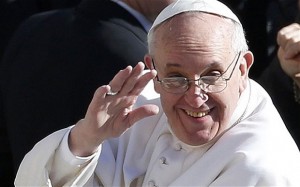
This version of The Weekly Francis covers material released in the last week from 26 April 2021 to 5 May 2021.
The Weekly Francis is a compilation of the Holy Father’s writings, speeches, etc which I also post on Jimmy Akin’s blog.
General Audiences
Letters
Messages
Motu Proprio
Regina Caeli
Speeches
Papal Tweets
Papal Instagram
This version of The Weekly Francis covers material released in the last week from 15 April 2021 to 28 April 2021.
The Weekly Francis is a compilation of the Holy Father’s writings, speeches, etc which I also post on Jimmy Akin’s blog.
General Audiences
Messages
Regina Caeli
Speeches
Papal Tweets
Papal Instagram
This version of The Weekly Francis covers material released in the last week from 14 April 2021 to 21 April 2021.
The Weekly Francis is a compilation of the Holy Father’s writings, speeches, etc which I also post at Jimmy Akin’s blog.
General Audiences
Messages
Regina Caeli
Papal Tweets
Papal Instagram
This version of The Weekly Francis covers material released in the last week from 4 April 2021 to 14 April 2021.
The Weekly Francis is a compilation of the Holy Father’s writings, speeches, etc which I also post at Jimmy Akin’s blog.
Homilies
Letters
Regina Caeli
Papal Tweets
Papal Instagram
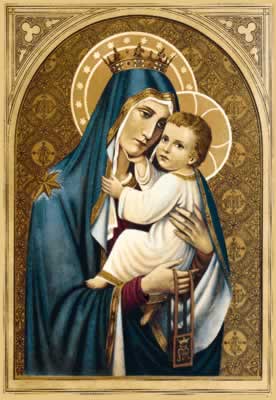
Tomorrow I will be going through the Rite of Admission for the Secular Discalced Carmelites. Also known as the clothing ceremony, where you receive a larger brown scapular.
Admission should have happened in 2019. Delayed since I was at a conference during the time the community was to interview me, and later COVID–19 stepped in to prevent any retreats.
Perhaps all to the good to spend more time preparing myself in developing a life of prayer. I am not doing this because I am so inclined towards mental prayer and working towards contemplation. Seriously, I was once offered a book contract to write on “Praying badly.” They must have thought I was a Subject Matter Expert on this. I am doing this for what Carmel can teach me in being prayer at the heart of the Church. Maybe I could write a book on “Persevering in prayer despite praying badly.”
I had to choose a religious name before this admission rite. There is something so cool about choosing a religious name and something daunting about it. First, I was thinking of something super-pious. Something impressive sounding. At least I recognized quickly how ridiculous this thought process was.
I ended up picking “Thomas of the Sacred Heart” for several reasons. In part because of the Apostle Thomas. He went from demanding empirical knowledge that Jesus had risen to say “My Lord and my God.” Thomas feels close to my track from my atheist days, wanting all truth to be empirical and provable to the senses, to acknowledging and worshiping Jesus. So the name is aspirational to me that you can finally get things right.
I double the Thomas with St. Thomas Aquinas since this saint I identify with the first crack I saw in my atheist beliefs. His life is also aspirational to me since the saint replies towards the end of his life Domine, non nisi Te—that is, “Lord, nothing except you.”
The Sacred Heart reminds that God is Love, Deus caritas est. In the last year, I started to notice how tied this devotion was in Carmel.
St. Saint Therese of Lisieux wrote this poem for her sister, Marie of the Sacred Heart.
To be able to gaze on your glory,
I know we have to pass through fire.
So I, for my purgatory,
Choose your burning love, O heart of my God!
On leaving this life, my exiled soul
Would like to make an act of pure love,
And then, flying away to Heaven, its Homeland,
Enter straightaway into your Heart.
This year I also had read the biographies of St. Teresa Margaret of the Sacred Heart and St. Teresa of the Andes; she also had this devotion.
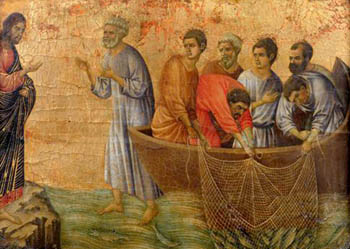
Today on Fr. Mike Schmitz “Bible in a Year” podcast, Jeff Cavins in an introduction to the Gospel of John was talking about John 21:11
“So Simon Peter went aboard and hauled the net ashore, full of large fish, 153 of them.”
He was explaining that the number 153 is the numerical total for the Hebrew phrase Ani Elohim, which means “I am God”.
The Church Fathers had a range of opinions on the significance of 153 since it seems an odd number for John to mention (Plus it is an odd number).
St. Jerome said that at the time there were 153 known species of fish according to Oppian’s Halieutica. This was written after the Gospel of John and does not even clearly provide such a list adding up to that number.
St. Augustine had a couple of interpretations. Focusing on seven apostles being present or the seven gifts of the Holy Spirit along with the Ten Commandments. Some inventive theological math – see Tractates on the Gospel of John (Augustine). Also noting that 153 is the sum of all the numbers from 1 to 17. He also has several more mystical interpretations.
St. Gregory the Great mentions that Seven and ten multiplied by three make fifty-one. So multiply that by 3.
My theory is that St. John was trolling future commentators by picking that number. Well, that is not really my theory, but there is just no really solid one.
What annoyed me with the talk about this on the podcast was how the Gematria technique of interpretation was presented. It would have been better to present it as a possible interpretation and not as “the” interpretation. I happen to like this interpretation especially with the high Christology of the Gospel of John.
This podcast follows Jeff Cavins timeline and they are at the point where they will be reading the Gospel of John and thus today’s introduction to this Gospel. Coincidentally today’s Gospel included this specific passage, which I don’t think was planned.
Some selections from St. Thomas Aquinas’ “Catena Aurea: Commentary on the Gospel of John”:
St. Augustine. (Tract. cxxii.) It is not then signified that only a hundred and fifty-three saints are to rise again to eternal life, but this number represents all who partake of the grace of the Holy Spirit: which number too contains three fifties, and three over, with reference to the mystery of the Trinity. And the number fifty is made up of seven sevens, and one in addition, signifying that those sevens are one. That they were great fishes too, is not without meaning. For when our Lord says, I came not to destroy the law, but to fulfil, by giving, that is, the Holy Spirit through Whom the law can be fulfilled, He says almost immediately after, Whosoever shall do and teach them, the same shall be called great in the kingdom of heaven. In the first draught the net was broken, to signify schisms; but here to shew that in that perfect peace of the blessed there would be no schisms, the Evangelist continues: And for all they were so great, yet was not the net broken; as if alluding to the case before, in which it was broken, and making a favourable comparison.
St. Gregory. (Hom. xxiv.) Seven and ten multiplied by three make fifty-one. The fiftieth year was a year of rest to the whole people from all their work. In unity is true rest; for where division is, true rest cannot be.
St. Augustine. (Tract. cxxii.) Mystically, in the draught of fishes He signified the mystery of the Church, such as it will be at the final resurrection of the dead. And to make this clearer, it is put near the end of the book. The number seven, which is the number of the disciples who were fishing, signifies the end of time; for time is counted by periods of seven days
This version of The Weekly Francis covers material released in the last week from 1 April 2021 to 7 April 2021.
The Weekly Francis is a compilation of the Holy Father’s writings, speeches, etc which I also post on Jimmy Akin’s blog.
General Audiences
Homilies
Messages
Regina Caeli
Papal Tweets
Papal Instagram
As part of my parish bible study class, I have a role to provide some commentary on the Gospel for the upcoming Sunday. Usually, this means basically stealing good stuff from Brant Pitre’s Sunday commentaries, other commentaries, and of course the Church Father.
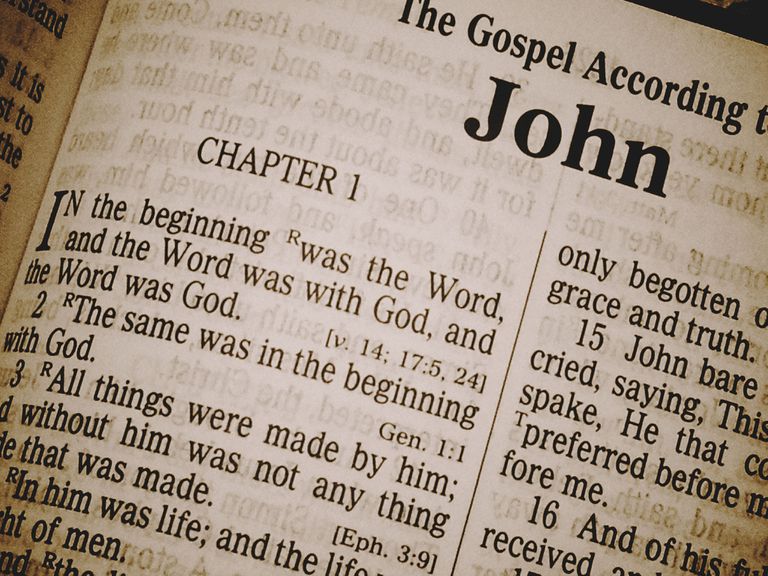
So I was reading part of the Gospel reading in John 20:22-23 “And when he had said this, he breathed on them and said to them, “Receive the Holy Spirit. If you forgive the sins of any, they are forgiven them; if you withhold forgiveness from any, it is withheld.”
This passage was fairly well-known to me and that it is the institution of the sacrament of confession.
“If you look at a thing 999 times, you are perfectly safe; if you look at it for the 1000th time, you are in danger of seeing it for the first time.” G.K. Chesterton
What I noticed for the first time was the context along with being more focused having just gone through the Triduum.
On Holy Thursday we have the institution of the new covenant priesthood. I would have assumed that then they received the fullness of what we now see as the effects of episcopal ordination.
What actually happened was that Jesus waited until he rose and for when all the Apostles were gathered together to breathe on them to be able to either retain or forgive sins. This seems pretty important to me that Jesus highlighted this sacrament with a separate action. I certainly do not have a grasp of all the implications concerning this. There are plenty of commentaries regarding the implication of Jesus breathing on them and how this relates to creation. I just have not seen discussed why Jesus broke out this sacrament from those conferred on Holy Thursday.
Or possibly I am just misunderstanding this.
Looking through Aquinas Catena Aurea, the Church Father quotes for this passage in John doesn’t mention this aspect.
I am thinking and praying for those who will be received into the Church tonight at the Easter Vigil. So welcome home! God is great!
It also marks my own anniversary as a Catholic as I also came into the Church on April 3rd, 1999 at the Easter Vigil.
I count myself lucky that by the time I was received into the Church I had read enough Church history to not have been expecting an idealized Church. That the Church was made up by fellow sinners like me. I expected to be frustrated by the hierarchy, fellow Catholics, and my own sinfulness. That we are all on a journey and that we must constantly fix our focus on Christ and our final end. That our consciences can be like a GPS to always say “redirecting” as we once again go off track.
If you don’t have the time to go in-depth into Church history, it is contained in this summary.
“It was the best of times, it was the worst of times, it was the age of wisdom, it was the age of foolishness, it was the epoch of belief, it was the epoch of incredulity, it was the season of light, it was the season of darkness, it was the spring of hope, it was the winter of despair.” – Dickens’ ”A Tale of Two Cities”
Despite this truth—in all conditions, God has raised up saints. That it is in the here and now that we are called to holiness.
I am so grateful to God for how far he has brought me and also thankful that he will not just leave me in my current miserable state, but desires to bring me closer to him.
In Saint John Paul II’s Apostolic Letter “Salvifici Doloris” he writes:
“Christ did not conceal from his listeners the need for suffering. He said very clearly: ”If any man would come after me… let him take up his cross daily ’’, and before his disciples he placed demands of a moral nature that can only be fulfilled on condition that they should “deny themselves”. The way that leads to the Kingdom of heaven is “hard and narrow”, and Christ contrasts it to the “wide and easy” way that “leads to destruction”. On various occasions Christ also said that his disciples and confessors would meet with much persecution, something which—as we know—happened not only in the first centuries of the Church’s life under the Roman Empire, but also came true in various historical periods and in other parts of the world, and still does even in our own time.”
It might seem like a bit of a buzzkill to talk about welcoming people to the Church and saying that her disciples will suffer. This quote is from his chapter on the “The Gospel of Suffering”, literally the “Good News of Suffering.” It is indeed good news that our sufferings have meaning and can be salvific in cooperation with Christ.