
The Curt Jester
  • Home
  • About
  • Rome Depot
  • WikiCatechism
  • Free Catholic eBooks
  • Home
  • About
  • Rome Depot
  • WikiCatechism
  • Free Catholic eBooks

The Curt Jester

"It is the test of a good religion whether you can joke about it." GKC

My Reflection on Sunday’s Gospel John 20:19-31
Scripture

My Reflection on Sunday’s Gospel John 20:19-31

by Jeffrey Miller April 16, 2023April 16, 2023
written by Jeffrey Miller

John 20:19–31 ESV – Bible Gateway


This Gospel passage is used on the Second Sunday of Easter for each liturgical year. The use of these verses goes back to before the liturgical reform of the lectionary and is the same reading still used for the Tridentine Rite of the Church. The reason being is that it details also the second appearance of Jesus to the Apostles “eight days later” and so is perfectly fitting for the Second Sunday of Easter.

Confession is very much the Sacrament of Divine Mercy. So it’s fitting that on this day we will both recall the appearance to Thomas that took place eight days after the resurrection and the institution of Confession which is the Sacrament of Divine Mercy. [1]

The Apostles gathered together are basically hunkering down for the duration. Gathered together in a locked room. “Proper residences were equipped with bolts and locks. Bolted doors would prevent anyone from entering (a heavy bolt could be slid through rings attached to the door and its frame).”[2] They are in fear, in fact, fear for their lives. As John writes “For fear of the Jews, they were hiding out.” They would have been afraid of any knock on the door. Jesus mysteriously comes and stands among them. Such an awkward moment as they both fear and rejoice at seeing Jesus again.

John Bergsma comments on this:[3]

The last time he saw this band of eleven men, he was looking at their backs, in the dark, as they all ran away from him rather than accompany him through his suffering and death (Matt 26:56). But Jesus does not mention this. He does not say, “Hey guys! Guess you didn’t think you’d see me again! Thanks for sticking by me there, in my hour of need.” Instead, he overlooks their dismal infidelity, and the word of Jesus is simply, “Peace be with you.”

Jesus would say “Peace be with you.” twice in this first encounter and again during the second one. They really need to let their fear go and for the peace of Christ to settle on them. Jesus is completing the commission he started at the Last Supper when he breaths on them and gives them the ability to forgive and retain sins.

When Jesus does this it recalls the book of Genesis when it says that “God breathed into the clay,” “breathed into the nostrils of Adam and he became a living being.” So what Jesus is doing here is, in a sense, inaugurating once again the new creation. But in this case the power that is being revealed through that action is not the Sacrament of Baptism as with the man born blind, but here it is the power to forgive and retain sin that will be passed down in the Church through the Sacrament of Reconciliation, through the Sacrament of Confession.[4]

The Council of Trent says:

“The Church has always understood—and has in fact defined—that Jesus Christ here conferred on the Apostles authority to forgive sins, a power which is exercised in the sacrament of Penance. ‘The Lord then especially instituted the sacrament of Penance when, after being risen from the dead, he breathed upon his disciples and said: “Receive the Holy Spirit.…” The consensus of all the Fathers has always acknowledged that by this action so sublime and words so clear the power of forgiving and retaining sins was given to the Apostles and their lawful successors for reconciling the faithful who have fallen after Baptism’ (Council of Trent, De Paenitentia, chap. 1).

Now we come to the Apostle Thomas who is now with the other Apostles on this second encounter with the risen Christ. We don’t know why he was not there the first time. Yet it is to our edification that he wasn’t.

St. Gregory the Great[5]

It was not an accident that that particular disciple was not present. The divine mercy ordained that a doubting disciple should, by feeling in his Master the wounds of the flesh, heal in us the wounds of unbelief. The unbelief of Thomas is more profitable to our faith than the belief of the other disciples. For the touch by which he is brought to believe confirms our minds in belief, beyond all question

When he joins up with them he is told the story about how Jesus came upon them although the doors were locked. There is one distinct difference between how the other Apostles acted and how Thomas acted. When Mary Magdalene informed the Apostles, Peter and John ran to the tomb. Based on witness testimony they were willing to believe that this might be true and dashed off to verify it. Thomas on the other hand heard testimony from his friends and did not believe them. He not only discounted his friends but was not even willing to see how this was consistent with what Jesus told them ahead of time. He demands empirical proof, but when Jesus offers him that very proof—he no longer demands or needs it.

New Testament scholar John Barclay writes:

“There was no halfway house about Thomas. He was not airing his doubts just for the sake of mental acrobatics; he doubted in order to become sure; and when he did, his surrender to certainty was complete. And when a man fights his way through his doubts to the conviction that Jesus Christ is Lord, he has attained to a certainty that the man who unthinkingly accepts things can never reach.”

One consideration from Brant Pitre, regarding what Jesus asks Thomas:

Since ancient Greek manuscripts do not use punctuation marks, it is not clear whether Jesus’ words to Thomas in 20:29a are a question or a statement. The NABRE translates it as a question, Have you come to believe because you have seen me?, which hints at disapproval that Thomas needed tangible proof to believe. However, it is also possible to translate it as a statement, “You have believed because you have seen me,” in which case Jesus does not disapprove of Thomas’s faith but simply declares that Thomas has arrived at full Easter faith because of the tangible proof that has been given him.

The Catechism [6] in paragraph 156 says:

156 What moves us to believe is not the fact that revealed truths appear as true and intelligible in the light of our natural reason: we believe “because of the authority of God himself who reveals them, who can neither deceive nor be deceived.”[1] So “that the submission of our faith might nevertheless be in accordance with reason, God willed that external proofs of his Revelation should be joined to the internal helps of the Holy Spirit.”[2] Thus the miracles of Christ and the saints, prophecies, the Church’s growth and holiness, and her fruitfulness and stability “are the most certain signs of divine Revelation, adapted to the intelligence of all”; they are “motives of credibility” (motiva credibilitatis), which show that the assent of faith is “by no means a blind impulse of the mind.

  • Photo by Ben White on Unsplash

My References


  1. Catholic Productions, Brant Pitre  ↩
  2. St. John’s Gospel: A Bible Study Guide and Commentary for Individuals and Groups. Steve Ray, 2002  ↩
  3. The Word of the Lord: Reflections on the Sunday Mass Readings for Year C, John Bergsma  ↩
  4. Catholic Productions, Brant Pitre  ↩
  5. Gregory the Great, Forty Gospel Homilies 26; trans. J. C. Elowsky, ACCS, p. 367  ↩
  6. Catholic Church. (2000). Catechism of the Catholic Church (2nd Ed). United States Catholic Conference.  ↩
April 16, 2023April 16, 2023 0 comment
0 FacebookTwitterGoogle +Pinterest
The Weekly Francis

The Weekly Francis – Volume 458

by Jeffrey Miller April 11, 2023April 11, 2023
written by Jeffrey Miller
pope-francis2-300x187

The Weekly Francis is a compilation of the Holy Father’s writings, speeches, etc., which I also cross-post on Jimmy Akin’s blog.

This version of The Weekly Francis covers material released in the last week, from 5 April 2023 to 11 April 2023.

General Audiences

  • 5 April 2023 – General Audience – Catechesis. ‘The Crucifix, well-spring of hope’

Homilies

  • 6 April 2023 – Holy Chrism Mass
  • 6 April 2023 – Mass of the Lord’s Supper (Prison for Minors ‘Casal del Marmo’, Rome)
  • 8 April 2023 – Easter Vigil in the Holy Night of Easter

Messages

  • 9 April 2023 – ‘Urbi et Orbi’ – Easter 2023

Regina Caeli

  • 10 April 2023 – Regina Caeli, Easter Monday

Papal Tweets

  • “During these holy days, let’s draw near the Crucified One. Let’s place ourselves before him, stripped, to take an honest look at ourselves, removing whatever is superfluous. Let’s look at him, wounded, and place our wounds in his. Let’s let Jesus regenerate hope in us. #HolyWeek” @Pontifex, 5 April 2023
  • “Without the Lord’s Spirit, there can be no Christian life. Without his anointing, there can be no holiness. It is fitting that today, on the birthday of the priesthood, we acknowledge that He is at the origin of the ministry, the life and vitality of every Pastor. #HolyThursday” @Pontifex, 6 April 2023
  • “On the cross, Jesus refused to yield to despair, but he prayed and entrusted Himself to the Father. In His abandonment, he continued to love and forgive His crucifiers. Jesus, in His abandonment, asks us to see and have a heart for the many ”abandoned Christs“.” @Pontifex, 7 April 2023
  • “#ViaCrucis #GoodFriday U Image” @Pontifex, 7 April 2023
  • “Today the power of Easter calls you to roll away every stone of disappointment and mistrust. The Lord is an expert in rolling back the stones of sin and fear. He wants to illuminate your sacred memory, your most beautiful memory, to make you relive your first encounter with him.” @Pontifex, 8 April 2023
  • “Let us revive the beauty of that moment when we realized that he is alive and we made him the Lord of our lives. Let us return to Galilee. Let each of us return to his or her own Galilee, to the place where we first encountered him. Let us rise to new life!” @Pontifex, 8 April 2023
  • “Let us make haste to surmount our conflicts and divisions, and to open our hearts to those in greatest need. Let us hasten to pursue paths of peace and fraternity.” @Pontifex, 9 April 2023
  • “To rise again, to start anew, to take up the journey, we always need to return to Galilee, that is, to go back to the living, concrete and palpable memory of our first encounter with him.” @Pontifex, 9 April 2023
  • “#Easter yeultk Image” @Pontifex, 9 April 2023
  • “Jesus, the Living One, is with us, forever. Let the Church and the world rejoice, for today our hopes no longer come up against the wall of death, for the Lord has built us a bridge to life.” @Pontifex, 9 April 2023
  • “May we allow ourselves to experience amazement at the joyful proclamation of Easter, at the light that illumines the darkness and the gloom in which, all too often, our world finds itself enveloped.” @Pontifex, 9 April 2023
  • “The #GospelOfToday lets us relive the women’s encounter with the Risen Jesus on Easter morning. Jesus meets them while they are going to announce him. This is beautiful: when we proclaim the Lord, the Lord comes to us. #Easter” @Pontifex, 10 April 2023
  • “When hope is spent and we feel loneliness in our hearts, inner weariness, the torment of sin, the fear of failure, let us return to Jesus. For He is the only one who always defeats death and always renews our life. #Easter” @Pontifex, 11 April 2023

Papal Instagram

  • Franciscus
April 11, 2023April 11, 2023 0 comment
0 FacebookTwitterGoogle +Pinterest
“Jesus is Risen” and odd thoughts that come to me
Liturgy

“Jesus is Risen” and odd thoughts that come to me

by Jeffrey Miller April 9, 2023April 9, 2023
written by Jeffrey Miller

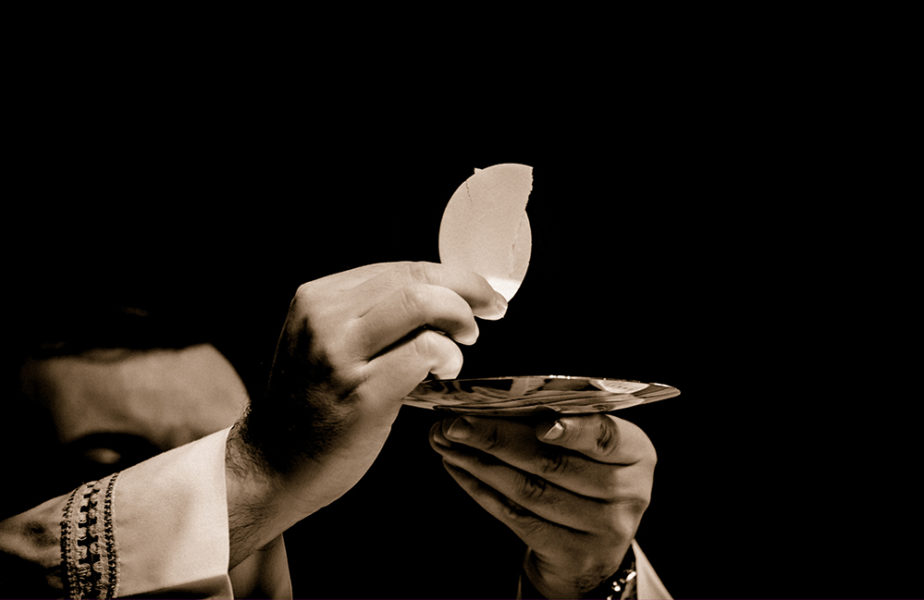
Weird ways my mind works. When I read/hear the awesome fact that Jesus is risen, having this in mind, I think it is ironic that in the Latin Rite for the Eucharist, the bread is unleavened.

I also find it interesting that the practice of using unleavened bread arose in the West in the 9th century.

… the change to unleavened bread. Alcuin and his pupil Rabanus Maurus are the first indisputable witnesses to this new practice, .. which spread only very slowly. The increased reverence for the Sacrament probably helped to introduce the use of the pure white wafers which could be so much more easily broken without worry about crumbs. (Joseph Jungman, S.J. “The Mass of the Roman Rite: Its Origins and Development”)

From the Catholic Encyclopedia (1917):

but leavened bread in the Eastern Church, except among the Maronites, the Armenians, and in the Churches of Jerusalem and Alexandria, where it is unleavened. It is probable that Christ used unleavened bread at the institution of the Blessed Eucharist, because the Jews were not allowed to have leavened bread in their houses on the days of the Azymes.

I was surprised at this history since I assumed that unleavened bread would have been the norm since this is what Jesus likely used at the Last Supper and that it has a greater sign value in relation to the institution of the Jewish Passover and the Exodus. I seems, at least in the West, this development was tied to the fact that in the early Church there was no manufacturing of specific Eucharistic hosts and thus commonly available bread was used.

In Lawrence Feingold’s, “The Eucharist”:

In the Latin rite, the bread must be unleavened, according to CIC, canon 926. This practice reflects the fact that Christ instituted the Last Supper on the first night of Passover, and so He would have used unleavened bread. In the Eastern tradition, however, leavened bread is used.

St. Thomas poses the question in the Summa of Theology as to whether the matter for the Eucharist is leavened or unleavened bread, and responds as follows:

Two things may be considered touching the matter of this sacrament namely, what is necessary, and what is suitable. It is necessary that the bread be wheaten, without which the sacrament is not valid, as stated above. It is not, however, necessary for the sacrament that the bread be unleavened or leavened, since it can be celebrated in either.

But it is suitable that every priest observe the rite of his Church in the celebration of the sacrament. Now in this matter there are various customs of the Churches: for, Gregory says: “The Roman Church offers unleavened bread, because our Lord took flesh without union of sexes: but the Greek Churches offer leavened bread, because the Word of the Father was clothed with flesh; as leaven is mixed with the flour.” Hence, as a priest sins by celebrating with fermented bread in the Latin Church, so a Greek priest celebrating with unfermented bread in a church of the Greeks would also sin, as perverting the rite of his Church. Nevertheless the custom of celebrating with unleavened bread is more reasonable. First, on account of Christ’s institution: for He instituted this sacrament “on the first day of the Azymes” (Matthew 26:17; Mark 14:12; Luke 22:7), on which day there ought to be nothing fermented in the houses of the Jews, as is stated in Exodus 12:15–19. Secondly, because bread is properly the sacrament of Christ’s body, which was conceived without corruption, rather than of His Godhead, as will be seen later (76, 1, ad 1). Thirdly, because this is more in keeping with the sincerity of the faithful, which is required in the use of this sacrament, according to 1 Corinthians 5:7: “Christ our Pasch is sacrificed: therefore let us feast … with the unleavened bread of sincerity and truth.”

However, this custom of the Greeks is not unreasonable both on account of its signification, to which Gregory refers, and in detestation of the heresy of the Nazarenes, who mixed up legal observances with the Gospel

April 9, 2023April 9, 2023 0 comment
0 FacebookTwitterGoogle +Pinterest
Pray Twice
Sacred Music

Pray Twice

by Jeffrey Miller April 8, 2023April 8, 2023
written by Jeffrey Miller

This morning my parish chanted Morning Prayer, finishing up the Triduum.

I just love this so much. I wish I could do it every day. I am not much of a prayer in community guy. I always feel I am reciting more than praying or that I am less focused. Chanting the morning prayer in community feels significantly different for me, where I can linger more on the words of the Psalms.

While there is no evidence that St. Augustine wrote/said, “He who sings, prays twice!”, that does not disprove the aphorism. From his other writings, I think he would have approved of the meaning of this, especially being taught/formed under the great hymn writer St. Ambrose.

Sacred music influenced my conversion, and to an extent, this is also true of my hopeful continuing conversion. Beauty can drive us to our knees to worship God, “O Beauty, even ancient, ever new” to refer again to St Augustine.

April 8, 2023April 8, 2023 1 comment
0 FacebookTwitterGoogle +Pinterest
The Weekly Francis

The Weekly Francis – Volume 457

by Jeffrey Miller April 4, 2023April 4, 2023
written by Jeffrey Miller
pope-francis2-300x187

The Weekly Francis is a compilation of the Holy Father’s writings, speeches, etc., which I also cross-post on Jimmy Akin’s blog.

This version of The Weekly Francis covers material released in the last week, from 30 March 2023 to 4 April 2023.

Angelus

  • 2 April 2023 – Angelus

Apostolic Letter

  • 2 April 2023 – Apostolic Letter issued ‘Motu Proprio’ of the Supreme Pontiff Francis modifying the terms of recourse of a member dismissed from an Institute of Consecrated Life

Homilies

  • 2 April 2023 – Palm Sunday

Speeches

  • 3 April 2023 – To Directors and employees of the National Institute for Social Security (Istituto Nazionale della Previdenza Sociale – INPS),

Papal Tweets

  • “Let us #PrayTogether for a more widespread culture of non-violence, that will progress when countries and citizens alike resort less and less to the use of arms. #PrayerIntention #ClickToPray Video” @Pontifex, 30 March 2023
  • “I am touched by the many messages received in these hours and I express my gratitude for the closeness and prayer.” @Pontifex, 30 March 2023
  • “When experienced with faith, the trials and difficulties of life serve to purify our hearts, making them humbler and thus more and more open to God. #Lent” @Pontifex, 31 March 2023
  • “Living #HolyWeek means entering ever more deeply into God’s logic, into the logic of the Cross, which is not primarily that of suffering and death, but rather that of love and of the gift of self that brings life.” @Pontifex, 1 April 2023
  • “I thank everyone for their closeness and prayer. I entrust the sick to Mary, especially the youngest, like those I met in the oncology ward at Gemelli. Let us pray for those who suffer the loss of dear ones and for those who work in hospitals. It takes courage. I admire them. https://t.co/WBUBDEmzdW Image” @Pontifex, 1 April 2023
  • “On the cross, Christ put Himself in solidarity with us so that each of us can say: In my failures, in my desolation, when I feel betrayed and abandoned, You are there, Jesus. When I feel I can’t take it anymore, you are with me. In all my unanswered “why’s”, you are with me.” @Pontifex, 2 April 2023
  • ““My God, my God, why have you forsaken me?” (Mt 27:46). These are the words that bring us to the very heart of Christ’s passion, the culmination of the sufferings He bore to save us. #PalmSunday” @Pontifex, 2 April 2023
  • “Abandoned, Christ stirs us to seek and love Him in the abandoned. For they are not only people in need, but He is there – Jesus abandoned – the One who saved us by descending to the depths of our human condition. #PalmSunday” @Pontifex, 2 April 2023
  • “God chose to enter into our human history the most difficult way possible: the cross. This way, no one could ever be so desperate and not to be able to find Him, even in the midst of anguish and abandonment. God arrived in the very place we didn’t think He could be.” @Pontifex, 3 April 2023
  • “During these days of Holy Week, let us #PrayTogether more intensely for the war-torn people of Ukrainia, and for all peoples experiencing war, that with God’s help, paths of peace might be opened.” @Pontifex, 3 April 2023
  • “From the Cross forgiveness poured forth and fraternal love was reborn: the Cross makes us brothers and sisters. #HolyWeek” @Pontifex, 4 April 2023

Papal Instagram

  • Franciscus
April 4, 2023April 4, 2023 0 comment
0 FacebookTwitterGoogle +Pinterest
24 Years as a Catholic
conversion

24 Years as a Catholic

by Jeffrey Miller April 4, 2023
written by Jeffrey Miller

Since today is my 24th anniversary of my entering the Catholic Church.

“You have no idea how much nastier I would be if I was not Catholic. Without supernatural aid I would hardly be a human being.” – Evelyn Waugh

People wonder why bad things happen to good people. I wonder why good things happen to bad people. So I am wondrously happy at the gift of grace and wished I showed a commensurate gratitude for it.

As I have been forgiven much, my love should be such as the woman who wet Jesus’ feet with her tears.

I was thinking about today’s Gospel where Jesus was deeply troubled by the person who would betray him. Peter would say that he would lay down his life for him, even though he would shortly betray him.

I also read this:

“The loving glance of the Master had saved him. Because Peter no longer relied on himself, Jesus could rely upon him and would entrust His flock to him. The lesson is clear. As long as a soul depends solely upon itself, it is not ready to be sanctified, nor to cooperate efficaciously in the sanctification of others.”

Father Gabriel of St. Mary Magdalen, O.C.D “Divine Intimacy”

I also noticed this paraphrased headline:

“there is a danger of triumphalism by receiving baptized Christians” into the Catholic Church at the Easter Vigil.”

This article is ridiculous, even for America Mag. It reads like a pet peeve held before he entered the Church trying to make is sound like a big deal. True, there are nuances and distinctions to be made here. Still, I can’t ever remember hearing this complaint among those already baptized entering the Church on the Easter Vigil.

We should make accommodations for those already baptized and well-catechized regarding OCIA (Formerly RCIA) process and the timing of entering the Church. Each person being received into the Church needs to be treated as the individual they are and not just put into a bureaucratic process that everybody goes through.

I guess that is my pet peeve. When I entered RCIA I had been doing an intense study for a couple of years and totally convicted of the truth of the Church. I learned nothing new during RCIA. I was baptized as an infant in a Methodist church, but I would have laughed if somebody told me the Church was being triumphalistic by putting me in with the non-baptized non-catechized group and being received on the Easter Vigil.

There is much that we might reconsider in how effective the current process is and how or if it is forming disciples of Christ. It is easy to surmise that there is a lot of variance in effectiveness depending on the parish, those involved, along with societal factors. I recently read the book “Augustine and the Catechumenate” by the late Fr. William Harmless, S.J. It was a fascinating look into how St. Augustine and North Africa addressed the question of catechesis and training for those becoming Catholic. This information made me glad that I am not in charge of an OCIA program as this is such a serious responsibility and I ponder how I could take more academic knowledge and considerations in dealing with real people to help them love Jesus and the faith.

April 4, 2023 0 comment
0 FacebookTwitterGoogle +Pinterest
The Weekly Francis

The Weekly Francis – Volume 456

by Jeffrey Miller March 29, 2023
written by Jeffrey Miller

The Weekly Francis is a compilation of the Holy Father’s writings, speeches, etc., which I also cross-post on Jimmy Akin’s blog.

pope-francis2-300x187

This version of The Weekly Francis covers material released in the last week, from 9 March 2023 to 29 March 2023.

Angelus

  • 26 March 2023 – Angelus

General Audiences

  • 29 March 2023 – General Audience – Catechesis. The passion for evangelization’ the apostolic zeal of the believer. 9. Witnesses’ Saint Paul. 1

Speeches

  • 9 March 2023 – To Participants in the Meeting organized by Fraterna Domus of Sacrofano
  • 9 March 2023 – To Leaders and staff of the National Institute for Insurance against Accidents at Work (INAIL)
  • 11 March 2023 – To the Members of the organization ‘Misión América’
  • 17 March 2023 – To the Members of the Congregation of St. Joseph (Giuseppini del Murialdo), on the occasion of the 150th anniversary of its foundation
  • 23 March 2023 – To Participants in the Conference promoted by the Alphonsian Academy
  • 23 March 2023 – To Participants in the Course on the Internal Forum organized by the Tribunal of the Apostolic Penitentiary
  • 23 March 2023 – To Participants in the Plenary Assembly of the Commission of the Bishops’ Conferences of the European Union (COMECE)
  • 24 March 2023 – To the families of the Polish miners who perished in coal mines on 20 and 23 April 2022
  • 25 March 2023 – To the faithful of the parishes of Rho (Milan)
  • 27 March 2023 – To Participants in the ‘Minerva Dialogues’, meeting organized by the Dicastery for Culture and Education
  • 27 March 2023 – To the Seminarians of the dioceses of Calabria

Papal Tweets

  • “In #Lent, may we be increasingly concerned with speaking words of comfort, strength, consolation and encouragement, and not words that demean, sadden, anger or show scorn.” @Pontifex, 23 March 2023
  • “The martyrs are the most precious gift God could have given to His Church, for in them that “greater love” that Jesus showed us on the cross becomes a reality.” @Pontifex, 24 March 2023
  • “Today I am thinking of 25 March last year, when, in union with all the bishops, the Church and humanity, in particular Russia and Ukraine, were consecrated to the Immaculate Heart of Mary. Let us not tire of entrusting the cause of peace to the Queen of Peace!” @Pontifex, 25 March 2023
  • “God came to live among us thanks to Mary’s ‘yes’ at the moment of the #Annunciation. It’s the most important ‘yes’ in history, a humble ‘yes’ that undoes the prideful ‘no’ of Genesis, a faithful ‘yes’ that heals disobedience, a willing ‘yes’ that overturns the egoism of sin.” @Pontifex, 25 March 2023
  • “There are moments when life seems to be a sealed tomb: all is dark, and around us we see only sorrow and despair. In #TodaysGospel (Jn 11:1–45) Jesus tells us that in these moments we are not alone. Precisely in these moments He comes closer than ever to restore life to us.” @Pontifex, 26 March 2023
  • “#TodaysGospel (Jn 11:1–45 is a hymn to life. Jesus teaches us not to let ourselves be imprisoned by pain, not to let hope die. He wants us free and living, he does not abandon us, he is always with us. He tells us, like Lazarus: come back to life!” @Pontifex, 26 March 2023
  • “Let us continue to pray for the tormented Ukrainian people. And let us stay close also to the earthquake victims of Turkey and Syria. Let us also pray for the population of the state of Mississippi, struck by a devastating tornado. Let’s #PrayTogether” @Pontifex, 26 March 2023
  • “We need to be cleansed of all the dust that has sullied our hearts. How? Prayer, fasting, works of mercy: this is the journey of #Lent.” @Pontifex, 27 March 2023
  • “During this Season of #Lent, it’s good not to turn off the light in our rooms without placing ourselves before God’s light. Let’s give the Lord the chance to reawaken our hearts by opening the Gospel and letting ourselves be amazed by the #WordofGod that illuminates our steps.” @Pontifex, 28 March 2023
  • “We must never forget the moment and the way in which God enters into our lives, treasuring in our hearts and minds that encounter with Grace that enkindles faith in our hearts and sparks zeal for the Gospel within us.” @Pontifex, 29 March 2023

Papal Instagram

  • Franciscus
March 29, 2023 0 comment
0 FacebookTwitterGoogle +Pinterest
“Give us better homilies”
Scripture

“Give us better homilies”

by Jeffrey Miller March 28, 2023March 28, 2023
written by Jeffrey Miller

A leading Catholic theologian has revealed a strong “lament” that has emerged from the “listening phase” of the Church’s global synodal process.

Catholics, it turns out, are desperate for their priests to preach better homilies.

…

Professor Rowlands is one of the few people to have read every single documented submitted to the synod office from the worldwide church as a result of the listening phase.

That is a pretty severe Lenten penance to have read every single one of them.

But one strong, universal theme that emerged from the listening phase was concern about the quality of sermons.

“The quality of homilies is a major, major universal feedback across the Church – people lamenting, either sermons that are just too hurriedly prepared or sermons that are too abstract and intellectual, or sermons that lack any kind of real meat and content to them.

“So there’s a kind of lament from across the world that we would like better homilies that genuinely feed us spiritually. Well that doesn’t require a policy change in Rome to make that happen.” Source

This is probably a lament across all times and space regarding homilies. This is a complaint that will never be remedied. We can not really expect a perfectly crafted homily that speaks to us for many reasons.

One thing to remember is that a homily that we might consider too abstract or not speaking directly to us might be exactly what another person needed to hear. Talking to others in my parish, I remember occasions where somebody is left dry by a homily I thought was fantastic on every level, preferring the style and content of another priest. A salutary reminder that it is not “all about us” and that we should be thankful for our priests, regardless.

It is too easy to sit back critiquing topics of homilies because it does not address your particular hobby horse, usually what you see as somebody else’s sins. Often we don’t want to be preached to, but confirmed in what we already accept. Priest also vary in personality, style, learning, level of insights, etc. We should accept this as long as the homilies are orthodox and seek to reduce our own barriers to what is being preached. I am not perfect in this myself. There are homilies where I zone out intellectually and I have to remind myself to take what nuggets I can.

Another problem is that we put too much onus on the importance of a homily. The average weekly Mass going Catholic will hear 52 plus a few days of other Solemnities during the year. If you expect that roughly 10 minutes during the week as being the full catechesis you need, you are expecting too much.

Some priests are going to be more effective homilists than others, and no amount of preparation and training will overcome. Writing to the Synod complaining about homilies is not going to move the needle.

Pope Benedict XVI wrote in his post-synodal apostolic exhortation Verbum Domini:

The homily is a means of bringing the scriptural message to life in a way that helps the faithful to realize that God’s word is present and at work in their everyday lives. It should lead to an understanding of the mystery being celebrated, serve as a summons to mission, and prepare the assembly for the profession of faith, the universal prayer and the Eucharistic liturgy.

Pope Benedict could deliver the Platonic form of a homily that meets these conditions, but how receptive are we if we hear a well-crafted homily on the day’s readings? Is it always the fault of the homilist if ten minutes later we have forgotten the message of the homily along with the day’s readings?

Besides, if you feel you are not being nourished spiritually from homilies, you are hearing—what are you doing to feed yourself spiritually? What efforts are you making regarding spiritual reading, Eucharistic Adoration, or finding devotions that help you?

One last point is that even when we hear a less than ideal homily, we are still hearing the Word of God read to us. Instead of complaining about the perceived quality of a homily, maybe we could spend some time in gratitude for the priests we have who give us the Sacraments and their service.

March 28, 2023March 28, 2023 0 comment
0 FacebookTwitterGoogle +Pinterest
My Reflection on Sunday’s Gospel John 11:1–45
Scripture

My Reflection on Sunday’s Gospel John 11:1–45

by Jeffrey Miller March 26, 2023
written by Jeffrey Miller

John 11:1–45 ESV – The Death of Lazarus – Bible Gateway


We have another marathon passage from the Gospel of John on this the fourth Sunday of Lent and in this case a story unique to John. We were introduced to the sisters Martha and Mary of Bethany in the Gospel of Luke and John expects that we already know them and the story of Mary anointing and wiping Jesus; feet with her hair. Their brother Lazarus was not previously mentioned. The sisters send word to Jesus about their brother, “Lord, he whom you love is ill.” I like to reflect on this regarding in his earthly life how many friendships he had and all those he dearly loved that are anonymous to us. From his childhood on up he would have had many such friendships and to this day this continues for us. I think I should use the phrase, “Lord, he whom you love is ill.” more in my own intercessory prayers for those who are ill since the Lord indeed loves the person I am praying for.

I don’t know if Jesus’ initial reply that Lazarus’ illness does not lead to death, but to the glory of God, was sent back to the sisters. It seems likely to me it was, and they must have pondered over it when their brother died. Perhaps Martha reflected on the aspect that ultimately death is conquered and the belief in the resurrection of the dead. Based on her later interaction with Jesus, they reflected on this and were strengthened.

After waiting two days, he tells his disciples that they are returning to Judea, which they had recently left because of the danger they were in. The disciples remind him of the threat, and Jesus gives them what seems to be an enigmatic reply. A reminder to them he is the light to the world and that anywhere they go with him they will not stumble as they are safe with him. In the context of the rest of the parable, a safety not necessarily protective of illness and death, but protection against a second death from sin. Jesus further makes the point as he did at the start of this passage that Lazarus’ death will lead to belief and ultimately to his glory.

By the time they reach Bethany, which is very near to Jerusalem, Lazarus has been entombed for four days.

Dr. John Bergsma explains the significance of the number of days:

…the Jewish understanding was that the first three days of death were an intermediate state, in which the soul stayed close to the body. But after three days, death was final. It’s a bit like Billy Crystal’s routine as Miracle Max when examining the dead body of Wesley in The Princess Bride. “There’s a big difference between mostly dead and all dead!” In this case, Lazarus is all dead.[1]

When Martha gets word that Jesus is near, she goes out to meet and talk with him about her brother. I can imagine both her grief and her joy as she tries to understand Jesus’ delay. Joyful to see him, especially as her faith has increased.

Peter Kreeft has some very insightful thoughts on this:

Now we see these same two sisters acting out their parts again. Mary quietly stays in the house while Martha busily runs to meet Jesus down the road—which is good, and shows faith in Jesus; but Mary has the greater faith. She waits until Jesus calls her, and then she immediately comes: at his desire rather than hers. On the previous visit of Jesus to their house, if Jesus had told Mary to leave him and go into the kitchen to help Martha, she would gladly have done it. It’s not a question of prayer versus good works; it’s a question of “Thy will be done” versus “My will be done.” That’s the difference between the greater faith and the lesser faith. Like Martha’s busy works, our desires and hopes and loves are many, but Mary’s is only one: Jesus himself. That’s why Jesus has to redirect Martha’s faith and hope from the future resurrection of the many to the present one, the one who is “the resurrection and the life.” Lazarus was only a large part of her life, and of her love, and of her hope; Jesus was to be all of it.[2]


Although Mary’s faith is greater, yet even that lesser faith of Martha’s is real faith. But Jesus increases it, and that’s our third point, the point of the dialogue between Jesus and Martha before he raises Lazarus. In this conversation with Martha, Jesus performs an even greater miracle than the one he does a few minutes later in raising Lazarus from the dead. He raises Martha’s faith. That’s a greater miracle than raising a dead body, because a dead body has no power to resist him but a live soul does. A dead body has no mind or will to think wrong thoughts or to refuse to believe; but a living human soul does. When God created the universe out of nothing, that was a great deed, but when he makes a saint out of a sinner, or makes a greater saint out of a lesser one, which is what he did to Martha here, that is an even greater deed, because nothingness had no power to resist his word when he commanded it to become something, as Lazarus’ dead body had no power to disobey his command to rise. But a human soul has free will and it can hold back; it can be double minded; it can be mistrusting as well as trusting.[3]

Dr. Brant Pitre makes a similar point:

And so when he asks Martha “do you believe in me?”, Martha makes a confession of faith that is almost as great as Peters in the Gospel of Matthew.[4]

Fundamentally, what this comes down to is that we often plan out how God should respond to our prayers and giving him the timeline we want, which is usually right now! Often we both step out in faith and in lack of faith. That even when we have a strong faith that it can be vivified and further enlivened. Jesus will bring more out of us when we more fully trust him. This is a letting go of self as we enter a deeper relationship of trust.

Returning to Dr. Peter Kreeft:

And the answer is that God is answering our prayers. God answers all prayers. But his timing is better than ours. We want instant answers, and they are not usually what is best for us. In his wisdom God knows this, knows that in the end it will work out better for us and for those we pray for if he uses his power in his time, not ours. There is no limit to his power. He can heal the sick, he can raise the dead, and he can convert the unbeliever. And there is no limit to his love: he wants what is really best for every single one of us, whether we deserve it or not. But he knows what we do not know. He works all things out for good in the end, but we do not see the end; we do not see the future. He does. If we trust his love, his power, _and his wisdom—_all of which are perfect and unlimited and infinite—he will do something better than we ask for, not something worse.[5]

Martha’s sister Mary comes out to meet Jesus and displays her faith and trust in him. She waits until Jesus calls her and they relayed the message to her.

John Bergsma reflects on Jesus’ reaction:

In response to Mary’s weeping and that of the other mourners, Jesus becomes “perturbed”—in verse 33 and also 38. The Greek word used here (embrimaomai) is very strong—“he became angry within himself.” What is the cause of Jesus’s anger? The brute fact of death in a fallen, sinful world? A lack of faith among the mourners? Commentators have not come to a satisfactory consensus. Surely, though, one of the purposes of St. John in reporting the emotion of Jesus is to stress his sharing in our human nature, including the depth of human emotion. It is often said that the Gospel of John portrays Jesus as most clearly divine among all the Gospels; at the same time, John portrays Jesus in some of the most deeply human moments of his ministry: “Jesus wept.”[6]

The Ignatius Catholic Study Bible, New Testament, looks at one possibility for Jesus’ anger:

Literally, “angered”. Though left unexplained, Jesus is probably angry with the Jews who are now weeping with Mary but who will soon betray him to hostile authorities (11:46). In other words, he foresees that the raising of Lazarus, while strengthening the faith of some, will also occasion the unbelief and treachery of others (11:53; 12:10)[7]

The raising of Lazarus was witnessed by so many people who had come to Bethany to mourn his death during a seven-day period. The reaction to this miracle appears to be mixed, especially as the news is passed around later. Sometimes we think or hear about God’s silence and we desire to witness miracles to give us strength or to show God’s power to others. This episode reminds us faith is not just generated by signs and wonders forced to believe and accept. We can reject the obvious when it does not fit are preconceptions or desires. The Israelites witnessed a great number of miracles, yet also easily fell away as they would return to their previous beliefs.

Via the Catholic Commentary on Sacred Scripture on “The Gospel of Matthew”:

The raising of Lazarus is the preeminent sign in Jesus’ public ministry, and like Jesus himself, it prompts different responses from people. Many of the Jews who had come to Mary saw the sign and began to believe in him—the outcome for which Jesus prayed before raising Lazarus (11:42). However, others went to the Pharisees and told them what Jesus had done. This report prompts a meeting of the Jerusalem religious authorities, where they decide to seek Jesus’ death (11:53). The irony is striking: Jesus’ giving life to Lazarus leads to his own death. This is the dynamic that Jesus expressed in speaking about himself as the good shepherd: the good shepherd freely sacrifices his life (10:11, 15) so that his sheep may receive life (10:10).[8]

We have made much of Jesus’ reaction and his weeping over Lazarus. This is one aspect of the Incarnation to dwell on and a facet to think on in our own faith reaction to grief. Mary of Bethany has a strong and active faith and trusted implicitly in Jesus, and she wept in her grief. Jesus, knowing that he would raise Lazarus, weeps. He knows Lazarus will also experience physical death again later and raised up into eternal life. Those who have a strong faith can be perturbed by grief, as it can be felt as a lack of trust that Jesus will raise up their loved ones. Faith does not turn us into stoics, but helps us to love more deeply and to let process our emotional responses formed in grief. Let us join Jesus when he weeps.

One last reflection from Francis A. Schaeffer:

“To me, what Jesus did at the tomb of Lazarus sets the world on fire—it becomes a great shout into the morass of the twentieth century. Jesus came to the tomb of Lazarus. The One who claims to be God stood before the tomb, and the Greek language makes it very plain that he had two emotions. The first was tears for Lazarus, but the second emotion was anger. He was furious; and he could be furious at the abnormality of death without being furious with Himself as God. This is tremendous in the context of the twentieth century. When I look at evil—the cruelty which is abnormal to that which God made—my reaction should be the same. I am able not only to cry over the evil, but I can be angry at the evil—as long as I am careful that egoism does not enter into my reaction. I have a basis to fight the thing which is abnormal to what God originally made. The Christian should be in the front line, fighting the results of man’s cruelty, for we know that it is not what God has made. We are able to be angry at the results of man’s cruelty ❲and the abnormal world resulting from sin❳ without being angry at God or being angry at what is normal.”[9]

References

  • The Word of the Lord: Reflections on the Sunday Mass Readings for Year A – John Bergsma
  • Peter Kreeft, Food for the Soul: Reflections on the Mass Readings Cycle A
  • Catholic Productions, Commentaries by Brant Pitre
  • The Ignatius Catholic Study Bible꞉ The New Testament
  • The Gospel of Matthew (Catholic Commentary on Sacred Scripture)
  • St. John’s Gospel: A Bible Study Guide and Commentary for Individuals and Groups: Ray, Stephen K.
  • Photo by Ben White on Unsplash

  1. The Word of the Lord: Reflections on the Sunday Mass Readings for Year A, John Bergsma, Fourth Sunday of Lent  ↩
  2. Peter Kreeft, Food for the Soul: Reflections on the Mass Readings Cycle A, Fourth Sunday of Lent  ↩
  3. ibid  ↩
  4. Catholic Productions, Brant Pitre, Fourth Sunday of Lent  ↩
  5. Peter Kreeft, Food for the Soul: Reflections on the Mass Readings Cycle A, Fourth Sunday of Lent  ↩
  6. The Word of the Lord: Reflections on the Sunday Mass Readings for Year A, John Bergsma, Fourth Sunday of Lent  ↩
  7. Ignatius Catholic Study Bible: New Testament  ↩
  8. The Gospel of Matthew, Catholic Commentary on Sacred Scripture, Edward Sri and Curtis Mitch  ↩
  9. Francis A. Schaeffer, He Is There and He Is Not Silent, in The Complete Works of Francis A. Schaeffer (Westchester, Ill. Crossway Books, 1982), 1:301–2. Excerpted from St. John’s Gospel: A Bible Study Guide and Commentary for Individuals and Groups. Steve Ray, 2002  ↩
March 26, 2023 0 comment
0 FacebookTwitterGoogle +Pinterest
The Weekly Francis

The Weekly Francis – Volume 455

by Jeffrey Miller March 23, 2023
written by Jeffrey Miller
pope-francis2-300x187

The Weekly Francis is a compilation of the Holy Father’s writings, speeches, etc., which I also cross-post on Jimmy Akin’s blog.

This version of The Weekly Francis covers material released in the last week, from 1 August 2022 to 22 March 2023.

Angelus

  • 19 March 2023 – Angelus

Apostolic Letter

  • 1 August 2022 – Decree on the full legal representation of the II Section of the Dicastery for Evangelization (1st August 2022)

General Audiences

  • 22 March 2023 – General Audience – Catechesis. The passion for evangelization’ the apostolic zeal of the believer 8. The first way of evangelization’ witness’ (cfr. Evangelii nuntiandi)

Homilies

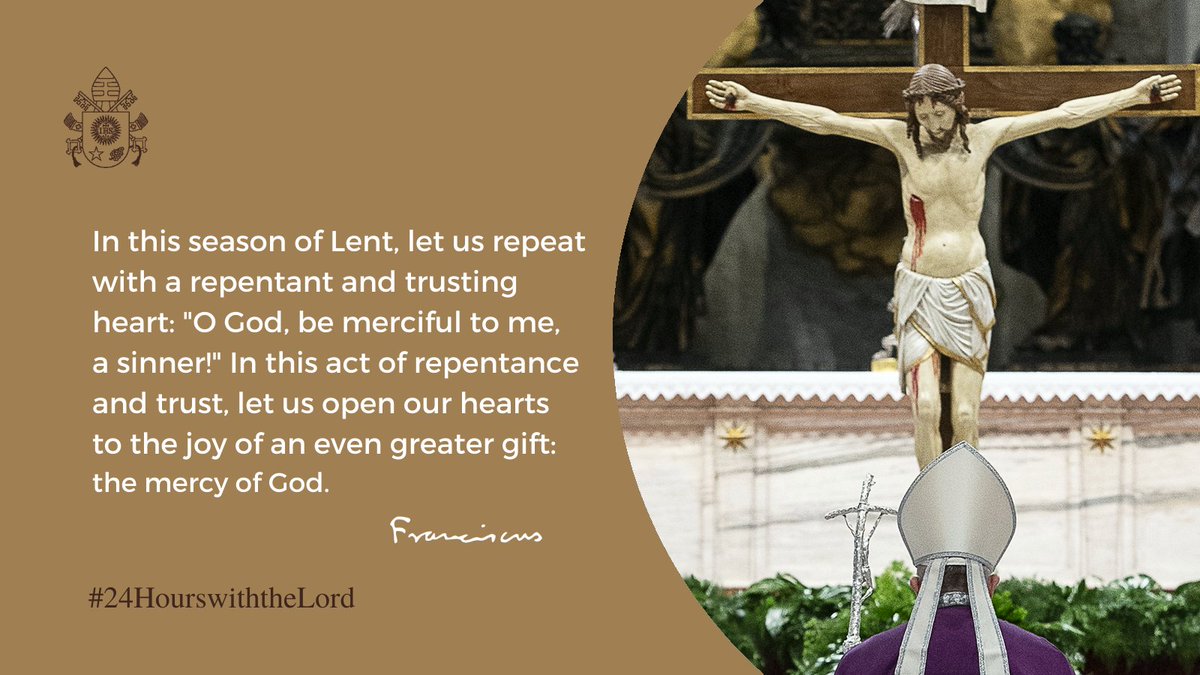
  • 17 March 2023 – ‘24 Hours for the Lord’’ Celebration of Reconciliation (Parish of Santa Maria delle Grazie al Trionfale)

Speeches

  • 16 March 2023 – To a Delegation of the United Association of Humanistic Buddhism (Taiwan)
  • 18 March 2023 – To the young people of the ‘Progetto Policoro’ promoted by the Italian Bishops’ Conference
  • 18 March 2023 – To Refugee Families through the Humanitarian Corridors
  • 20 March 2023 – To Members of the National Union of Traveling Fairground Workers (U.N.A.V.)

Papal Tweets

  • “Is your faith tired? Do you want to reinvigorate it? Look for God’s gaze: sit in adoration, allow yourself to be forgiven in Confession, stand before the Crucified One. In short, let him love you. #Lent” @Pontifex, 16 March 2023
  • “In Confession, let’s give God first place. Once he is in charge, everything becomes beautiful and confession becomes the Sacrament of joy, not of fear and judgement, but of joy. #24hourswiththeLord” @Pontifex, 17 March 2023
  • “#24HourswiththeLord https://t.co/fEkeNpiYeO Image” @Pontifex, 17 March 2023
  • “We are sinners and in need of mercy like the air we breathe. Willingness to convert – to allow ourselves to be purified, to change our lives – is a sign of courage, of strength. #Lent” @Pontifex, 18 March 2023
  • “Only those who are poor in spirit, in need of salvation, who beg for grace, present themselves before God without vaunting their merits, without pretense or presumption. Having nothing, they therefore find everything, because they find the Lord. #24HourswiththeLord” @Pontifex, 18 March 2023
  • “The Sacrament of Reconciliation is, and must be, a festive encounter that heals the heart and leaves us with inner peace. It is not a human tribunal to be afraid of, but a divine embrace by which we are consoled. #24HourswiththeLord” @Pontifex, 18 March 2023
  • “There is no acceptance without integration. People need to be accompanied from the beginning until they are truly integrated into our society. As Scripture bids us: “The stranger who resides with you shall be to you as the native among you” (Lev 19:34). m Speech” @Pontifex, 18 March 2023
  • “Yesterday in #Ecuador, an earthquake caused deaths, injuries and considerable damage. I am near to the Ecuadorian people and I assure you of my prayer for the deceased and for all who are suffering.” @Pontifex, 19 March 2023
  • “Today, we extend best wishes to all fathers! May they find in Saint Joseph a model, support and consolation to live their fatherhood well. Let us #PrayTogether for Fathers.” @Pontifex, 19 March 2023
  • “Let us ask the grace to be surprised every day by God’s gifts and to see the various circumstances of life, even the ones that are the most difficult to accept, as occasions to do good, as Jesus did with the blind man. #GospelOfTheDay (Jn 9:1–41)” @Pontifex, 19 March 2023
  • “Everyone can discover in #SaintJoseph a man who goes unnoticed, a man whose daily presence is discreet and hidden, an intercessor, a support, and a guide in difficult moments.” @Pontifex, 20 March 2023
  • “Every human person is sacred and inviolable. To ensure that a society has a future, it is necessary that a sense of respect be matured for the dignity of every person, no matter in what condition they find themselves.” @Pontifex, 21 March 2023
  • “The international community must work together to guarantee access and sanitation services for everyone, so that the right to water, which is none other than the right to life, to a future, to hope, might become a reality at the universal level.#WorldWaterDay” @Pontifex, 22 March 2023
  • “Chosen and loved by God, we are called to live ”as is fitting among the saints“ (Eph 5:3), to clothe ourselves with sentiments of goodness, humility, magnanimity, bearing the fruits of the Spirit. #GeneralAudience” @Pontifex, 22 March 2023

Papal Instagram

  • Franciscus
March 23, 2023 0 comment
0 FacebookTwitterGoogle +Pinterest
Newer Posts
Older Posts

About Me

Jeff Miller is a former atheist who after spending forty years in the wilderness finds himself with both astonishment and joy a member of the Catholic Church. This award-winning blog presents my hopefully humorous and sometimes serious take on things religious, political, and whatever else crosses my mind.

Conversion story

  • Catholic Answers Magazine
  • Coming Home Network

Appearances on:

  • The Journey Home
  • Hands On Apologetics (YouTube)
  • Catholic RE.CON.

Blogging since July 2002

Recent Posts

  • A Litany of Gratitude

  • The Spiritual Life and Memes

  • What is your distance from Jesus on the Cross?

  • Feast of St. Thomas, Apostle

  • Gratitude and Generosity

  • “The Heart and Center of Catholicism”

  • Post-Lent Report

  • Stay in your lane

  • Echoing through creation

  • Another Heaven

  • My Year in Books – 2024 Edition

  • I Have a Confession to Make

  • A Mandatory Take

  • Everybody is ignorant

  • Sacramental Disposal, LLC

  • TL;DH (Too Long;Didn’t Hear)

  • A Shop Mark Would Like

  • The Narrow Way Through the Sacred Heart of Jesus

  • Time Travel and Fixing Up Our Past

  • The Weekly Leo

  • The Weekly Leo

  • The Weekly Leo

  • The Weekly Leo

  • The Weekly Leo

Meta

I also blog at Happy Catholic Bookshelf Entries RSS
Entries ATOM
Comments RSS
Email: curtjester@gmail.com

What I'm currently reading

Subscribe to The Curt Jester by Email

Endorsements

  • The Curt Jester: Disturbingly Funny --Mark Shea
  • EX-cellent blog --Jimmy Akin
  • One wag has even posted a list of the Top Ten signs that someone is in the grip of "motu-mania," -- John Allen Jr.
  • Brilliance abounds --Victor Lams
  • The Curt Jester is a blog of wise-ass musings on the media, politics, and things "Papist." The Revealer

Archives

About Me

Jeff Miller is a former atheist who after spending forty years in the wilderness finds himself with both astonishment and joy a member of the Catholic Church. This award winning blog presents my hopefully humorous and sometimes serious take on things religious, political, and whatever else crosses my mind.
My conversion story
  • The Curt Jester: Disturbingly Funny --Mark Shea
  • EX-cellent blog --Jimmy Akin
  • One wag has even posted a list of the Top Ten signs that someone is in the grip of "motu-mania," -- John Allen Jr.
  • Brilliance abounds --Victor Lams
  • The Curt Jester is a blog of wise-ass musings on the media, politics, and things "Papist." The Revealer

Meta

I also blog at Happy Catholic Bookshelf Twitter
Facebook
Entries RSS
Entries ATOM
Comments RSS 2.0" >RSS
Email: curtjester@gmail.com

What I'm currently reading

Subscribe to The Curt Jester by Email

Commercial Interuption

Podcasts

•Catholic Answers Live Subscribe to Podcast RSS
•Catholic Underground Subscribe to Podcast RSS
•Catholic Vitamins Subscribe to Podcast RSS
•EWTN (Multiple Podcasts) Subscribe to Podcast RSS
•Forgotten Classics Subscribe to Podcast RSS
•Kresta in the Afternoon Subscribe to Podcast RSS
•SQPN - Tons of great Catholic podcasts Subscribe to Podcast RSS
•The Catholic Hack Subscribe to Podcast RSS
•The Catholic Laboratory Subscribe to Podcast RSS
•The Catholics Next Door Subscribe to Podcast RSS
•What does the prayer really say? Subscribe to Podcast RSS

Archives

Catholic Sites

  • Big Pulpit
  • Capuchin Friars
  • Catholic Answers
  • Catholic Lane
  • Crisis Magazine
  • New Evangelizers
  • Waking Up Catholic

Ministerial Bloghood

  • A Jesuit’s Journey
  • A Shepherd’s Voice
  • Ad Majorem Dei Gloriam
  • Adam’s Ale
  • Archbishop Dolan
  • Bonfire of the Vanities
  • Cardinal Sean’s Blog
  • Da Mihi Animas
  • Domine, da mihi hanc aquam!
  • Father Joe
  • Fr. Roderick
  • Godzdogz
  • Laus Crucis
  • Omne Quod Spirat, Laudet Dominum
  • Orthometer
  • Priests for Life
  • Servant and Steward
  • Standing on My Head
  • The hermeneutic of continuity
  • This Week at Vatican II
  • Waiting in Joyful Hope
  • What Does The Prayer Really Say?

Bloghood of the Faithful

  • A Catholic Mom Climbing the Pillars
  • A Catholic Mom in Hawaii
  • A Long Island Catholic
  • A Wing And A Prayer
  • Acts of the Apostasy
  • Ad Altare Dei
  • AdoroTeDevote
  • Against the Grain
  • Aggie Catholics
  • Aliens in this world
  • Always Catholic
  • American Chesterton Society
  • American Papist
  • Among Women
  • And Sometimes Tea
  • Ask Sister Mary Martha
  • auntie joanna writes
  • Bad Catholic
  • Bethune Catholic
  • Big C Catholics
  • Bl. Thaddeus McCarthy's Catholic Heritage Association
  • Catholic and Enjoying It!
  • Catholic Answers Blog
  • Catholic Fire
  • Catholic New Media Roundup
  • Charlotte was Both
  • Christus Vincit
  • Confessions of a Hot Carmel Sundae
  • Cor ad cor loquitur
  • Courageous Priest
  • Creative Minority Report
  • CVSTOS FIDEI
  • Dads Called to Holiness
  • Darwin Catholic
  • Defend us in Battle
  • Defenders of the Catholic Faith
  • Disputations
  • Divine Life
  • Domenico Bettinelli Jr.
  • Dominican Idaho
  • Dyspectic Mutterings
  • Ecce Homo
  • Ecclesia Militans
  • Eve Tushnet
  • Eye of the Tiber
  • feminine-genius
  • Five Feet of Fury
  • Flying Stars
  • For The Greater Glory
  • Get Religion
  • GKC’s Favourite
  • God’s Wonderful Love
  • Gray Matters
  • Happy Catholic
  • Ignatius Insight Scoop
  • In Dwelling
  • In the Light of the Law
  • InForum Blog
  • Jeff Cavins
  • Jimmy Akin
  • John C. Wright
  • La Salette Journey
  • Laudem Gloriae
  • Lex Communis
  • Life is a Prayer
  • Man with Black Hat
  • Maria Lectrix
  • Mary Meets Dolly
  • MONIALES OP
  • Mulier Fortis
  • Musings of a Pertinacious Papist
  • My Domestic Church
  • Nunblog
  • Oblique House
  • Open wide the doors to Christ!
  • Over the Rhine and Into the Tiber
  • Patrick Madrid
  • Pro Ecclesia * Pro Familia * Pro Civitate
  • Recta Ratio
  • Saint Mary Magdalen
  • Sonitus Sanctus
  • Southern-Fried Catholicism
  • St. Conleth's Catholic Heritage Association
  • Stony Creek Digest
  • Testosterhome
  • The Ark and the Dove
  • The B-Movie Catechism
  • The Crescat
  • The Daily Eudemon
  • The Digital Hairshirt
  • The Four Pillars
  • The Inn at the End of the World
  • The Ironic Catholic
  • The Lady in the Pew
  • The Lion and the Cardinal
  • The New Liturgical Movement
  • The Pulp.it
  • The Sacred Page
  • The Sci Fi Catholic
  • The Scratching Post
  • The Weight of Glory
  • The Wired Catholic
  • Two Catholic Men and a Blog
  • Unam Sanctam Catholicam
  • Video meliora, proboque; Deteriora sequor
  • Vivificat
  • Facebook
  • Twitter
  • Instagram
  • Pinterest
  • Email
  • Reddit
  • RSS

@2026 - www.splendoroftruth.com/curtjester. All Right Reserved. Designed and Developed by PenciDesign


Back To Top