The Curt Jester
  • Home
  • About
  • Rome Depot
  • WikiCatechism
  • Free Catholic eBooks
  • Home
  • About
  • Rome Depot
  • WikiCatechism
  • Free Catholic eBooks

The Curt Jester

"It is the test of a good religion whether you can joke about it." GKC

The Weekly Francis

The Weekly Francis – Volume 460

by Jeffrey Miller April 26, 2023
written by Jeffrey Miller
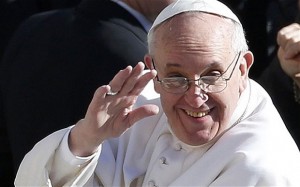
pope-francis2-300x187

The Weekly Francis is a compilation of the Holy Father’s writings, speeches, etc., which I also cross-post on Jimmy Akin’s blog.

This version of The Weekly Francis covers material released in the last week, from 19 April 2023 to 30 April 2023.

General Audiences

  • 19 April 2023 – General Audience – Catechesis. The passion for evangelization’ the apostolic zeal of the believer. 9. Witnesses’ the martyrs
  • 26 April 2023 – General Audience – The passion for evangelization’ the apostolic zeal of the believer. 2. Witnesses’ monasticism and the power of intercession. Gregory of Narek

Messages

  • 30 April 2023 – Message for the 60th World Day of Prayer for Vocations 2023

Regina Caeli

  • 23 April 2023 – Regina Caeli

Speeches

  • 20 April 2023 – To a Delegation of ‘Interfaith Leaders from Greater Manchester’ (Great Britain)
  • 20 April 2023 – To members of the Pontifical Biblical Commission
  • 21 April 2023 – To the members of the ‘Papal Foundation’
  • 22 April 2023 – To the Participants in the Plenary Assembly of the Dicastery for Laity, Family and Life
  • 22 April 2023 – To the Participants in the pilgrimage of thanksgiving for the Beatification of Armida Barelli
  • 26 April 2023 – To Members of the ‘Catholic Extension Society’

Papal Tweets

  • “Let us #PrayTogether that we may never tire of bearing witness to the Gospel, even in times of tribulation. May all the martyr saints be seeds of peace among peoples for a more humane and fraternal world, as we await the full manifestation of the Kingdom of Heaven.” @Pontifex, 19 April 2023
  • “Let us persevere in our closeness in prayer for dear and distressed #Ukraine, which continues to endure terrible suffering. Let us #PrayTogether.” @Pontifex, 19 April 2023
  • “God’s gaze never stops with our past filled of errors, but looks with infinite confidence at what we can become.” @Pontifex, 20 April 2023
  • “Praising God is like breathing pure oxygen: it purifies the soul, it makes you look far ahead, it does not leave you imprisoned in the difficult and dark moment of hardship.” @Pontifex, 21 April 2023
  • “The Book of Genesis tells us that the Lord entrusted human beings with the responsibility of being stewards of creation (Gen 2:15). Care for the Earth, then, is a moral obligation for all men and women as children of God. #EarthDay @EarthDay” @Pontifex, 22 April 2023
  • “The #GospelOfToday (Lk 24: 13–35) invites us to tell Jesus everything, sincerely, without fear of saying the wrong thing. The Lord is happy whenever we open ourselves to Him; only in this way can He take us by the hand, accompany us and make our hearts burn again.” @Pontifex, 23 April 2023
  • “Next Friday I will go to Budapest, in Hungary. It will be a journey to the centre of Europe, over which the icy winds of war continue to blow, while the displacement of so many people puts urgent humanitarian questions on the agenda.” @Pontifex, 23 April 2023
  • “Dear Hungarian brothers and sisters, I know you are making great efforts to prepare for my arrival: I thank you from my heart. And I ask you all to accompany me with your prayers.” @Pontifex, 23 April 2023
  • “Using weapons to resolve conflicts is a sign of weakness and fragility. Negotiation, proceeding in mediation, and conciliation require courage. #Peace” @Pontifex, 24 April 2023
  • “We discover we are children of God at the moment we discover we are brothers and sisters, children of the same Father. This is why it is essential to be part of a journeying community. No one goes to the Lord alone.” @Pontifex, 25 April 2023
  • “This year, for the World Day of Prayer for #Vocations, I would ask you, in your reflection and prayer, to take as your guide the theme “Vocation: Grace and Mission”. xLCuT Message” @Pontifex, 26 April 2023
  • “Monks and nuns are the beating heart of the proclamation of the Gospel: their prayer is oxygen for all the members of the Body of Christ, the invisible force that sustains the mission. #GeneralAudience” @Pontifex, 26 April 2023

Papal Instagram

  • Franciscus
April 26, 2023 0 comment
0 FacebookTwitterGoogle +Pinterest
My Reflection on Sunday’s Gospel Luke 24:13–35
Scripture

My Reflection on Sunday’s Gospel Luke 24:13–35

by Jeffrey Miller April 23, 2023
written by Jeffrey Miller

Luke 24.13–35 ESV – On the Road to Emmaus – Bible Gateway


In the Gospel of Mark, the story of the two disciples on the road to Emmaus is limited to just Mark 16:12–13:

12 After these things he appeared in another form to two of them, as they were walking into the country. 13 And they went back and told the rest, but they did not believe them.

In Mark, neither disciple is named or their destination. We can be thankful for the extensive treatment Luke gives this beautiful story. This occurs later on the same day as the Resurrection. There are disputes on the location of Emmaus and just how far it was from Jerusalem. But these same disciples could apparently return to Jerusalem to meet with the Apostles on the same night.

16 But their eyes were kept from recognizing him.

Jimmy Akin comments on this in a post on The Post-Resurrection Appearances of Jesus.

In the case of the two disciples on the road to Emmaus (Luke 24:13–32), it was because they were deliberately stopped from recognizing him. The text explicitly tells us that “their eyes were kept from recognizing him” (Luke 24:19). In order to teach them a lesson and make a big impact with it, Jesus stopped them from recognizing him so that he could do what a cinematographer would call a “dramatic reveal.” (There is also a likely element of playfulness here.)

He also mentions that “Philosophers call the kind of situation where you look at something but don’t notice or recognize it “non-cognitive seeing.”” Jimmy also goes into the parallels with other Gospel instances where people close to him failed to recognize him after the Resurrection.

They interacted with Jesus where “they consider themselves to be more knowledgeable than this visitor, who seems ignorant of the things that have taken place.”[1] and later “Now there is a role reversal regarding who is knowledgeable and who is ignorant, as it is the stranger’s turn to give an explanation. Regarding faith, he upbraids them for being slow of heart to believe Scripture. If they truly believed all that the prophets spoke, then they would have believed what the women spoke.”[2]

I found what Brant Pitre says on this is instructive:

Number one, notice he does upbraid them. He does rebuke them and he says “you foolish men, slow of heart to believe all the prophets have spoken.” Now I remember years ago when I was doing a video on this—like a lecture—on the road to Emmaus, I made a mistake. I said that Jesus upbraided them for not knowing the Scriptures. And somebody came up to me after the talk and said “Dr. Pitre, I don’t mean to be rude but I think you made a mistake. Jesus does not upbraid them for not knowing the Scriptures, he upbraids them for not believing the Scriptures.” And that’s true. That’s exactly what he said. They, as Jews, they would’ve known the prophets. The problem is they don’t believe. They are lacking faith.[3]

This got me to thinking about knowledge and living out the faith. If I pile up knowledge upon knowledge and don’t live out the faith, it is only an abstract game. I constantly need this reminder to let whatever knowledge I might have to strengthen and live out my faith. Looking at the world and the actions of members of the Church, it is easy to get dejected, forgetting that Jesus warned us of the cross to come and that faith often would not be comfy, but lived out in trust.

Peter Kreeft, in his commentary, writes:

And when Jesus interpreted all the passages in the Scriptures that referred to him, everything suddenly lit up for the two disciples and made sense, even the shocking prophecies that the Messiah would have to suffer. How did Jesus light up the Scriptures? What was Jesus’ method? We should imitate it. It really worked, for the text tells us that afterward, the two disciples said, “Were not our hearts burning within us while he spoke to us on the way and opened the Scriptures to us?” Jesus spoke to the heart, not just to the head. He was not a scholarly professor; he was a lover interpreting a love letter. And the disciples got it because their hearts were seeking it, their hearts were right, their hearts were in love with the right thing, the thing the Messiah was designed to bring them: salvation from sin; sanctity, charity, love. Jesus’ explanation worked because it was heart to heart, not just head to head. And “heart” here means something much deeper than feeling or emotion. It was wisdom, intuition, spiritual intelligence, understanding, seeing deeply because you love deeply that which is most deeply worth loving.[4]

I have heard many lament that fact that we don’t know exactly what the passages Jesus referred to in the Old Testament were. Or how much they would have loved to hear Jesus’ exposition. I can join them in this desire, but I also think about the fact that how Jesus taught this is also very instructive. He was not just stringing a bunch of verses together to make his point.

Returning to Dr. Pitre:

Now why is that so important? Well for me personally, one of the reasons this is important is because it gives me the model of how to do biblical studies, of how to to teach about the Scriptures, to teach the word of God; which is this, always go back to the Old Testament. Always go back to the beginning. Always start with Genesis and walk through the Scriptures looking for the signs and the shadows that point forward to what God is going to do in Jesus Christ. In other words, Jesus’ method of interpreting the Scripture is you start with the Old Testament and you interpret it (what’s called) typologically. Typology means the study of Old Testament prefigurations (events, realities, signs and things) that point forward to and are fulfilled in the New Testament, in the new covenant of Jesus—in his life, his, death and his resurrection.[5]

It is also instructive that have this exegesis from Jesus, their eyes were not yet opened to seeing him. What happens next draws many parallels between events in Jesus’ ministry up to that point and to the future of the Church.

Dr. John Bergsma points out:

The disciples press Jesus to stay with them for the night, and at the evening meal, he “takes, blesses, breaks, and gives” the bread to those present. Luke employs this same sequence of four verbs in his account of the Feeding of the Five Thousand and at the Institution of the Eucharist; it became almost a technical phrase for Eucharistic celebration in the early Church. This helps us to understand the significance of their “recognition” of him and his sudden vanishing from their sight. This is meant as Eucharistic instruction for us: we should “recognize” Jesus in the broken bread and no longer seek for an apparition of him because he is truly present with us in the Eucharistic host.[6]

I remember that early in the days when I had shed my atheism and was searching for the church and not understanding what church I was searching for; I came across the story of the Emmaus road. When Jesus vanishes from their sight, this really hit me with the Eucharistic overtones. I did not know what the various understandings involving the Eucharist were in the various churches. I only knew that this was really important. This was something fundamental to what I was searching for. This was such an epiphany to me it burned the time and place in me. So it is not surprising that later it was the Eucharist I believed in, and the Catholic understanding of it, that was decisive for me.

Dr. Bergsma also writes:

To this day, Emmaus Road presents us with the ideal form of Mass.[7]

I also came across this in the Catholic Commentary on Sacred Scripture on Luke:

This meal at Emmaus is the first meal of the new creation.”[8]

That commentary also pointed out this paragraph from Pope Benedict’s XVI Verbum Domini: Post-Synodal Apostolic Exhortation on the Word of God in the Life and Mission of the Church (30 September 2010)

Luke’s account of the disciples on the way to Emmaus enables us to reflect further on this link between the hearing of the word and the breaking of the bread… . The presence of Jesus, first with his words and then with the act of breaking bread, made it possible for the disciples to recognize him… . From these accounts it is clear that Scripture itself points us towards an appreciation of its own unbreakable bond with the Eucharist… . Word and Eucharist are so deeply bound together that we cannot understand one without the other: the word of God sacramentally takes flesh in the event of the Eucharist. The Eucharist opens us to an understanding of Scripture, just as Scripture for its part illumines and explains the mystery of the Eucharist.[9]

Pulling from the Catechism:

1346 The liturgy of the Eucharist unfolds according to a fundamental structure which has been preserved throughout the centuries down to our own day. It displays two great parts that form a fundamental unity: (CCC 103)

  • the gathering, the liturgy of the Word, with readings, homily, and general intercessions;
  • the liturgy of the Eucharist, with the presentation of the bread and wine, the consecratory thanksgiving, and communion

The liturgy of the Word and liturgy of the Eucharist together form “one single act of worship”; the Eucharistic table set for us is the table both of the Word of God and of the Body of the Lord.[10]

One last point, when I read in verse 24:16 that their eyes were opened, I wondered if this was an allusion to Genesis:

Whereas previously “their eyes were prevented from recognizing him” (24:16), now their eyes were opened. This exact expression (of three consecutive words in Greek) occurs elsewhere in Scripture only in the account of the fall in Genesis, which similarly occurs during a meal involving taking and giving and results in the recognition of a hidden reality: “The eyes of the two were opened, and they knew …” (Gen 3:7 NETS).[11]

References

  • The Gospel of Luke, Catholic Commentary on Sacred Scripture, Rev. Pablo T. Gadenz
  • Catholic Productions, Commentaries by Brant Pitre
  • Peter Kreeft, Food for the Soul: Reflections on the Mass Readings Cycle A
  • The Word of the Lord: Reflections on the Sunday Mass Readings for Year A – John Bergsma
  • Catechism of the Catholic Church, 2nd Edition
  • Photo by Ben White on Unsplash

  1. The Gospel of Luke, Catholic Commentary on Sacred Scripture, Rev. Pablo T. Gadenz  ↩
  2. ibid  ↩
  3. Catholic Productions, Brant Pitre, Third Sunday in Easter, Year A  ↩
  4. Peter Kreeft, Food for the Soul: Reflections on the Mass Readings Cycle A, , Third Sunday in Easter  ↩
  5. Catholic Productions, Brant Pitre, Third Sunday in Easter, Year A  ↩
  6. The Word of the Lord: Reflections on the Sunday Mass Readings for Year A, John Bergsma, Third Sunday in Easter  ↩
  7. ibid  ↩
  8. Arthur A. Just Jr., The Ongoing Feast: Table Fellowship and Eschatology at Emmaus (Collegeville, MN: Liturgical Press, 1993)  ↩
  9. Benedict XVI, Verbum Domini 54–55.  ↩
  10. Catholic Church. (2000). Catechism of the Catholic Church (2nd Ed). United States Catholic Conference.  ↩
  11. The Gospel of Luke, Catholic Commentary on Sacred Scripture, Rev. Pablo T. Gadenz  ↩
April 23, 2023 0 comment
0 FacebookTwitterGoogle +Pinterest
The Weekly Francis

The Weekly Francis – Volume 459

by Jeffrey Miller April 19, 2023April 19, 2023
written by Jeffrey Miller
pope-francis2-300x187

The Weekly Francis is a compilation of the Holy Father’s writings, speeches, etc., which I also cross-post on Jimmy Akin’s blog.

This version of The Weekly Francis covers material released in the last week, from 12 April 2023 to 18 April 2023.

General Audiences

  • 12 April 2023 – General Audience – Catechesis. The passion for evangelization’ the apostolic zeal of the believer. 9. Witnesses’ Saint Paul. 2

Regina Caeli

  • 16 April 2023 – Regina Caeli

Speeches

  • 14 April 2023 – To the Directors and Staff of ITA Airways
  • 14 April 2023 – To a Delegation of Diocesan Oblate Brothers
  • 15 April 2023 – To the Members of the ‘Fundación Madre de la Esperanza de Talavera de la Reina’, of Toledo (Spain)
  • 15 April 2023 – To the Pilgrimage of the Diocese of Crema (Italy)
  • 17 April 2023 – To a Delegation of the Community of the Beatitudes

Papal Tweets

  • “Brothers and sisters, filled with the joy of the Risen Christ, let us ask the grace of being a Church ”moving out“, the community of missionary disciples taking initiative and committed to proclaim the Gospel of peace and mercy. #GeneralAudience #Easter” @Pontifex, 12 April 2023
  • “60 years ago, St. John XXIII addressed the Encyclical ”Pacem in terris“ to the Church and to the world. I invite everyone to read it, because it is more timely than ever. And I pray that the heads of nations might allow it to inspire projects and decisions yIneqi Vatican” @Pontifex, 12 April 2023
  • “Our wounds can be passages, openings that, in imitating the wounds of the Lord, allow God’s mercy to enter. His grace changes our lives and makes us artisans of #peace and reconciliation.” @Pontifex, 13 April 2023
  • “Let us welcome the grace of Christ’s Resurrection! Let us be renewed by God’s mercy. Let us allow the power of His love to transform our lives too. And let us become agents of this mercy so justice and peace can flourish in the world.” @Pontifex, 14 April 2023
  • “Today, with the world torn always more by war, distancing itself from God, we have all the more need of the Father’s mercy. Let us #PrayTogether #DivineMercy” @Pontifex, 15 April 2023
  • “On this Divine Mercy Sunday, certain of interpreting the feelings of the faithful throughout the world, I direct a grateful thought to the memory of Saint John Paul II, the object of offensive and unfounded inferences these past few days.” @Pontifex, 16 April 2023
  • “Let us #PrayTogether for the victims of war, which continue to sow death in horrific ways, asking God that the world might never more have to experience the shock of violent death by the human hand, but the awe of the life that He gives and renews with His grace!” @Pontifex, 16 April 2023
  • “I express my closeness to all our brothers and sisters who are celebrating Easter today. Dear brothers and sisters, may the Risen Lord be with you and fill you with His Holy Spirit! Happy Easter to all of you!” @Pontifex, 16 April 2023
  • “The wounds of the risen Jesus are the signs of the Love that overcomes hatred, of the Pardon that disarms revenge, of the Life that conquers death. #GospelOfTheDay (Jn 20:19–3) #DivineMercy” @Pontifex, 16 April 2023
  • “If you have dreams of true glory, not the glory of this passing world, but of the glory of God, this is the path to follow: the works of #mercy give glory to God more than any other thing.” @Pontifex, 17 April 2023
  • “Our hope is called Jesus. He is alive and evil has no more power over Him. Failure cannot prevent us from beginning again, and death becomes the passage to the beginning of a new life. #Easter” @Pontifex, 18 April 2023

Papal Instagram

  • Franciscus
April 19, 2023April 19, 2023 0 comment
0 FacebookTwitterGoogle +Pinterest
My Reflection on Sunday’s Gospel John 20:19-31
Scripture

My Reflection on Sunday’s Gospel John 20:19-31

by Jeffrey Miller April 16, 2023April 16, 2023
written by Jeffrey Miller

John 20:19–31 ESV – Bible Gateway


This Gospel passage is used on the Second Sunday of Easter for each liturgical year. The use of these verses goes back to before the liturgical reform of the lectionary and is the same reading still used for the Tridentine Rite of the Church. The reason being is that it details also the second appearance of Jesus to the Apostles “eight days later” and so is perfectly fitting for the Second Sunday of Easter.

Confession is very much the Sacrament of Divine Mercy. So it’s fitting that on this day we will both recall the appearance to Thomas that took place eight days after the resurrection and the institution of Confession which is the Sacrament of Divine Mercy. [1]

The Apostles gathered together are basically hunkering down for the duration. Gathered together in a locked room. “Proper residences were equipped with bolts and locks. Bolted doors would prevent anyone from entering (a heavy bolt could be slid through rings attached to the door and its frame).”[2] They are in fear, in fact, fear for their lives. As John writes “For fear of the Jews, they were hiding out.” They would have been afraid of any knock on the door. Jesus mysteriously comes and stands among them. Such an awkward moment as they both fear and rejoice at seeing Jesus again.

John Bergsma comments on this:[3]

The last time he saw this band of eleven men, he was looking at their backs, in the dark, as they all ran away from him rather than accompany him through his suffering and death (Matt 26:56). But Jesus does not mention this. He does not say, “Hey guys! Guess you didn’t think you’d see me again! Thanks for sticking by me there, in my hour of need.” Instead, he overlooks their dismal infidelity, and the word of Jesus is simply, “Peace be with you.”

Jesus would say “Peace be with you.” twice in this first encounter and again during the second one. They really need to let their fear go and for the peace of Christ to settle on them. Jesus is completing the commission he started at the Last Supper when he breaths on them and gives them the ability to forgive and retain sins.

When Jesus does this it recalls the book of Genesis when it says that “God breathed into the clay,” “breathed into the nostrils of Adam and he became a living being.” So what Jesus is doing here is, in a sense, inaugurating once again the new creation. But in this case the power that is being revealed through that action is not the Sacrament of Baptism as with the man born blind, but here it is the power to forgive and retain sin that will be passed down in the Church through the Sacrament of Reconciliation, through the Sacrament of Confession.[4]

The Council of Trent says:

“The Church has always understood—and has in fact defined—that Jesus Christ here conferred on the Apostles authority to forgive sins, a power which is exercised in the sacrament of Penance. ‘The Lord then especially instituted the sacrament of Penance when, after being risen from the dead, he breathed upon his disciples and said: “Receive the Holy Spirit.…” The consensus of all the Fathers has always acknowledged that by this action so sublime and words so clear the power of forgiving and retaining sins was given to the Apostles and their lawful successors for reconciling the faithful who have fallen after Baptism’ (Council of Trent, De Paenitentia, chap. 1).

Now we come to the Apostle Thomas who is now with the other Apostles on this second encounter with the risen Christ. We don’t know why he was not there the first time. Yet it is to our edification that he wasn’t.

St. Gregory the Great[5]

It was not an accident that that particular disciple was not present. The divine mercy ordained that a doubting disciple should, by feeling in his Master the wounds of the flesh, heal in us the wounds of unbelief. The unbelief of Thomas is more profitable to our faith than the belief of the other disciples. For the touch by which he is brought to believe confirms our minds in belief, beyond all question

When he joins up with them he is told the story about how Jesus came upon them although the doors were locked. There is one distinct difference between how the other Apostles acted and how Thomas acted. When Mary Magdalene informed the Apostles, Peter and John ran to the tomb. Based on witness testimony they were willing to believe that this might be true and dashed off to verify it. Thomas on the other hand heard testimony from his friends and did not believe them. He not only discounted his friends but was not even willing to see how this was consistent with what Jesus told them ahead of time. He demands empirical proof, but when Jesus offers him that very proof—he no longer demands or needs it.

New Testament scholar John Barclay writes:

“There was no halfway house about Thomas. He was not airing his doubts just for the sake of mental acrobatics; he doubted in order to become sure; and when he did, his surrender to certainty was complete. And when a man fights his way through his doubts to the conviction that Jesus Christ is Lord, he has attained to a certainty that the man who unthinkingly accepts things can never reach.”

One consideration from Brant Pitre, regarding what Jesus asks Thomas:

Since ancient Greek manuscripts do not use punctuation marks, it is not clear whether Jesus’ words to Thomas in 20:29a are a question or a statement. The NABRE translates it as a question, Have you come to believe because you have seen me?, which hints at disapproval that Thomas needed tangible proof to believe. However, it is also possible to translate it as a statement, “You have believed because you have seen me,” in which case Jesus does not disapprove of Thomas’s faith but simply declares that Thomas has arrived at full Easter faith because of the tangible proof that has been given him.

The Catechism [6] in paragraph 156 says:

156 What moves us to believe is not the fact that revealed truths appear as true and intelligible in the light of our natural reason: we believe “because of the authority of God himself who reveals them, who can neither deceive nor be deceived.”[1] So “that the submission of our faith might nevertheless be in accordance with reason, God willed that external proofs of his Revelation should be joined to the internal helps of the Holy Spirit.”[2] Thus the miracles of Christ and the saints, prophecies, the Church’s growth and holiness, and her fruitfulness and stability “are the most certain signs of divine Revelation, adapted to the intelligence of all”; they are “motives of credibility” (motiva credibilitatis), which show that the assent of faith is “by no means a blind impulse of the mind.

  • Photo by Ben White on Unsplash

My References


  1. Catholic Productions, Brant Pitre  ↩
  2. St. John’s Gospel: A Bible Study Guide and Commentary for Individuals and Groups. Steve Ray, 2002  ↩
  3. The Word of the Lord: Reflections on the Sunday Mass Readings for Year C, John Bergsma  ↩
  4. Catholic Productions, Brant Pitre  ↩
  5. Gregory the Great, Forty Gospel Homilies 26; trans. J. C. Elowsky, ACCS, p. 367  ↩
  6. Catholic Church. (2000). Catechism of the Catholic Church (2nd Ed). United States Catholic Conference.  ↩
April 16, 2023April 16, 2023 0 comment
0 FacebookTwitterGoogle +Pinterest
The Weekly Francis

The Weekly Francis – Volume 458

by Jeffrey Miller April 11, 2023April 11, 2023
written by Jeffrey Miller
pope-francis2-300x187

The Weekly Francis is a compilation of the Holy Father’s writings, speeches, etc., which I also cross-post on Jimmy Akin’s blog.

This version of The Weekly Francis covers material released in the last week, from 5 April 2023 to 11 April 2023.

General Audiences

  • 5 April 2023 – General Audience – Catechesis. ‘The Crucifix, well-spring of hope’

Homilies

  • 6 April 2023 – Holy Chrism Mass
  • 6 April 2023 – Mass of the Lord’s Supper (Prison for Minors ‘Casal del Marmo’, Rome)
  • 8 April 2023 – Easter Vigil in the Holy Night of Easter

Messages

  • 9 April 2023 – ‘Urbi et Orbi’ – Easter 2023

Regina Caeli

  • 10 April 2023 – Regina Caeli, Easter Monday

Papal Tweets

  • “During these holy days, let’s draw near the Crucified One. Let’s place ourselves before him, stripped, to take an honest look at ourselves, removing whatever is superfluous. Let’s look at him, wounded, and place our wounds in his. Let’s let Jesus regenerate hope in us. #HolyWeek” @Pontifex, 5 April 2023
  • “Without the Lord’s Spirit, there can be no Christian life. Without his anointing, there can be no holiness. It is fitting that today, on the birthday of the priesthood, we acknowledge that He is at the origin of the ministry, the life and vitality of every Pastor. #HolyThursday” @Pontifex, 6 April 2023
  • “On the cross, Jesus refused to yield to despair, but he prayed and entrusted Himself to the Father. In His abandonment, he continued to love and forgive His crucifiers. Jesus, in His abandonment, asks us to see and have a heart for the many ”abandoned Christs“.” @Pontifex, 7 April 2023
  • “#ViaCrucis #GoodFriday U Image” @Pontifex, 7 April 2023
  • “Today the power of Easter calls you to roll away every stone of disappointment and mistrust. The Lord is an expert in rolling back the stones of sin and fear. He wants to illuminate your sacred memory, your most beautiful memory, to make you relive your first encounter with him.” @Pontifex, 8 April 2023
  • “Let us revive the beauty of that moment when we realized that he is alive and we made him the Lord of our lives. Let us return to Galilee. Let each of us return to his or her own Galilee, to the place where we first encountered him. Let us rise to new life!” @Pontifex, 8 April 2023
  • “Let us make haste to surmount our conflicts and divisions, and to open our hearts to those in greatest need. Let us hasten to pursue paths of peace and fraternity.” @Pontifex, 9 April 2023
  • “To rise again, to start anew, to take up the journey, we always need to return to Galilee, that is, to go back to the living, concrete and palpable memory of our first encounter with him.” @Pontifex, 9 April 2023
  • “#Easter yeultk Image” @Pontifex, 9 April 2023
  • “Jesus, the Living One, is with us, forever. Let the Church and the world rejoice, for today our hopes no longer come up against the wall of death, for the Lord has built us a bridge to life.” @Pontifex, 9 April 2023
  • “May we allow ourselves to experience amazement at the joyful proclamation of Easter, at the light that illumines the darkness and the gloom in which, all too often, our world finds itself enveloped.” @Pontifex, 9 April 2023
  • “The #GospelOfToday lets us relive the women’s encounter with the Risen Jesus on Easter morning. Jesus meets them while they are going to announce him. This is beautiful: when we proclaim the Lord, the Lord comes to us. #Easter” @Pontifex, 10 April 2023
  • “When hope is spent and we feel loneliness in our hearts, inner weariness, the torment of sin, the fear of failure, let us return to Jesus. For He is the only one who always defeats death and always renews our life. #Easter” @Pontifex, 11 April 2023

Papal Instagram

  • Franciscus
April 11, 2023April 11, 2023 0 comment
0 FacebookTwitterGoogle +Pinterest
“Jesus is Risen” and odd thoughts that come to me
Liturgy

“Jesus is Risen” and odd thoughts that come to me

by Jeffrey Miller April 9, 2023April 9, 2023
written by Jeffrey Miller

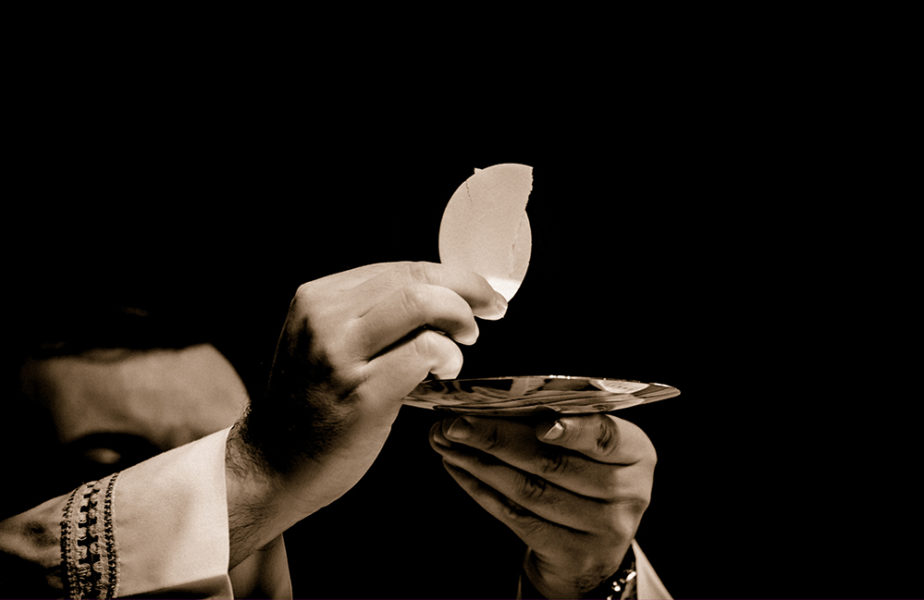
Weird ways my mind works. When I read/hear the awesome fact that Jesus is risen, having this in mind, I think it is ironic that in the Latin Rite for the Eucharist, the bread is unleavened.

I also find it interesting that the practice of using unleavened bread arose in the West in the 9th century.

… the change to unleavened bread. Alcuin and his pupil Rabanus Maurus are the first indisputable witnesses to this new practice, .. which spread only very slowly. The increased reverence for the Sacrament probably helped to introduce the use of the pure white wafers which could be so much more easily broken without worry about crumbs. (Joseph Jungman, S.J. “The Mass of the Roman Rite: Its Origins and Development”)

From the Catholic Encyclopedia (1917):

but leavened bread in the Eastern Church, except among the Maronites, the Armenians, and in the Churches of Jerusalem and Alexandria, where it is unleavened. It is probable that Christ used unleavened bread at the institution of the Blessed Eucharist, because the Jews were not allowed to have leavened bread in their houses on the days of the Azymes.

I was surprised at this history since I assumed that unleavened bread would have been the norm since this is what Jesus likely used at the Last Supper and that it has a greater sign value in relation to the institution of the Jewish Passover and the Exodus. I seems, at least in the West, this development was tied to the fact that in the early Church there was no manufacturing of specific Eucharistic hosts and thus commonly available bread was used.

In Lawrence Feingold’s, “The Eucharist”:

In the Latin rite, the bread must be unleavened, according to CIC, canon 926. This practice reflects the fact that Christ instituted the Last Supper on the first night of Passover, and so He would have used unleavened bread. In the Eastern tradition, however, leavened bread is used.

St. Thomas poses the question in the Summa of Theology as to whether the matter for the Eucharist is leavened or unleavened bread, and responds as follows:

Two things may be considered touching the matter of this sacrament namely, what is necessary, and what is suitable. It is necessary that the bread be wheaten, without which the sacrament is not valid, as stated above. It is not, however, necessary for the sacrament that the bread be unleavened or leavened, since it can be celebrated in either.

But it is suitable that every priest observe the rite of his Church in the celebration of the sacrament. Now in this matter there are various customs of the Churches: for, Gregory says: “The Roman Church offers unleavened bread, because our Lord took flesh without union of sexes: but the Greek Churches offer leavened bread, because the Word of the Father was clothed with flesh; as leaven is mixed with the flour.” Hence, as a priest sins by celebrating with fermented bread in the Latin Church, so a Greek priest celebrating with unfermented bread in a church of the Greeks would also sin, as perverting the rite of his Church. Nevertheless the custom of celebrating with unleavened bread is more reasonable. First, on account of Christ’s institution: for He instituted this sacrament “on the first day of the Azymes” (Matthew 26:17; Mark 14:12; Luke 22:7), on which day there ought to be nothing fermented in the houses of the Jews, as is stated in Exodus 12:15–19. Secondly, because bread is properly the sacrament of Christ’s body, which was conceived without corruption, rather than of His Godhead, as will be seen later (76, 1, ad 1). Thirdly, because this is more in keeping with the sincerity of the faithful, which is required in the use of this sacrament, according to 1 Corinthians 5:7: “Christ our Pasch is sacrificed: therefore let us feast … with the unleavened bread of sincerity and truth.”

However, this custom of the Greeks is not unreasonable both on account of its signification, to which Gregory refers, and in detestation of the heresy of the Nazarenes, who mixed up legal observances with the Gospel

April 9, 2023April 9, 2023 0 comment
0 FacebookTwitterGoogle +Pinterest
Pray Twice
Sacred Music

Pray Twice

by Jeffrey Miller April 8, 2023April 8, 2023
written by Jeffrey Miller

This morning my parish chanted Morning Prayer, finishing up the Triduum.

I just love this so much. I wish I could do it every day. I am not much of a prayer in community guy. I always feel I am reciting more than praying or that I am less focused. Chanting the morning prayer in community feels significantly different for me, where I can linger more on the words of the Psalms.

While there is no evidence that St. Augustine wrote/said, “He who sings, prays twice!”, that does not disprove the aphorism. From his other writings, I think he would have approved of the meaning of this, especially being taught/formed under the great hymn writer St. Ambrose.

Sacred music influenced my conversion, and to an extent, this is also true of my hopeful continuing conversion. Beauty can drive us to our knees to worship God, “O Beauty, even ancient, ever new” to refer again to St Augustine.

April 8, 2023April 8, 2023 1 comment
0 FacebookTwitterGoogle +Pinterest
The Weekly Francis

The Weekly Francis – Volume 457

by Jeffrey Miller April 4, 2023April 4, 2023
written by Jeffrey Miller
pope-francis2-300x187

The Weekly Francis is a compilation of the Holy Father’s writings, speeches, etc., which I also cross-post on Jimmy Akin’s blog.

This version of The Weekly Francis covers material released in the last week, from 30 March 2023 to 4 April 2023.

Angelus

  • 2 April 2023 – Angelus

Apostolic Letter

  • 2 April 2023 – Apostolic Letter issued ‘Motu Proprio’ of the Supreme Pontiff Francis modifying the terms of recourse of a member dismissed from an Institute of Consecrated Life

Homilies

  • 2 April 2023 – Palm Sunday

Speeches

  • 3 April 2023 – To Directors and employees of the National Institute for Social Security (Istituto Nazionale della Previdenza Sociale – INPS),

Papal Tweets

  • “Let us #PrayTogether for a more widespread culture of non-violence, that will progress when countries and citizens alike resort less and less to the use of arms. #PrayerIntention #ClickToPray Video” @Pontifex, 30 March 2023
  • “I am touched by the many messages received in these hours and I express my gratitude for the closeness and prayer.” @Pontifex, 30 March 2023
  • “When experienced with faith, the trials and difficulties of life serve to purify our hearts, making them humbler and thus more and more open to God. #Lent” @Pontifex, 31 March 2023
  • “Living #HolyWeek means entering ever more deeply into God’s logic, into the logic of the Cross, which is not primarily that of suffering and death, but rather that of love and of the gift of self that brings life.” @Pontifex, 1 April 2023
  • “I thank everyone for their closeness and prayer. I entrust the sick to Mary, especially the youngest, like those I met in the oncology ward at Gemelli. Let us pray for those who suffer the loss of dear ones and for those who work in hospitals. It takes courage. I admire them. https://t.co/WBUBDEmzdW Image” @Pontifex, 1 April 2023
  • “On the cross, Christ put Himself in solidarity with us so that each of us can say: In my failures, in my desolation, when I feel betrayed and abandoned, You are there, Jesus. When I feel I can’t take it anymore, you are with me. In all my unanswered “why’s”, you are with me.” @Pontifex, 2 April 2023
  • ““My God, my God, why have you forsaken me?” (Mt 27:46). These are the words that bring us to the very heart of Christ’s passion, the culmination of the sufferings He bore to save us. #PalmSunday” @Pontifex, 2 April 2023
  • “Abandoned, Christ stirs us to seek and love Him in the abandoned. For they are not only people in need, but He is there – Jesus abandoned – the One who saved us by descending to the depths of our human condition. #PalmSunday” @Pontifex, 2 April 2023
  • “God chose to enter into our human history the most difficult way possible: the cross. This way, no one could ever be so desperate and not to be able to find Him, even in the midst of anguish and abandonment. God arrived in the very place we didn’t think He could be.” @Pontifex, 3 April 2023
  • “During these days of Holy Week, let us #PrayTogether more intensely for the war-torn people of Ukrainia, and for all peoples experiencing war, that with God’s help, paths of peace might be opened.” @Pontifex, 3 April 2023
  • “From the Cross forgiveness poured forth and fraternal love was reborn: the Cross makes us brothers and sisters. #HolyWeek” @Pontifex, 4 April 2023

Papal Instagram

  • Franciscus
April 4, 2023April 4, 2023 0 comment
0 FacebookTwitterGoogle +Pinterest
24 Years as a Catholic
conversion

24 Years as a Catholic

by Jeffrey Miller April 4, 2023
written by Jeffrey Miller

Since today is my 24th anniversary of my entering the Catholic Church.

“You have no idea how much nastier I would be if I was not Catholic. Without supernatural aid I would hardly be a human being.” – Evelyn Waugh

People wonder why bad things happen to good people. I wonder why good things happen to bad people. So I am wondrously happy at the gift of grace and wished I showed a commensurate gratitude for it.

As I have been forgiven much, my love should be such as the woman who wet Jesus’ feet with her tears.

I was thinking about today’s Gospel where Jesus was deeply troubled by the person who would betray him. Peter would say that he would lay down his life for him, even though he would shortly betray him.

I also read this:

“The loving glance of the Master had saved him. Because Peter no longer relied on himself, Jesus could rely upon him and would entrust His flock to him. The lesson is clear. As long as a soul depends solely upon itself, it is not ready to be sanctified, nor to cooperate efficaciously in the sanctification of others.”

Father Gabriel of St. Mary Magdalen, O.C.D “Divine Intimacy”

I also noticed this paraphrased headline:

“there is a danger of triumphalism by receiving baptized Christians” into the Catholic Church at the Easter Vigil.”

This article is ridiculous, even for America Mag. It reads like a pet peeve held before he entered the Church trying to make is sound like a big deal. True, there are nuances and distinctions to be made here. Still, I can’t ever remember hearing this complaint among those already baptized entering the Church on the Easter Vigil.

We should make accommodations for those already baptized and well-catechized regarding OCIA (Formerly RCIA) process and the timing of entering the Church. Each person being received into the Church needs to be treated as the individual they are and not just put into a bureaucratic process that everybody goes through.

I guess that is my pet peeve. When I entered RCIA I had been doing an intense study for a couple of years and totally convicted of the truth of the Church. I learned nothing new during RCIA. I was baptized as an infant in a Methodist church, but I would have laughed if somebody told me the Church was being triumphalistic by putting me in with the non-baptized non-catechized group and being received on the Easter Vigil.

There is much that we might reconsider in how effective the current process is and how or if it is forming disciples of Christ. It is easy to surmise that there is a lot of variance in effectiveness depending on the parish, those involved, along with societal factors. I recently read the book “Augustine and the Catechumenate” by the late Fr. William Harmless, S.J. It was a fascinating look into how St. Augustine and North Africa addressed the question of catechesis and training for those becoming Catholic. This information made me glad that I am not in charge of an OCIA program as this is such a serious responsibility and I ponder how I could take more academic knowledge and considerations in dealing with real people to help them love Jesus and the faith.

April 4, 2023 0 comment
0 FacebookTwitterGoogle +Pinterest
The Weekly Francis

The Weekly Francis – Volume 456

by Jeffrey Miller March 29, 2023
written by Jeffrey Miller

The Weekly Francis is a compilation of the Holy Father’s writings, speeches, etc., which I also cross-post on Jimmy Akin’s blog.

pope-francis2-300x187

This version of The Weekly Francis covers material released in the last week, from 9 March 2023 to 29 March 2023.

Angelus

  • 26 March 2023 – Angelus

General Audiences

  • 29 March 2023 – General Audience – Catechesis. The passion for evangelization’ the apostolic zeal of the believer. 9. Witnesses’ Saint Paul. 1

Speeches

  • 9 March 2023 – To Participants in the Meeting organized by Fraterna Domus of Sacrofano
  • 9 March 2023 – To Leaders and staff of the National Institute for Insurance against Accidents at Work (INAIL)
  • 11 March 2023 – To the Members of the organization ‘Misión América’
  • 17 March 2023 – To the Members of the Congregation of St. Joseph (Giuseppini del Murialdo), on the occasion of the 150th anniversary of its foundation
  • 23 March 2023 – To Participants in the Conference promoted by the Alphonsian Academy
  • 23 March 2023 – To Participants in the Course on the Internal Forum organized by the Tribunal of the Apostolic Penitentiary
  • 23 March 2023 – To Participants in the Plenary Assembly of the Commission of the Bishops’ Conferences of the European Union (COMECE)
  • 24 March 2023 – To the families of the Polish miners who perished in coal mines on 20 and 23 April 2022
  • 25 March 2023 – To the faithful of the parishes of Rho (Milan)
  • 27 March 2023 – To Participants in the ‘Minerva Dialogues’, meeting organized by the Dicastery for Culture and Education
  • 27 March 2023 – To the Seminarians of the dioceses of Calabria

Papal Tweets

  • “In #Lent, may we be increasingly concerned with speaking words of comfort, strength, consolation and encouragement, and not words that demean, sadden, anger or show scorn.” @Pontifex, 23 March 2023
  • “The martyrs are the most precious gift God could have given to His Church, for in them that “greater love” that Jesus showed us on the cross becomes a reality.” @Pontifex, 24 March 2023
  • “Today I am thinking of 25 March last year, when, in union with all the bishops, the Church and humanity, in particular Russia and Ukraine, were consecrated to the Immaculate Heart of Mary. Let us not tire of entrusting the cause of peace to the Queen of Peace!” @Pontifex, 25 March 2023
  • “God came to live among us thanks to Mary’s ‘yes’ at the moment of the #Annunciation. It’s the most important ‘yes’ in history, a humble ‘yes’ that undoes the prideful ‘no’ of Genesis, a faithful ‘yes’ that heals disobedience, a willing ‘yes’ that overturns the egoism of sin.” @Pontifex, 25 March 2023
  • “There are moments when life seems to be a sealed tomb: all is dark, and around us we see only sorrow and despair. In #TodaysGospel (Jn 11:1–45) Jesus tells us that in these moments we are not alone. Precisely in these moments He comes closer than ever to restore life to us.” @Pontifex, 26 March 2023
  • “#TodaysGospel (Jn 11:1–45 is a hymn to life. Jesus teaches us not to let ourselves be imprisoned by pain, not to let hope die. He wants us free and living, he does not abandon us, he is always with us. He tells us, like Lazarus: come back to life!” @Pontifex, 26 March 2023
  • “Let us continue to pray for the tormented Ukrainian people. And let us stay close also to the earthquake victims of Turkey and Syria. Let us also pray for the population of the state of Mississippi, struck by a devastating tornado. Let’s #PrayTogether” @Pontifex, 26 March 2023
  • “We need to be cleansed of all the dust that has sullied our hearts. How? Prayer, fasting, works of mercy: this is the journey of #Lent.” @Pontifex, 27 March 2023
  • “During this Season of #Lent, it’s good not to turn off the light in our rooms without placing ourselves before God’s light. Let’s give the Lord the chance to reawaken our hearts by opening the Gospel and letting ourselves be amazed by the #WordofGod that illuminates our steps.” @Pontifex, 28 March 2023
  • “We must never forget the moment and the way in which God enters into our lives, treasuring in our hearts and minds that encounter with Grace that enkindles faith in our hearts and sparks zeal for the Gospel within us.” @Pontifex, 29 March 2023

Papal Instagram

  • Franciscus
March 29, 2023 0 comment
0 FacebookTwitterGoogle +Pinterest
Newer Posts
Older Posts

About Me

Jeff Miller is a former atheist who after spending forty years in the wilderness finds himself with both astonishment and joy a member of the Catholic Church. This award-winning blog presents my hopefully humorous and sometimes serious take on things religious, political, and whatever else crosses my mind.

Conversion story

  • Catholic Answers Magazine
  • Coming Home Network

Appearances on:

  • The Journey Home
  • Hands On Apologetics (YouTube)
  • Catholic RE.CON.

Blogging since July 2002

Recent Posts

  • The Weekly Leo

  • A Litany of Gratitude

  • The Spiritual Life and Memes

  • What is your distance from Jesus on the Cross?

  • Feast of St. Thomas, Apostle

  • Gratitude and Generosity

  • “The Heart and Center of Catholicism”

  • Post-Lent Report

  • Stay in your lane

  • Echoing through creation

  • Another Heaven

  • My Year in Books – 2024 Edition

  • I Have a Confession to Make

  • A Mandatory Take

  • Everybody is ignorant

  • Sacramental Disposal, LLC

  • TL;DH (Too Long;Didn’t Hear)

  • A Shop Mark Would Like

  • The Narrow Way Through the Sacred Heart of Jesus

  • Time Travel and Fixing Up Our Past

  • The Weekly Leo

  • The Weekly Leo

  • The Weekly Leo

  • The Weekly Leo

Meta

I also blog at Happy Catholic Bookshelf Entries RSS
Entries ATOM
Comments RSS
Email: curtjester@gmail.com

What I'm currently reading

Subscribe to The Curt Jester by Email

Endorsements

  • The Curt Jester: Disturbingly Funny --Mark Shea
  • EX-cellent blog --Jimmy Akin
  • One wag has even posted a list of the Top Ten signs that someone is in the grip of "motu-mania," -- John Allen Jr.
  • Brilliance abounds --Victor Lams
  • The Curt Jester is a blog of wise-ass musings on the media, politics, and things "Papist." The Revealer

Archives

About Me

Jeff Miller is a former atheist who after spending forty years in the wilderness finds himself with both astonishment and joy a member of the Catholic Church. This award winning blog presents my hopefully humorous and sometimes serious take on things religious, political, and whatever else crosses my mind.
My conversion story
  • The Curt Jester: Disturbingly Funny --Mark Shea
  • EX-cellent blog --Jimmy Akin
  • One wag has even posted a list of the Top Ten signs that someone is in the grip of "motu-mania," -- John Allen Jr.
  • Brilliance abounds --Victor Lams
  • The Curt Jester is a blog of wise-ass musings on the media, politics, and things "Papist." The Revealer

Meta

I also blog at Happy Catholic Bookshelf Twitter
Facebook
Entries RSS
Entries ATOM
Comments RSS 2.0" >RSS
Email: curtjester@gmail.com

What I'm currently reading

Subscribe to The Curt Jester by Email

Commercial Interuption

Podcasts

•Catholic Answers Live Subscribe to Podcast RSS
•Catholic Underground Subscribe to Podcast RSS
•Catholic Vitamins Subscribe to Podcast RSS
•EWTN (Multiple Podcasts) Subscribe to Podcast RSS
•Forgotten Classics Subscribe to Podcast RSS
•Kresta in the Afternoon Subscribe to Podcast RSS
•SQPN - Tons of great Catholic podcasts Subscribe to Podcast RSS
•The Catholic Hack Subscribe to Podcast RSS
•The Catholic Laboratory Subscribe to Podcast RSS
•The Catholics Next Door Subscribe to Podcast RSS
•What does the prayer really say? Subscribe to Podcast RSS

Archives

Catholic Sites

  • Big Pulpit
  • Capuchin Friars
  • Catholic Answers
  • Catholic Lane
  • Crisis Magazine
  • New Evangelizers
  • Waking Up Catholic

Ministerial Bloghood

  • A Jesuit’s Journey
  • A Shepherd’s Voice
  • Ad Majorem Dei Gloriam
  • Adam’s Ale
  • Archbishop Dolan
  • Bonfire of the Vanities
  • Cardinal Sean’s Blog
  • Da Mihi Animas
  • Domine, da mihi hanc aquam!
  • Father Joe
  • Fr. Roderick
  • Godzdogz
  • Laus Crucis
  • Omne Quod Spirat, Laudet Dominum
  • Orthometer
  • Priests for Life
  • Servant and Steward
  • Standing on My Head
  • The hermeneutic of continuity
  • This Week at Vatican II
  • Waiting in Joyful Hope
  • What Does The Prayer Really Say?

Bloghood of the Faithful

  • A Catholic Mom Climbing the Pillars
  • A Catholic Mom in Hawaii
  • A Long Island Catholic
  • A Wing And A Prayer
  • Acts of the Apostasy
  • Ad Altare Dei
  • AdoroTeDevote
  • Against the Grain
  • Aggie Catholics
  • Aliens in this world
  • Always Catholic
  • American Chesterton Society
  • American Papist
  • Among Women
  • And Sometimes Tea
  • Ask Sister Mary Martha
  • auntie joanna writes
  • Bad Catholic
  • Bethune Catholic
  • Big C Catholics
  • Bl. Thaddeus McCarthy's Catholic Heritage Association
  • Catholic and Enjoying It!
  • Catholic Answers Blog
  • Catholic Fire
  • Catholic New Media Roundup
  • Charlotte was Both
  • Christus Vincit
  • Confessions of a Hot Carmel Sundae
  • Cor ad cor loquitur
  • Courageous Priest
  • Creative Minority Report
  • CVSTOS FIDEI
  • Dads Called to Holiness
  • Darwin Catholic
  • Defend us in Battle
  • Defenders of the Catholic Faith
  • Disputations
  • Divine Life
  • Domenico Bettinelli Jr.
  • Dominican Idaho
  • Dyspectic Mutterings
  • Ecce Homo
  • Ecclesia Militans
  • Eve Tushnet
  • Eye of the Tiber
  • feminine-genius
  • Five Feet of Fury
  • Flying Stars
  • For The Greater Glory
  • Get Religion
  • GKC’s Favourite
  • God’s Wonderful Love
  • Gray Matters
  • Happy Catholic
  • Ignatius Insight Scoop
  • In Dwelling
  • In the Light of the Law
  • InForum Blog
  • Jeff Cavins
  • Jimmy Akin
  • John C. Wright
  • La Salette Journey
  • Laudem Gloriae
  • Lex Communis
  • Life is a Prayer
  • Man with Black Hat
  • Maria Lectrix
  • Mary Meets Dolly
  • MONIALES OP
  • Mulier Fortis
  • Musings of a Pertinacious Papist
  • My Domestic Church
  • Nunblog
  • Oblique House
  • Open wide the doors to Christ!
  • Over the Rhine and Into the Tiber
  • Patrick Madrid
  • Pro Ecclesia * Pro Familia * Pro Civitate
  • Recta Ratio
  • Saint Mary Magdalen
  • Sonitus Sanctus
  • Southern-Fried Catholicism
  • St. Conleth's Catholic Heritage Association
  • Stony Creek Digest
  • Testosterhome
  • The Ark and the Dove
  • The B-Movie Catechism
  • The Crescat
  • The Daily Eudemon
  • The Digital Hairshirt
  • The Four Pillars
  • The Inn at the End of the World
  • The Ironic Catholic
  • The Lady in the Pew
  • The Lion and the Cardinal
  • The New Liturgical Movement
  • The Pulp.it
  • The Sacred Page
  • The Sci Fi Catholic
  • The Scratching Post
  • The Weight of Glory
  • The Wired Catholic
  • Two Catholic Men and a Blog
  • Unam Sanctam Catholicam
  • Video meliora, proboque; Deteriora sequor
  • Vivificat
  • Facebook
  • Twitter
  • Instagram
  • Pinterest
  • Email
  • Reddit
  • RSS

@2026 - www.splendoroftruth.com/curtjester. All Right Reserved. Designed and Developed by PenciDesign


Back To Top