The Curt Jester
  • Home
  • About
  • Rome Depot
  • WikiCatechism
  • Free Catholic eBooks
  • Home
  • About
  • Rome Depot
  • WikiCatechism
  • Free Catholic eBooks

The Curt Jester

"It is the test of a good religion whether you can joke about it." GKC

The Weekly Francis

The Weekly Francis – Volume 441

by Jeffrey Miller December 13, 2022December 13, 2022
written by Jeffrey Miller
pope-francis2-300x187

The Weekly Francis is a compilation of the Holy Father’s writings, speeches, etc., which I also cross-post on Jimmy Akin’s blog.

This version of The Weekly Francis covers material released in the last week, from 24 November 2022 to 13 December 2022.

Angelus

  • 8 December 2022 – Angelus, Solemnity of the Immaculate Conception of the Blessed Virgin Mary
  • 11 December 2022 – Angelus

General Audiences

  • 7 December 2022 – General Audience – Catechesis on Discernment. 11. The confirmation of the good choice

Messages

  • 27 November 2022 – Message of the Holy Father to the International Forum of Catholic Action
  • 1 December 2022 – Message of the Holy Father to the participants in the VIII Rome MED Dialogues Conference [1–3 December 2022]
  • 7 December 2022 – Video Message of the Holy Father Francis to the Archdiocese of Rosario, Argentina, on the occasion of the archdiocesan Marian Year [7 October 2022 – 7 October 2023]

Speeches

  • 24 November 2022 – To members of the International Theological Commission
  • 26 November 2022 – To Participants in the Assembly of the Union of Superiors General (U.S.G.)
  • 2 December 2022 – To the Members of the Forum of Family Associations (2nd December 2022)
  • 9 December 2022 – To members of the Christian Workers’ Movement
  • 10 December 2022 – To the Community of the Seminary of Barcelona
  • 10 December 2022 – To the firefighters, with family members
  • 12 December 2022 – To members of Amitié Judéo-Chrétienne de France’
  • 12 December 2022 – To Members of the Italian Union of Blind and Partially-Sighted People

Papal Tweets

  • “Let us place our trust in the Lord of the universe, who loves us immensely and knows that we can build something wonderful, something eternal with Him. The lives of the saints show us this in a most beautiful way. #GeneralAudience” @Pontifex, 7 December 2022
  • “Let us entrust to the intercession of the Mother of God the universal desire for peace, in particular for tormented Ukraine, which suffers greatly. With God’s help, peace is possible; disarmament is possible. May Our Lady help us to convert ourselves towards God’s plans.” @Pontifex, 8 December 2022
  • “With Baptism, we became God’s beloved children forever. This is our original beauty, for which to be joyful! Today, Mary, surprised by the grace that made her beautiful from the first instant of her life, leads us to marvel at our beauty. #ImmaculateConception” @Pontifex, 8 December 2022
  • “In the #GospelOfTheDay (Lk 1:26–38), the angel does not call Mary by her name, but with a new name: full of grace. Full of grace, and therefore free from sin, is the name God gives her and that we celebrate today. #ImmaculateConception” @Pontifex, 8 December 2022
  • “The Virgin Mary is the “Way” God Himself prepared to come into the world. Let us #PrayTogether, entrusting to her intercession the salvation and peace awaited by all men and women of our time.” @Pontifex, 8 December 2022
  • “If we embrace Christ with open arms, we will also embrace others with trust and humility.” @Pontifex, 9 December 2022
  • “To protect the human dignity of the weakest by affirming their rights contributes to the growth of human fraternity and safeguards the image of God imprinted in each person. #StandUp4HumanRights #HumanRightsDay” @Pontifex, 10 December 2022
  • “God is always greater than we imagine Him to be. His works are surprising compared to our calculations. His actions exceed our needs and expectations. And for this reason we must never stop seeking Him and transforming ourselves into His true appearance. #Angelus” @Pontifex, 11 December 2022
  • “I invite you to pray, before the creche, that the Nativity of the Lord will bring a ray of peace to children all over the world, especially those forced to live the terrible and dark days of war.” @Pontifex, 11 December 2022
  • “I am following with sorrow and concern the news from South Sudan about the violent clashes over recent days. Let us pray to the Lord for peace and national reconciliation, so that the attacks may cease and that civilians may always be respected.” @Pontifex, 11 December 2022
  • “In the #GospelOfTheDay, John the Baptist is no longer able to recognize in Jesus the awaited Messiah, and he sends the disciples to check. Even the greatest believer goes through the tunnel of doubt. This is not a bad thing, and sometimes it is essential for spiritual growth.” @Pontifex, 11 December 2022
  • “This is a difficult time for humanity, but it is also a propitious time of salvation, in which the Lord, through the Virgin Mary, continues to give us His Son, who calls us to fraternity, to set aside selfishness, indifference and enmity, and to get involved with each other.” @Pontifex, 12 December 2022
  • “Thank you to all who follow me on this account which was opened 10 years ago to proclaim the joy of the Gospel. Let us continue to build up this network as a free space to promote encounter and dialogue and to value what unites us.” @Pontifex, 12 December 2022
  • “In the many painful crossroads of our present history, God continues to send us the Mother of His Son. #OurLadyOfGuadalupe invites us to trust in the ”true God for whom we live“, joyfully and confidently directing us to reaffirm our belonging to the Lord.” @Pontifex, 12 December 2022
  • “Preparing the #creche for Baby Jesus, we once again learn who our Lord is. He is the God of humble meekness, of mercy and love, who intervenes always respecting our freedom and our choices.” @Pontifex, 13 December 2022

Papal Instagram

  • Franciscus
December 13, 2022December 13, 2022 0 comment
0 FacebookTwitterGoogle +Pinterest
My Reflection on Sunday’s Gospel Matthew 11:2–11
Scripture

My Reflection on Sunday’s Gospel Matthew 11:2–11

by Jeffrey Miller December 11, 2022December 11, 2022
written by Jeffrey Miller

Matthew 11:2–11

2  Now when John heard in prison about the deeds of the Christ, he sent word by his disciples 3  and said to him, “Are you the one who is to come, or shall we look for another?” 4  And Jesus answered them, “Go and tell John what you hear and see: 5  the blind receive their sight and the lame walk, lepers are cleansed and the deaf hear, and the dead are raised up, and the poor have good news preached to them. 6  And blessed is the one who is not offended by me.”

7  As they went away, Jesus began to speak to the crowds concerning John: “What did you go out into the wilderness to see? A reed shaken by the wind? 8  What then did you go out to see? A man dressed in soft clothing? Behold, those who wear soft clothing are in kings’ houses. 9  What then did you go out to see? A prophet? Yes, I tell you, and more than a prophet.10  This is he of whom it is written,

“‘Behold, I send my messenger before your face,
    who will prepare your way before you.’

11  Truly, I say to you, among those born of women there has arisen no one greater than John the Baptist. Yet the one who is least in the kingdom of heaven is greater than he.

Matthew 112–11 ESV – Bible Gateway


The Catholic Commentary on Sacred Scripture puts this chapter of Matthew into context:

Matthew 11 is a hinge chapter that swings the storyline of the Gospel into its next major phase. It begins by addressing what Jesus’ mighty words and deeds indicate about his identity. It also begins a long section, extending to 16:16, that reports how different people respond to Jesus. Some believe he is the Messiah and Son of God (14:33; 16:16). Others are sufficiently impressed to think he is a prophet (14:2; 16:14). Still others reject him and his message (11:20–24; 13:53–58). Most disturbing of all, the Pharisees accuse him of wielding the power of Satan (12:24) and begin to plot his demise (12:14).[1]

This question, from John the Baptist to Jesus, sent via John’s disciples, can be perplexing. How can John, who proclaims Jesus as the “Lamb of God” come to what appears to be doubt regarding this?

The Church Fathers also asked the same question regarding this passage and provided some interpretations:

St. Gregory. We must enquire how John, who is a prophet and more than a prophet, who made known the Lord when He came to be baptized, saying, Behold the Lamb of God, that taketh away the sins of the world!—why, when he was afterwards cast into prison, he should send his disciples to ask, Art thou he that should come, or look we for another? Did he not know Him whom he had pointed out to others; or was he uncertain whether this was He, whom by foretelling, by baptizing, and by making known, he had proclaimed to be He? [2]

St. Ambrose. Some understand it thus; That it was a great thing that John should be so far a prophet, as to acknowledge Christ, and to preach remission of sin; but that like a pious prophet, he could not think that He whom he had believed to be He that should come, was to suffer death; he doubted therefore though not in faith, yet in love. So Peter also doubted, saying, This be far from thee, Lord; this shall not be unto thee. (Mat. 16:22) [3]

St. Hilary. John then is providing not for his own, but his disciples’ ignorance; that they might know that it was no other whom he had proclaimed, he sent them to see His works, that the works might establish what John had spoken; and that they should not look for any other Christ, than Him to whom His works had borne testimony.[4]

It is easy to assume that the question John the Baptist is asking is a straightforward question whether Jesus is the Messiah. That is not the question he actually asks, but “Are you he who is to come?” This terminology provides a clear allusion to a prophecy in the book of Malachi.

Dr. Brant Pitre dives into this aspect of John’s question in Jesus’ reply.

Here Jesus alludes to a very important prophecy from the book of Malachi. I mentioned Malachi last week as prophesying that one day Elijah would come before the great and terrible day of the Lord, before the coming of the Lord (see Mal 4:5). And at the end of Malachi it also says that God is going to send his messenger to prepare his way (see Mal 3:1). So here Jesus identifies John as the messenger who would prepare the way for the coming of the Lord himself (see Matt 11:10). Now that’s very interesting because a lot of times Christians assume that he’s just talking about the coming of the Messiah. But if you go look at the book of Malachi, it doesn’t say anything about the coming Messiah, it says something about the coming of the Lord, about the coming of Yahweh, about the God of Israel coming on this great day of judgment. So what Jesus is saying here is that he’s more than a prophet because he’s the one who heralds the coming of the Lord himself.[5]

John’s question might be something deeper than asking if Jesus is the expected Messiah. Whether the Messiah is something much greater than the general expectations of what the coming of the Kingdom of God means?

There are multiple ways to look at this and there might be both/and with some interpretations. He could ask this question as a teaching moment for his disciples and also asking a deeper question for himself. John was always working to point to Jesus instead of himself.

In most modern commentaries I read, there is much more openness to the idea that John had some doubts, or more accurately, some questions. I don’t believe he actually doubted in the theological sense. I refer to St John Henry Newman quote, “Ten thousand difficulties do not make one doubt.”

Is St. John the Baptist going through a dark night of the soul?

Dr. John Bergsma writes:

Even great saints can go through a dark night and experience trials of faith. Such is not incompatible with holiness. As John suffers in the physical and spiritual darkness of Herod’s dungeon, he reaches out to Jesus for consolation: “Are you the one who is to come? Don’t you know I’m imprisoned for speaking up for marriage?”[6]

When St. Thérèse of Lisieux was going through her dark night, she wrote: “I believe that I have made more acts of faith in this past year than all through my whole life.”

St. John the Baptist was not the man to wax and wane in his spiritual life, as Jesus attested when he asked if John was “A reed shaken by the wind?”

Asking questions of God when you are amid suffering is not an act of denial, but of trust. That even if you do not understand what is going on, that in God’s providence and personal love of you, that there are answers. Coming to a Jobian understanding of this is difficult because we have to put away our pride in thinking we can see everything from God’s point of view. Our asking questions of him shows we realize the intelligibility of God’s plan and that there are answers even if we can’t grasp them.

What I find interesting is that John’s question and Jesus’ answer do much more than shoring up either his own faith or the faith of John’s disciples. Jesus’ answer lets us also so that we might see God’s plan. His answer points to the passage in Isaiah, which is in the first reading today. That it was always part of God’s plan that he heal us of our infirmities. Faith removes the blindness of doubt, the dead raised into the beatific vision, those contaminated with the leprosy of sin, restored. Those who are deaf to others move out of themselves to hear and to help them.

The Catholic Commentary on Sacred Scripture has an interesting observation on these verses:

Verses 7–15 are the mirror opposite of verses 2–6. Just as John, by asking a question, brought to light the true identity of Jesus, so now it is Jesus who poses a series of questions in order to reveal the true identity of John. And just as Jesus explained his messianic mission by alluding to Scripture, so now he explains the preparatory mission of John by referencing Scripture. The parallels are significant, for each in his own way is described as “one who is to come” (Jesus, 11:3; John, 11:14).


CCC §719: John the Baptist is “more than a prophet.” In him, the Holy Spirit concludes his speaking through the prophets. John completes the cycle of prophets begun by Elijah. He proclaims the imminence of the consolation of Israel; he is the “voice” of the Consoler who is coming. As the Spirit of truth will also do, John “came to bear witness to the light.” In John’s sight, the Spirit thus brings to completion the careful search of the prophets and fulfills the longing of the angels. “He on whom you see the Spirit descend and remain, this is he who baptizes with the Holy Spirit. And I have seen and have borne witness that this is the Son of God.… Behold, the Lamb of God.” (2684; 536)[7]

Sources

  • The Gospel of Matthew (Catholic Commentary on Sacred Scripture)
  • Catholic Productions, Commentaries by Brant Pitre
  • The Word of the Lord: Reflections on the Sunday Mass Readings for Year A – John Bergsma
  • Catechism of the Catholic Church, 2nd Edition
  • Photo by Ben White on Unsplash

  1. The Gospel of Matthew, Catholic Commentary on Sacred Scripture, Edward Sri and Curtis Mitch  ↩
  2. St. Gregory I. Pope, A.D. 590. (Hom. in Ev. vi. 1.) Catena Aurea: Commentary on the Four Gospels, Collected out of the Works of the Fathers: St. Matthew (J. H. Newman, Ed.; Vol. 1, p. 404)  ↩
  3. St. Ambrose, Archbishop of Milan, A.D. 374. (in Luc. 7. 19.) Catena Aurea: Commentary on the Four Gospels, Collected out of the Works of the Fathers: St. Matthew (J. H. Newman, Ed.; Vol. 1, p. 404)  ↩
  4. St. Hilary, Bishop of Poictiers, A.D. 354. Catena Aurea: Commentary on the Four Gospels, Collected out of the Works of the Fathers: St. Matthew (J. H. Newman, Ed.; Vol. 1, p. 404)  ↩
  5. Catholic Productions, Brant Pitre  ↩
  6. The Word of the Lord: Reflections on the Sunday Mass Readings for Year A, John Bergsma  ↩
  7. Catholic Church. (2000). Catechism of the Catholic Church (2nd Ed). United States Catholic Conference.  ↩
December 11, 2022December 11, 2022 0 comment
0 FacebookTwitterGoogle +Pinterest
The Weekly Francis

The Weekly Francis – Volume 440

by Jeffrey Miller December 6, 2022
written by Jeffrey Miller
pope-francis2-300x187

The Weekly Francis is a compilation of the Holy Father’s writings, speeches, etc., which I also cross-post on Jimmy Akin’s blog.

This version of The Weekly Francis covers material released in the last week, from 30 November 2022 to 6 December 2022.

Angelus

  • 4 December 2022 – Angelus

General Audiences

  • 30 November 2022 – General Audience – Catechesis on Discernment. 10. The true consolation

Messages

  • 30 November 2022 – Message of Pope Francis to His Holiness Bartholomew I on the occasion of the Feast of Saint Andrew
  • 3 December 2022 – Message of His Holiness Pope Francis to mark the International Day of Persons with Disabilities

Speeches

  • 1 December 2022 – To the Participants in the Awards Ceremony of the Ratzinger Prize (1st December 2022)
  • 2 December 2022 – To the Delegation of ‘Leaders pour la Paix’ (2nd December 2022)
  • 3 December 2022 – To a group of disabled people on the occasion of the International Day of Persons with Disabilities (3rd December 2022)
  • 3 December 2022 – To the donors of the Nativity scene and Christmas Tree in Saint Peter’s Square (3rd December 2022)

Papal Tweets

  • “Before the day’s end, let us learn how to read what has happened during that day in the book of our hearts – not in newspapers, but in my heart. #Discernment” @Pontifex, 30 November 2022
  • “On the Feast of the Apostle Andrew, I would like to express my affection to my dear brother Patriarch Bartholomew I and to the Church of Constantinople. May the intercession of the brothers, Saints Peter and Andrew, obtain full unity for the Church and peace for the entire world.” @Pontifex, 30 November 2022
  • “Let us #PrayTogether that volunteer non-profit and human development organizations may find people willing to commit themselves to the common good and ceaselessly seek out new paths of international cooperation. #PrayerIntention #ClickToPray dHw Video” @Pontifex, 1 December 2022
  • “We are all together called to develop a renewed society oriented towards freedom, justice and peace so as to overcome every kind of inequality and discrimination so that no one can make another person a slave.” @Pontifex, 2 December 2022
  • “Today we want to remember every person with a #disability, especially those suffering because they are living in situations of war or whose disability was caused by combat. @LaityFamilyLife” @Pontifex, 3 December 2022
  • “Let us hear directed to us John’s cry of love to return to God. And let us not let this Advent go by like days on the calendar because this is a moment of grace for us, here and now! #GospelOFTheDay (Mt 3:1–12)” @Pontifex, 4 December 2022
  • “In the #GospeloftheDay (Mt 3:1–12), John the Baptist sayts, “Bear fruit in keeping with repentance!” This is a cry of love, like the cry of a father who sees his son ruining himself and says to him, “Don’t throw your life away!” #Advent” @Pontifex, 4 December 2022
  • “The #WordOfGod plunges us into daily life and calls us to listen to the cry of the poor and heed the violence and injustice that wound our world. It challenges Christians not to be indifferent, but to be active, creative and prophetic.” @Pontifex, 5 December 2022
  • “I wish you all a good #Advent journey made up of many small gestures of #peace every day: welcoming gestures, gestures of understanding, closeness, forgiveness, and service… Gestures from the heart, like steps towards Bethlehem, towards Jesus, the King of peace.” @Pontifex, 6 December 2022

Papal Instagram

  • Franciscus
December 6, 2022 0 comment
0 FacebookTwitterGoogle +Pinterest
My Reflection on Sunday’s Gospel Matthew 3:1–12
Scripture

My Reflection on Sunday’s Gospel Matthew 3:1–12

by Jeffrey Miller December 4, 2022December 4, 2022
written by Jeffrey Miller

Matthew 31–12 ESV – Bible Gateway

3  In those days John the Baptist came preaching in the wilderness of Judea, 2  “Repent, for the kingdom of heaven is at hand.” 3  For this is he who was spoken of by the prophet Isaiah when he said,

“The voice of one crying in the wilderness:
‘Prepare the way of the Lord;
    make his paths straight.’”

4  Now John wore a garment of camel’s hair and a leather belt around his waist, and his food was locusts and wild honey. 5  Then Jerusalem and all Judea and all the region about the Jordan were going out to him, 6  and they were baptized by him in the river Jordan, confessing their sins.

7  But when he saw many of the Pharisees and Sadducees coming to his baptism, he said to them, “You brood of vipers! Who warned you to flee from the wrath to come? 8  Bear fruit in keeping with repentance. 9  And do not presume to say to yourselves, ‘We have Abraham as our father,’ for I tell you, God is able from these stones to raise up children for Abraham.10  Even now the axe is laid to the root of the trees. Every tree therefore that does not bear good fruit is cut down and thrown into the fire.

11  “I baptize you with water for repentance, but he who is coming after me is mightier than I, whose sandals I am not worthy to carry. He will baptize you with the Holy Spirit and fire. 12  His winnowing fork is in his hand, and he will clear his threshing floor and gather his wheat into the barn, but the chaff he will burn with unquenchable fire.”


They circumcise John the Baptizer on the eighth day, his neighbors and relatives declare:

“What then will this child be?” For the hand of the Lord was with him. (Lk 1:66) [1]

They only knew that God had mysteriously entered the lives of Elizabeth and Zechariah and Zechariah’s mouth being opened and his tongue loosed, confirms this. They talked about this event throughout Judea and now John the Baptist enters the scene showing the hand of the Lord in preaching repentance.

Turning to the Catholic Commentary on Sacred Scripture regarding this passage:

But John’s call to repentance comes with an even greater sense of urgency because he announces something no prophet before him could proclaim: the kingdom of heaven is at hand. Israel faces a unique, now-or-never opportunity to repent. The “kingdom of heaven” does not refer to a place—a place, for example, where God and the angels dwell—but to God’s dynamic activity as ruler. God alone was king over Israel, and the prophets foretold that he would come as king, establish his reign in Jerusalem, and bring justice on earth. Thus in proclaiming that “the kingdom of heaven is at hand,” John is announcing that God’s promised reign is now dawning on Israel and the world …[2]

John’s popularity is surprising. He was not a man to sugarcoat or make his message palatable. Usually, if you want to disperse a crowd, you simply call for those around you to repent of their sins. There was a heightened awareness in Israel of the imminent coming of the Messiah. That perhaps this man, talked about from his birth, appearing in the very garb of Elijah, might indeed by him. John’s location was not convenient and yet they sought him out. Expecting perhaps to hear about the glorious coming of the kingdom of God, only to be confronted by their personal need to repent of their sins. John told them what they needed to hear, not what they wanted to hear, and grace moved them to respond by acknowledging this and seeking John’s baptism.

Dr. Brant Pitre gives us an idea about the popularity of St. John the Baptist:

This is one of the reasons by the way, if you noticed the passage, John was so popular. It says all Jerusalem, all Judea, everyone around the Jordan, they all went out to him to be baptized. Sometimes we forget that although John was the forerunner of Jesus, he was actually in some ways more popular than Jesus in his day. In fact, if you read the writings of the first century Jewish historian Josephus, he gives much more space to his description of John the Baptist than he does to Jesus of Nazareth. And that is kind of indicative of the immense popularity that John the Baptist had with the Jewish people. He was an extremely popular prophet because they knew what he was doing. This guy is out at the river Jordan talking about the prophecies being fulfilled and the way in the wilderness being made. That means that the time for the new exodus is at hand, that the prophecies of God are going to be fulfilled.[3]

He further points out the excitement regarding him that “there hadn’t been a prophet, a true prophet of God, on the scene since the time of Daniel, Ezekiel and Malachi. Centuries had gone by without any true prophet arising and now John arises and everyone recognizes that this guy is a prophet of God, and he’s come to herald this one who is ‘mightier than I’” (Matt 3:11)[4]
Verse 4 mentions John’s clothing and diet and Edward Sri and Curtis Mitch comment on the importance of this:

But the biblical connections between John and Elijah are deeper than clothing. Both prophets confronted wicked kings with their sinfulness and were persecuted for it. Both prepared the way for another prophetic figure who would succeed them. Elijah’s ministry was passed on to the prophet Elisha, who cleansed a leper (2 Kings 5:1–19), raised a child from the dead (2 Kings 4:32–37), and multiplied loaves of bread to feed a crowd (2 Kings 4:42–44). Similarly, John the Baptist was the forerunner of an even greater prophet, Jesus, who also cured a leper (8:2–4), raised a child from the dead (9:23–25), and multiplied loaves to feed a multitude (14:15–21; 15:32–38).[5]

and

Perhaps the most significant link between John and Elijah is the place that marked the culmination of their ministries: the Jordan River. Elijah passed on his ministry to Elisha at the Jordan just before being taken up to heaven in the fiery chariot (2 Kings 2:6–14). Now, centuries later, John appears as a prophet, at the same river, dressed like Elijah and calling people to repent. And there at the Jordan, John, like Elijah, will pass on his ministry to the one who comes after him, Jesus Christ (3:13–17).[6]

Dr. John Bergsma in his commentary writes:

I think this is meant to indicate some typical foods, not that his diet was entirely limited to just these two items. This would mean he was living off the land, eating whatever was edible in the environment. Locusts and wild honey were clean foods and permissible, according to Mosaic Law.[7]

He also notes some interesting correlations between this and the possibility that John had once been part of the Essene community and expelled from it. We gathered this from what we have learned of this community from Josephus and other sources. He goes into these connections in his book Jesus and the Dead Sea Scrolls: Revealing the Jewish Roots of Christianity

While some note that John’s baptism does not include the remission of sins and only points to the Baptism of the Holy Spirit, it is still significant. There had been various ceremonies using water to maintain ritual purity in the life of the Jews. The Qumran community, which was in proximity to where John was, practiced a routine of ritual washings.

A third possible background to John’s baptism is the Jewish practice of proselyte baptism: the ritual cleansing of a Gentile converting to Judaism that symbolized the rejection of one’s sinful ways and a commitment to the Jewish way of life. Although it is not certain that this practice was already in place in the time of John the Baptist, John’s rite does seem to entail the same kind of radical renunciation of a lifestyle found among Gentiles converting to Judaism… If John’s baptism does reflect proselyte baptism, he would be requiring all of Israel to repent like the Gentiles.[8]

In verse 7, John discerns the motive of the Pharisees and Sadducees coming to see him. Like encounters between them and Jesus, there is likely some intellectual curiosity at play here, along with already making up their minds that John and Jesus are a threat to the status quo and their leadership.

Remigius. There is a tradition, that John preached at that place of the Jordan, where the twelve stones taken from the bed of the river had been set up by command of God. He might then be pointing to these, when he said, Of these stones.[9]

In verses 11–12, we get to the major thrust of John’s life. That he is a pointer to Jesus and desires repentance for others that they may know the Messiah. John is the oddity that knows he is a warm-up act and desires nothing more. Totally subsumed in this task to only decrease so that Christ may increase. When asked questions about who he is, he points to Christ. Totally content to live in Jesus’s shadow where there is no darkness at all.

This is an Advent reminder to myself to evaluate how much pride warps me by pointing to myself other than Jesus. Wanting to point to myself and Christ at the same time.

Sources

  • The Gospel of Matthew (Catholic Commentary on Sacred Scripture)
  • Catholic Productions, Commentaries by Brant Pitre
  • The Word of the Lord: Reflections on the Sunday Mass Readings for Year A – John Bergsma
  • Catena Aurea Commentary on the Four Gospels, Collected out of the Works of the Fathers, Volume 1 St. Matthew – Verbum
  • Photo by Ben White on Unsplash

  1. (Lk 1:66). ESV-CE (2019). Augustine Institute.  ↩
  2. The Gospel of Matthew, Catholic Commentary on Sacred Scripture, Edward Sri and Curtis Mitch  ↩
  3. Catholic Productions, Brant Pitre  ↩
  4. ibid  ↩
  5. The Gospel of Matthew, Catholic Commentary on Sacred Scripture, Edward Sri and Curtis Mitch  ↩
  6. ibid  ↩
  7. The Word of the Lord: Reflections on the Sunday Mass Readings for Year A, John Bergsma  ↩
  8. The Gospel of Matthew, Catholic Commentary on Sacred Scripture, Edward Sri and Curtis Mitch  ↩
  9. Remigius, Presbyter and Monk of Anxerre, A.D. 880. Catena Aurea: Commentary on the Four Gospels, Collected out of the Works of the Fathers: St. Matthew (J. H. Newman, Ed.; Vol. 1, p. 92)  ↩
December 4, 2022December 4, 2022 0 comment
0 FacebookTwitterGoogle +Pinterest
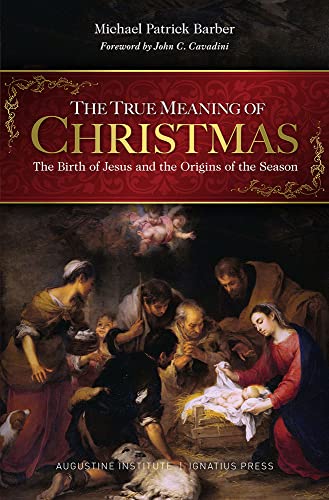
The True Meaning of Christmas
Book Review

The True Meaning of Christmas

by Jeffrey Miller December 3, 2022December 3, 2022
written by Jeffrey Miller

I wanted to let others know about this book I read last year by Theologian Michael Patrick Barber titled “The True Meaning of Christmas: The Birth of Jesus and the Origins of the Season.”

What does the Bible really say about the birth of Jesus? How did the celebration of Christmas become associated with things like Santa Claus and decorated trees? In The True Meaning of Christmas: The Birth of Jesus and the Origins of the Season, biblical scholar Michael Patrick Barber offers an inspiring look at the Bible’s accounts of Jesus’ birth and the development of the Christmas season. Along the way, he answers numerous questions, including:

How is the Christmas story related to ancient Jewish expectations? Why is Jesus said to be laid in a “manger”? Who are the Magi? What is the mysterious Christmas star? How did December 25th become the date of Christmas? How did Saint Nicholas become “Santa Claus”? 

As Dr. Barber will show, to find our way “home” at Christmas, we need to first return to Christmas’s home in the story of the Bible. Only by carefully reflecting on the stories of Jesus’ birth can we hope to celebrate Christmas in the way it is meant to be celebrated and discover the real joy it promises!

Provided below are links to either know more about this book or to get your own copy.

Dr. Michael Barber interview with Michael Lofton on the “True Meaning of Christmas” (YouTube)
Audio from Catholic Answers Live where he is interviewed about this book

A series of 20 five-minute episodes on Formed.org
(Many parishes offer a free subscription to Formed)

Ignatius Press Paperback
Ignatius Press Hardback
Amazon Kindle Edition
Amazon Paperback
Audiobook on Audible

December 3, 2022December 3, 2022 0 comment
0 FacebookTwitterGoogle +Pinterest
The Weekly Francis

The Weekly Francis – Volume 439

by Jeffrey Miller November 29, 2022
written by Jeffrey Miller
pope-francis2-300x187

The Weekly Francis is a compilation of the Holy Father’s writings, speeches, etc., which I also cross-post on Jimmy Akin’s blog.

This version of The Weekly Francis covers material released in the last week, from 6 November 2022 to 29 November 2022.

Angelus

  • 27 November 2022 – Angelus

Letters

  • 24 November 2022 – Letter of His Holiness Pope Francis to the People of Ukraine Nine Months after the Outbreak of the War

Speeches

  • 6 November 2022 – Apostolic Journey to the Kingdom of Bahrain’ Press Conference on the return flight to Rome
  • 19 November 2022 – To Participants in the Meeting promoted by Doctors with Africa (CUAMM)
  • 28 November 2022 – To the Community of the Pius Pontifical Latin American College in Rome
  • 28 November 2022 – To the students participating in the Meeting for the education of peace and caring

Papal Tweets

  • “The path to happiness is the one that Saint Paul described at the end of one of his letters: “Pray constantly, give thanks in all circumstances; for this is the will of God in Christ Jesus for you. Do not quench the Spirit” (1 Thess 5:17–19). #Prayer #ThanksgivingDay” @Pontifex, 24 November 2022
  • “Acts of violence and exploitation directed at women are not merely wrong. They are crimes that destroy the harmony, the harmony and beauty that God wished to bestow on the world.” @Pontifex, 25 November 2022
  • “During this #Advent Season, let us ask the Lord to help us keep the lamp of faith alit in our lives, to be prepared to receive him, and that he fill us with peace and joy.” @Pontifex, 26 November 2022
  • “Let us not tire of saying no to war, no to violence, yes to dialogue, yes to #peace: in particular for the martyred Ukrainian people. Yesterday we remembered the tragedy of the Holodomor.” @Pontifex, 27 November 2022
  • “In the #GospelOfTheDay we hear a promise that introduces us to the Time of #Advent: “Your Lord is coming” (Mt 24:42). This is the foundation of our hope, it is what supports us even in the most difficult moments: God is coming. Let us never forget this!” @Pontifex, 27 November 2022
  • “Violence kills the future. I hope that the Israeli and Palestinian authorities will more readily take to heart the pursuit of dialogue, building mutual trust, without which there will never be a solution for #peace in the #HolyLand.” @Pontifex, 27 November 2022
  • “Season of #Advent, let us be shaken out of our torpor to recognize God’s present in daily situations. If we are unaware of his coming today, we will also be unprepared when He arrives at the end of time. Let us remain vigilant!” @Pontifex, 28 November 2022
  • “God conceals himself in the most ordinary situations of our lives. He does not come in extraordinary events, but in everyday things: our daily work, a chance encounter, someone in need… That’s where the Lord is, who calls to us and inspires our actions. #Advent” @Pontifex, 29 November 2022

Papal Instagram

  • Franciscus
November 29, 2022 0 comment
0 FacebookTwitterGoogle +Pinterest
My Reflection on Sunday’s Gospel Matthew 24:37–44
Scripture

My Reflection on Sunday’s Gospel Matthew 24:37–44

by Jeffrey Miller November 27, 2022
written by Jeffrey Miller

Matthew 24:37–44 ESV – Bible Gateway

37  For as were the days of Noah, so will be the coming of the Son of Man.38  For as in those days before the flood they were eating and drinking, marrying and giving in marriage, until the day when Noah entered the ark,39  and they were unaware until the flood came and swept them all away, so will be the coming of the Son of Man. 40  Then two men will be in the field; one will be taken and one left. 41  Two women will be grinding at the mill; one will be taken and one left. 42  Therefore, stay awake, for you do not know on what day your Lord is coming. 43  But know this, that if the master of the house had known in what part of the night the thief was coming, he would have stayed awake and would not have let his house be broken into.44  Therefore you also must be ready, for the Son of Man is coming at an hour you do not expect.


The suddenness of the Second Coming seems to be implied here. That people will go about their lives performing the range of daily human acts. The suggestion that this will be a surprise to them, the same as it was for the people in the days of Noah. This astonishment results because they were oblivious to any warnings there were.
In Genesis, regarding the story of Noah, we have no sign that he was actively warning others about the coming judgement and their destruction because of their corruption and violence. It would be amazing if he did not do so. We have no exact time line regarding how long he took building the ark, but some indications regarding his children’s ages and when they might have started their families show a fairly long period of perhaps around a 100 years.

St. Peter writes:

if he did not spare the ancient world, but preserved Noah, a herald of righteousness, with seven others, when he brought a flood upon the world of the ungodly; (2 Pe 2:5)
That Noah was a herald/preacher/proclaimed of righteousness seems clear and his message ignored. Jesus is warning us of complacency. We do not know the day or the hour of or own judgement upon death.

St. Augustine. He said this Watch, not to those only who heard Him speak at the time, but to those who came after them, and to us, and to all who shall be after us, until His second coming, for it touches all in a manner. That day comes to each one of us, when it comes to him to go out of the world, such as he shall be judged, and therefore ought every Christian to watch that the Lord’s coming may not find him unprepared; and he will be unprepared for the day of His coming, whom the last day of his life shall find unprepared.[1]

Dr. John Bergsma provides an excellent summary for today’s readings:

The First Reading and the Psalm present the Christian life as a “pilgrimage” to Zion. The Second Reading and Gospel present the Christian life as “wakefulness” and abstaining from sensual indulgence in this life. The two images can be combined. On a pilgrimage, one doesn’t get caught up in pleasure-seeking. You have to walk long hours on the camino during the day and sleep where you can—sometimes in austere places—during the night. And if you make a habit of stopping and “hanging out,” you’re not going to finish the way. The readings for this Mass call us to renew our commitment to living this present life as a pilgrimage to the heavenly Zion.[2]

In verses 40–41 follow the “scenario follows Jesus’ example of Noah and the flood (24:37). The righteous will be left, just as Noah and his family were spared (Sir 44:17); the wicked will be taken, as Noah’s generation was swept away by the flood.”[3]

Because of the influence, especially here in America, of the novel Rapture theology proposed by some, we culturally assume that those who are “taken” in this Gospel passage are righteous.

This is further pointed out by Dr. Brant Pitre:

If you look at it, you can see that when Jesus says one is taken and one is left, whether one man is taken and one man is left or one woman is taken and one woman is left (again if you think about the imagery of the of the flood as the background to what he is saying), what happened here? Noah’s family was taken. In other words, they were saved from the judgment of the flood, and the rest of people were left, but they weren’t left behind to live on the world and have time to repent or something like that, they were left out of the salvation and exposed to the flood, and they perished in the judgment of God. So what Jesus is essentially getting at here is the separation of the righteous and the wicked that will take place at the final judgment.[4]

As does the Catholic Commentary on Sacred Scripture:

More likely Jesus speaks in the idiom of the prophets, where those who are taken are those captured or killed in judgment (Isa 8:13; Jer 6:11; Zech 14:2) and those who are left constitute the surviving remnant that is spared (Isa 1:9; 4:3; Jer 40:11; Ezek 14:22).[5]

Regarding Jesus’ knowledge regarding when this will happen:

St. Jerome. Having declared that of that hour knoweth no man, but the Father only, He shews that it was not expedient for the Apostles to know, that being ignorant they might live in perpetual expectation of His coming, and thus concluding the whole, He says, Watch therefore, And He does not say, ‘Because we know not,’ but Because ye know not, shewing that He Himself is not ignorant of the day of judgment.[6]

The Catechism regarding Jesus’ knowledge makes these distinctions:

472 This human soul that the Son of God assumed is endowed with a true human knowledge. As such, this knowledge could not in itself be unlimited: it was exercised in the historical conditions of his existence in space and time. This is why the Son of God could, when he became man, “increase in wisdom and in stature, and in favor with God and man,” and would even have to inquire for himself about what one in the human condition can learn only from experience. This corresponded to the reality of his voluntary emptying of himself, taking “the form of a slave.”

473 But at the same time, this truly human knowledge of God’s Son expressed the divine life of his person. “The human nature of God’s Son, not by itself but by its union with the Word, knew and showed forth in itself everything that pertains to God.” Such is first of all the case with the intimate and immediate knowledge that the Son of God made man has of his Father. The Son in his human knowledge also showed the divine penetration he had into the secret thoughts of human hearts.

474 By its union to the divine wisdom in the person of the Word incarnate, Christ enjoyed in his human knowledge the fullness of understanding of the eternal plans he had come to reveal. What he admitted to not knowing in this area, he elsewhere declared himself not sent to reveal.

Sources

  • Catena Aurea Commentary on the Four Gospels, Collected out of the Works of the Fathers, Volume 1 St. Matthew – Verbum
  • The Word of the Lord: Reflections on the Sunday Mass Readings for Year A – John Bergsma
  • The Ignatius Catholic Study Bible꞉ The New Testament
  • Catholic Productions, Commentaries by Brant Pitre
  • The Gospel of Matthew (Catholic Commentary on Sacred Scripture)
  • Catechism of the Catholic Church, 2nd Edition
  • Photo by Ben White on Unsplash

  1. S. Augustine, Bishop of Hippo, A.D. 396. (Ep. 199, 3.) Thomas Aquinas. Catena Aurea: Commentary on the Four Gospels, St. Matthew (J. H. Newman, Ed.; Vol. 1, p. 836).  ↩
  2. The Word of the Lord: Reflections on the Sunday Mass Readings for Year A, John Bergsma  ↩
  3. Ignatius Catholic Study Bible: New Testament  ↩
  4. Catholic Productions, Brant Pitre  ↩
  5. The Gospel of Matthew, Catholic Commentary on Sacred Scripture, Edward Sri and Curtis Mitch  ↩
  6. St. Jerome, Presbyter and Monk of Bethlehem, A.D. 378. From the Commentary on the Four Gospels, St. Matthew (J. H. Newman, Ed.; Vol. 1, p. 836).  ↩
November 27, 2022 0 comment
0 FacebookTwitterGoogle +Pinterest
The Weekly Francis

The Weekly Francis – Volume 438

by Jeffrey Miller November 23, 2022November 23, 2022
written by Jeffrey Miller
pope-francis2-300x187

The Weekly Francis is a compilation of the Holy Father’s writings, speeches, etc., which I also cross-post on Jimmy Akin’s blog.

This version of The Weekly Francis covers material released in the last week, from 12 November 2022 to 23 November 2022.

Angelus

  • 20 November 2022 – Angelus, Solemnity of Our Lord Jesus Christ, King of the Universe

Apostolic Letter

  • 21 November 2022 – Decree regarding Caritas Internationalis

General Audiences

  • 16 November 2022 – General Audience – Catechesis on Discernment. 8. ‘Why are we desolate?’
  • 23 November 2022 – General Audience – Catechesis on Discernment. 9. Consolation

Homilies

  • 20 November 2022 – Our Lord Jesus Christ, King of the Universe – Holy Mass (Asti Cathedral)

Speeches

  • 12 November 2022 – To Employees and participants in the Plenary Assembly of the Dicastery for Communication
  • 14 November 2022 – To the participants in the third edition of the 2022 ‘Match for Peace’ organized by the Scholas Occurrentes Foundation
  • 19 November 2022 – To His Holiness Mar Awa III Catholicos-Patriarch of the Assyrian Church of the East
  • 22 November 2022 – To the participants in the Conference of the World Jewish Congress

Papal Tweets

  • “The spiritual state we call desolation can be an opportunity of growth. It provokes a ”shaking of the soul“, fosters vigilance and humility, and protects us from the winds of fancy. #GeneralAudience” @Pontifex, 16 November 2022
  • “Let us pray that the Lord might convert the hearts of those who are still directed toward war, and make the desire for peace prevail for tortured Ukraine, to avoid every escalation and to be open to the way of cease fire and dialogue. #GeneralAudience” @Pontifex, 16 November 2022
  • “Let us not tire of doing everything possible for the dramatic urgency of climate change. Let us put concrete, far-sighted choices in act, thinking of the younger generations first, before it is too late! #COP27” @Pontifex, 17 November 2022
  • “Where can we find the strength to put ourselves generously at the service of others? In prayer and in the silent contemplation of Christ. A prayerful encounter with Jesus fills our hearts with His peace and love which we can then give to others.” @Pontifex, 18 November 2022
  • “Christ is the unifying centre of all reality. He is the answer to all human questions. He is the fulfilment of every desire for happiness, goodness, love and eternity present in the human heart.” @Pontifex, 19 November 2022
  • “Jesus, naked on the cross, removes every veil from God and destroys every false image of His kingship. Let us look upon Him to find the courage to make ourselves servants, so as to reign with Him. #ChristTheKing g Vatican” @Pontifex, 20 November 2022
  • “We are living a famine of peace in our time. Let’s think of how many places in the world are scourged by war, in particular of war-torn Ukraine. Let us roll up our sleeves and continue to pray for #peace!” @Pontifex, 20 November 2022
  • “Let us also pray for the families of the victims of the serious fire in a refugee camp in Gaza, in Palestine, where several children also died. May the Lord welcome into heaven those who lost their lives and console those people who have suffered years of conflict.” @Pontifex, 20 November 2022
  • ““Mary arose and went with haste” (Lk 1:39) is the theme of this #WorldYouthDay. Aiming for the heights, getting on the move, leaving behind our own fears to take someone in need by the hand, is the secret to remaining young. #AriseandGo @laityfamilylife” @Pontifex, 20 November 2022
  • “In the #GospelOfTheDay (Lk 23:35–43), the good thief calls Jesus by name, he confesses his faults, he begs: ”Jesus, remember me“. In this way, a criminal becomes the first saint: he draws near to Jesus for an instant and the Lord keeps him forever at his side.” @Pontifex, 20 November 2022
  • “Through prayerful silence and hidden sacrifice, contemplative monasteries maternally sustain the life of the Church. #ProOrantibus” @Pontifex, 21 November 2022
  • “Each time we join our hands and open our hearts to God, we find ourselves in the company of anonymous saints and official saints who pray with us and intercede for us as older brothers and sisters who have preceded us on this same human adventure. #Prayer” @Pontifex, 22 November 2022
  • “Spiritual consolation is an experience of interior joy that allows us to see God’s presence in everything. It strengthens faith, hope, and the ability of doing good; it helps us never give up in the face of difficulties because it gives us a peace that is stronger than any trial.” @Pontifex, 23 November 2022
  • “In the past few hours, the island of #Java in Indonesia was hit by a strong #earthquake. I express my nearness to that dear population and I pray for the dead and the injured.” @Pontifex, 23 November 2022
  • “I would like to send my greetings to the athletes, fans and spectators following the football #WorldCup taking place in Qatar. May this important event be an occasion for encounter, fostering fraternity and peace among peoples. #Qatar2022” @Pontifex, 23 November 2022
  • “Let us #PrayTogether for #peace in the world, with a special thought for the people of Ukraine. This Saturday is the anniversary of the terrible #Holodomor genocide. Let us pray for the children, the women and the elderly, who are today suffering the martyrdom of the aggression.” @Pontifex, 23 November 2022

Papal Instagram

  • Franciscus
November 23, 2022November 23, 2022 0 comment
0 FacebookTwitterGoogle +Pinterest
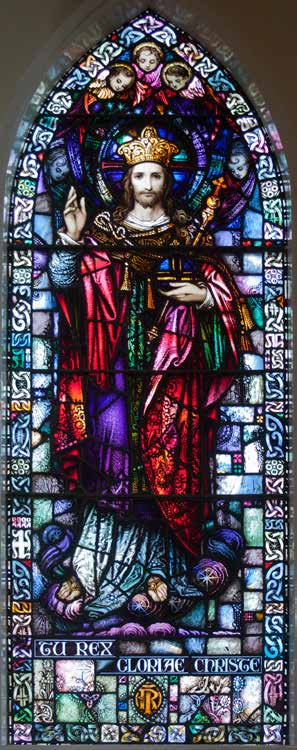
Christ the King
Liturgy

Christ the King

by Jeffrey Miller November 20, 2022November 20, 2022
written by Jeffrey Miller

Some selections from Quas Primas, the encyclical by Pope Pius XI, established the Feast of Christ the King in 1925.


In the first Encyclical Letter which We addressed at the beginning of Our Pontificate to the Bishops of the universal Church, We referred to the chief causes of the difficulties under which mankind was laboring. And We remember saying that these manifold evils in the world were due to the fact that the majority of men had thrust Jesus Christ and his holy law out of their lives; that these had no place either in private affairs or in politics: and we said further, that as long as individuals and states refused to submit to the rule of our Savior, there would be no really hopeful prospect of a lasting peace among nations. Men must look for the peace of Christ in the Kingdom of Christ; and that We promised to do as far as lay in Our power. In the Kingdom of Christ, that is, it seemed to Us that peace could not be more effectually restored nor fixed upon a firmer basis than through the restoration of the Empire of Our Lord. We were led in the meantime to indulge the hope of a brighter future at the sight of a more widespread and keener interest evinced in Christ and his Church, the one Source of Salvation, a sign that men who had formerly spurned the rule of our Redeemer and had exiled themselves from his kingdom were preparing, and even hastening, to return to the duty of obedience.


If, therefore, the rulers of nations wish to preserve their authority, to promote and increase the prosperity of their countries, they will not neglect the public duty of reverence and obedience to the rule of Christ. What We said at the beginning of Our Pontificate concerning the decline of public authority, and the lack of respect for the same, is equally true at the present day. “With God and Jesus Christ,” we said, “excluded from political life, with authority derived not from God but from man, the very basis of that authority has been taken away, because the chief reason of the distinction between ruler and subject has been eliminated. The result is that human society is tottering to its fall, because it has no longer a secure and solid foundation.


This state of things may perhaps be attributed to a certain slowness and timidity in good people, who are reluctant to engage in conflict or oppose but a weak resistance; thus the enemies of the Church become bolder in their attacks. But if the faithful were generally to understand that it behooves them ever to fight courageously under the banner of Christ their King, then, fired with apostolic zeal, they would strive to win over to their Lord those hearts that are bitter and estranged from him, and would valiantly defend his rights.


For me, today is liturgical déjà vu since we celebrated this feast last month in the TLM. I find this interesting because the placement was always for the end of the liturgical year, and the Pope thought the specific date “convenient.”

The last Sunday of October seemed the most convenient of all for this purpose, because it is at the end of the liturgical year, and thus the feast of the Kingship of Christ sets the crowning glory upon the mysteries of the life of Christ already commemorated during the year, and, before celebrating the triumph of all the Saints, we proclaim and extol the glory of him who triumphs in all the Saints and in all the Elect. Make it your duty and your task, Venerable Brethren, to see that sermons are preached to the people in every parish to teach them the meaning and the importance of this feast, that they may so order their lives as to be worthy of faithful and obedient subjects of the Divine King.

November 20, 2022November 20, 2022 0 comment
0 FacebookTwitterGoogle +Pinterest
My Reflection on Sunday’s Gospel Luke 23:35-43
Scripture

My Reflection on Sunday’s Gospel Luke 23:35-43

by Jeffrey Miller November 20, 2022November 20, 2022
written by Jeffrey Miller

35  And the people stood by, watching, but the rulers scoffed at him, saying, “He saved others; let him save himself, if he is the Christ of God, his Chosen One!” 36  The soldiers also mocked him, coming up and offering him sour wine 37  and saying, “If you are the King of the Jews, save yourself!” 38  There was also an inscription over him,[a] “This is the King of the Jews.”

39  One of the criminals who were hanged railed at him,[b] saying, “Are you not the Christ? Save yourself and us!” 40  But the other rebuked him, saying, “Do you not fear God, since you are under the same sentence of condemnation? 41  And we indeed justly, for we are receiving the due reward of our deeds; but this man has done nothing wrong.” 42  And he said, “Jesus, remember me when you come into your kingdom.” 43  And he said to him, “Truly, I say to you, today you will be with me in paradise.”


There seems to be quite the transition from the first reading, where David is now accepted as King of the twelve tribes, to Jesus hanging on the Cross. His kingship is portrayed only as a mockery by the rulers, soldiers, and the people present. The rulers taunt him regarding his apparent powerlessness. The soldiers had costumed him with a crown of thorns and a reed scepter in jest of his kingship. Pontius Pilate had a titulus placed above the Cross with the words, “Jesus of Nazareth, the King of the Jews.” (Jn 19:19).

From the Catholic Commentary on Sacred Scripture for the Gospel of Luke:

The rulers also derisively refer to Jesus as the chosen one (see 9:35), a title pointing to another biblical passage that sheds light on the crucifixion: “Here is my servant whom I uphold, / my chosen one with whom I am pleased” (Isa 42:1 ❲emphasis added❳). Jesus is this †servant foretold by Isaiah (Isa 52:13) who at his crucifixion is “counted among the wicked” (Luke 22:37, quoting Isa 53:12). Moreover, Moses was also called God’s “chosen one” (Ps 106:23). At the transfiguration, Jesus spoke with Moses about his “exodus” to take place “in Jerusalem” (Luke 9:31), and the voice from heaven referred to him as the “chosen Son” (9:35). This exodus of God’s chosen one is now being accomplished.[1]

We can look at this scene and want to deride those who mocked him as he revealed his kingship. Yet, I can think of all the instances where I have either mocked his kingship or lessened it. The times I have made idols of the things of this world.

“Then render to Caesar the things that are Caesar’s, and to God the things that are God’s.” (Lk 20:25)

I know how often I need to get this balance right. I am rendering too much to Caesar, trusting too much in fixing everything via political processes. Forgetting that Jesus is indeed King and that I should always give glory to him first and strengthened in discerning my Caesar rendering and never forget that I am a subject of Christ the King first and always. Instead, I try to caveat the call to love my enemies, thinking this does not apply to those I disagree with politically. I am dehumanizing those who are also subjects of Christ the King.

Our forgetfulness of Jesus’ kingship and the priority of Christ is nothing new, but perhaps our amnesia has deepened. Dr. Brant Pitre points out Pius XI, Encyclical Quas Primas, On the Feast of Christ the King ❲December 11, 1925❳. This encyclical letter instituted this Feast.

In the first Encyclical Letter which We addressed at the beginning of Our Pontificate to the Bishops of the universal Church, We referred to the chief causes of the difficulties under which mankind was laboring. And We remember saying that these manifold evils in the world were due to the fact that the majority of men had thrust Jesus Christ and his holy law out of their lives; that these had no place either in private affairs or in politics: and we said further, that as long as individuals and states refused to submit to the rule of our Savior, there would be no really hopeful prospect of a lasting peace among nations. Men must look for the peace of Christ in the Kingdom of Christ; and that We promised to do as far as lay in Our power. In the Kingdom of Christ, that is, it seemed to Us that peace could not be more effectually restored nor fixed upon a firmer basis than through the restoration of the Empire of Our Lord.

Still, we can always move our faces to Jesus. Despite how we have darkened our life in sin, Jesus is always ready to receive us and to restore us to the true human dignity that he has given us. In Matthew and Mark, both thieves on Calvary mocked Jesus. In Luke, we see a point of conversion where one thief repents his mockery and his own life and, as a result, rebukes the other thief. Grace moves him towards Jesus while not diminishing his sinfulness. In his humility, he sees the humanity of Jesus and something more. He recognizes Jesus is indeed King and is desirous of his kingdom, which is not of this world. He asks, only to be remembered as Jesus arrives in his kingdom. Sometimes our eyes are only opened via suffering when we move out of the orbit of our ego and see those around us. The repentant thief looked beyond his pain and suffering and saw Jesus before him.

From Venerable Fulton J. Sheen’s classic Life of Christ.

A dying man asked a dying man for eternal life; a man without possessions asked a poor man for a Kingdom; a thief at the door of death asked to die like a thief and steal Paradise. One would have thought a saint would have been the first soul purchased over the counter of Calvary by the red coins of Redemption, but in the Divine plan it was a thief who was the escort of the King of kings into Paradise. If Our Lord had come merely as a teacher, the thief would never have asked for forgiveness. But since the thief’s request touched the reason of His coming to earth, namely, to save souls, the thief heard the immediate answer:

“I promise thee, this day thou shalt be With Me in Paradise.” (LUKE 23:43)

It was the thief’s last prayer, perhaps even his first. He knocked once, sought once, asked once, dared everything, and found everything. When even the disciples were doubting and only one was present at the Cross, the thief owned and acknowledged Him as Savior. If Barabbas came to the execution, how he must have wished that he never had been released, and that he could have heard the words of the compassionate High Priest. Practically everything about the Body of Christ was fastened by nails, or tortured by whips and thorns, except His Heart and His tongue—and these declared forgiveness that very day. But who can forgive sins, but God? And who can promise Paradise except Him Who by nature is eternal to Paradise?[2]

The two thieves, on each side of Jesus, were at a cross-road, and I intentionally mean the pun of cross-road. Suffering can turn us inward or outward. If we have been prudent in following the narrow road that leads to Christ, we can still narrow in on him and others. To open ourselves to the grace that is constantly given to us.

CCC §1021 Death puts an end to human life as the time open to either accepting or rejecting the divine grace manifested in Christ. The New Testament speaks of judgment primarily in its aspect of the final encounter with Christ in his second coming, but also repeatedly affirms that each will be rewarded immediately after death in accordance with his works and faith. The parable of the poor man Lazarus and the words of Christ on the cross to the good thief, as well as other New Testament texts speak of a final destiny of the soul—a destiny which can be different for some and for others.[3]

Sources

  • The Gospel of Luke, Catholic Commentary on Sacred Scripture, Rev. Pablo T. Gadenz
  • Life of Christ
  • Catechism of the Catholic Church, 2nd Edition
  • Photo by Ben White on Unsplash

  1. The Gospel of Luke, Catholic Commentary on Sacred Scripture, Rev. Pablo T. Gadenz  ↩
  2. Sheen, Fulton J.. Life of Christ (p. 545). The Crown Publishing Group. Kindle Edition.  ↩
  3. Catholic Church. (2000). Catechism of the Catholic Church (2nd Ed). United States Catholic Conference.  ↩
November 20, 2022November 20, 2022 0 comment
0 FacebookTwitterGoogle +Pinterest
Newer Posts
Older Posts

About Me

Jeff Miller is a former atheist who after spending forty years in the wilderness finds himself with both astonishment and joy a member of the Catholic Church. This award-winning blog presents my hopefully humorous and sometimes serious take on things religious, political, and whatever else crosses my mind.

Conversion story

  • Catholic Answers Magazine
  • Coming Home Network

Appearances on:

  • The Journey Home
  • Hands On Apologetics (YouTube)
  • Catholic RE.CON.

Blogging since July 2002

Recent Posts

  • A Litany of Gratitude

  • The Spiritual Life and Memes

  • What is your distance from Jesus on the Cross?

  • Feast of St. Thomas, Apostle

  • Gratitude and Generosity

  • “The Heart and Center of Catholicism”

  • Post-Lent Report

  • Stay in your lane

  • Echoing through creation

  • Another Heaven

  • My Year in Books – 2024 Edition

  • I Have a Confession to Make

  • A Mandatory Take

  • Everybody is ignorant

  • Sacramental Disposal, LLC

  • TL;DH (Too Long;Didn’t Hear)

  • A Shop Mark Would Like

  • The Narrow Way Through the Sacred Heart of Jesus

  • Time Travel and Fixing Up Our Past

  • The Weekly Leo

  • The Weekly Leo

  • The Weekly Leo

  • The Weekly Leo

Meta

I also blog at Happy Catholic Bookshelf Entries RSS
Entries ATOM
Comments RSS
Email: curtjester@gmail.com

What I'm currently reading

Subscribe to The Curt Jester by Email

Endorsements

  • The Curt Jester: Disturbingly Funny --Mark Shea
  • EX-cellent blog --Jimmy Akin
  • One wag has even posted a list of the Top Ten signs that someone is in the grip of "motu-mania," -- John Allen Jr.
  • Brilliance abounds --Victor Lams
  • The Curt Jester is a blog of wise-ass musings on the media, politics, and things "Papist." The Revealer

Archives

About Me

Jeff Miller is a former atheist who after spending forty years in the wilderness finds himself with both astonishment and joy a member of the Catholic Church. This award winning blog presents my hopefully humorous and sometimes serious take on things religious, political, and whatever else crosses my mind.
My conversion story
  • The Curt Jester: Disturbingly Funny --Mark Shea
  • EX-cellent blog --Jimmy Akin
  • One wag has even posted a list of the Top Ten signs that someone is in the grip of "motu-mania," -- John Allen Jr.
  • Brilliance abounds --Victor Lams
  • The Curt Jester is a blog of wise-ass musings on the media, politics, and things "Papist." The Revealer

Meta

I also blog at Happy Catholic Bookshelf Twitter
Facebook
Entries RSS
Entries ATOM
Comments RSS 2.0" >RSS
Email: curtjester@gmail.com

What I'm currently reading

Subscribe to The Curt Jester by Email

Commercial Interuption

Podcasts

•Catholic Answers Live Subscribe to Podcast RSS
•Catholic Underground Subscribe to Podcast RSS
•Catholic Vitamins Subscribe to Podcast RSS
•EWTN (Multiple Podcasts) Subscribe to Podcast RSS
•Forgotten Classics Subscribe to Podcast RSS
•Kresta in the Afternoon Subscribe to Podcast RSS
•SQPN - Tons of great Catholic podcasts Subscribe to Podcast RSS
•The Catholic Hack Subscribe to Podcast RSS
•The Catholic Laboratory Subscribe to Podcast RSS
•The Catholics Next Door Subscribe to Podcast RSS
•What does the prayer really say? Subscribe to Podcast RSS

Archives

Catholic Sites

  • Big Pulpit
  • Capuchin Friars
  • Catholic Answers
  • Catholic Lane
  • Crisis Magazine
  • New Evangelizers
  • Waking Up Catholic

Ministerial Bloghood

  • A Jesuit’s Journey
  • A Shepherd’s Voice
  • Ad Majorem Dei Gloriam
  • Adam’s Ale
  • Archbishop Dolan
  • Bonfire of the Vanities
  • Cardinal Sean’s Blog
  • Da Mihi Animas
  • Domine, da mihi hanc aquam!
  • Father Joe
  • Fr. Roderick
  • Godzdogz
  • Laus Crucis
  • Omne Quod Spirat, Laudet Dominum
  • Orthometer
  • Priests for Life
  • Servant and Steward
  • Standing on My Head
  • The hermeneutic of continuity
  • This Week at Vatican II
  • Waiting in Joyful Hope
  • What Does The Prayer Really Say?

Bloghood of the Faithful

  • A Catholic Mom Climbing the Pillars
  • A Catholic Mom in Hawaii
  • A Long Island Catholic
  • A Wing And A Prayer
  • Acts of the Apostasy
  • Ad Altare Dei
  • AdoroTeDevote
  • Against the Grain
  • Aggie Catholics
  • Aliens in this world
  • Always Catholic
  • American Chesterton Society
  • American Papist
  • Among Women
  • And Sometimes Tea
  • Ask Sister Mary Martha
  • auntie joanna writes
  • Bad Catholic
  • Bethune Catholic
  • Big C Catholics
  • Bl. Thaddeus McCarthy's Catholic Heritage Association
  • Catholic and Enjoying It!
  • Catholic Answers Blog
  • Catholic Fire
  • Catholic New Media Roundup
  • Charlotte was Both
  • Christus Vincit
  • Confessions of a Hot Carmel Sundae
  • Cor ad cor loquitur
  • Courageous Priest
  • Creative Minority Report
  • CVSTOS FIDEI
  • Dads Called to Holiness
  • Darwin Catholic
  • Defend us in Battle
  • Defenders of the Catholic Faith
  • Disputations
  • Divine Life
  • Domenico Bettinelli Jr.
  • Dominican Idaho
  • Dyspectic Mutterings
  • Ecce Homo
  • Ecclesia Militans
  • Eve Tushnet
  • Eye of the Tiber
  • feminine-genius
  • Five Feet of Fury
  • Flying Stars
  • For The Greater Glory
  • Get Religion
  • GKC’s Favourite
  • God’s Wonderful Love
  • Gray Matters
  • Happy Catholic
  • Ignatius Insight Scoop
  • In Dwelling
  • In the Light of the Law
  • InForum Blog
  • Jeff Cavins
  • Jimmy Akin
  • John C. Wright
  • La Salette Journey
  • Laudem Gloriae
  • Lex Communis
  • Life is a Prayer
  • Man with Black Hat
  • Maria Lectrix
  • Mary Meets Dolly
  • MONIALES OP
  • Mulier Fortis
  • Musings of a Pertinacious Papist
  • My Domestic Church
  • Nunblog
  • Oblique House
  • Open wide the doors to Christ!
  • Over the Rhine and Into the Tiber
  • Patrick Madrid
  • Pro Ecclesia * Pro Familia * Pro Civitate
  • Recta Ratio
  • Saint Mary Magdalen
  • Sonitus Sanctus
  • Southern-Fried Catholicism
  • St. Conleth's Catholic Heritage Association
  • Stony Creek Digest
  • Testosterhome
  • The Ark and the Dove
  • The B-Movie Catechism
  • The Crescat
  • The Daily Eudemon
  • The Digital Hairshirt
  • The Four Pillars
  • The Inn at the End of the World
  • The Ironic Catholic
  • The Lady in the Pew
  • The Lion and the Cardinal
  • The New Liturgical Movement
  • The Pulp.it
  • The Sacred Page
  • The Sci Fi Catholic
  • The Scratching Post
  • The Weight of Glory
  • The Wired Catholic
  • Two Catholic Men and a Blog
  • Unam Sanctam Catholicam
  • Video meliora, proboque; Deteriora sequor
  • Vivificat
  • Facebook
  • Twitter
  • Instagram
  • Pinterest
  • Email
  • Reddit
  • RSS

@2025 - www.splendoroftruth.com/curtjester. All Right Reserved. Designed and Developed by PenciDesign


Back To Top