Here is my contribution to the series of reflections on each word of the Hail Mary at Sarah Reinhard’s blog “Snoring Scholar”.
The Holy Father is always an amazing homilist, but his Easter Vigil homily is just so good. Almost every part of it struck me with his insights. The way he looks at the creation account really opens it up along with his talking about the real darkness of evil, especially a scientism with a blinded moral vision. Just read it.
Holy Saturday is not the easiest day for me to meditate about. Good Friday provides many raw materials as I ponder on Jesus’ death on the cross for my sins. There are a wealth of meditations relating to the crucifixion along with the treasure of Christian art. The same goes for the Sorrowful Mysteries which even with my distracted meditative form can draw something out of.
Thinking about Holy Saturday and trying to imagine what it was like for the Apostles and for the followers of Christ is a bit more difficult. We already have the greatest spoiler alert in history by knowing about the Resurrection. Pondering what the disciples of Jesus felt after knowing he had died and not yet understanding all that Jesus had taught them is hard to fathom. For us now it is all so obvious what was to happen. But we are like the guy who reads the last chapter of a mystery first so as not to be surprised. We get some idea of a depth of feeling from the two disciples that conversed with Jesus on the road to Emmaus. His death was all they could talk about, but what was lacking was the hope in the good that would come about. The disconnect must have been the greatest for the Apostles who had lived with Jesus for three years, thinking they had absorbed so much of what he had taught, seeing the various miracles that confirmed that Jesus was not just a great teacher. It just couldn’t have ended the way it did on Good Friday, yet it did. Jesus had to rebuke Peter for trying to prevent what Jesus told would happen. After the fact of the Resurrection the Apostles finally put together all the clues Jesus had given them such as referring to the temple of his body that would be built up in three days or the sign of Jonah that was to be given. But on Holy Saturday all they could think was that something had fundamentally gone wrong. That somehow they had misunderstood Jesus. This was true, but they had also misunderstood what they misunderstood about him. Knowing what we know it is hard to fathom the depth of feeling of the disciples of Jesus. We can’t pretend to see the horror of his death on a cross without having it lightened by our knowledge of the Resurrection and our own redemption.
Yet perhaps on Holy Saturday we can align ourselves with his Mother Mary. She who had pondered in the heart from the beginning understood on a fundamental level that Good Friday was not the end of a story. The swords surely pierced her heart at the Cross and later holding him in her arms before he was brought to the tomb. Surely on that Holy Saturday as she was surrounded by her friends and some of the disciples of Jesus there was mourning and sadness, but with a hope that was not found in the others. There was a growing understanding of the Resurrection of the Dead and further insights into the nature of Heaven by others, but Mary’s hope was much more immediate and while others were comforting her, not doubt she was comforting them all the more. Her soul that magnified the Lord also magnified her hope in the Lord and knew that God brought good out of evil. That out of this greatest of evils, that the greatest of goods totally out of proportion was to be done. So on this Holy Saturday we too can rejoice in our spirit with God our Savior and both think of the ramification of our own sins and of the joy of Easter and our redemption.
Thomas Kinkade died on Good Friday and while I was not a fan of his art I did find this article by Thomas L. McDonald on him quite worthwhile.
Logos Bible Software continues to add great stuff for Catholics:
|
|||
A British Bishop claims that the Bible can provide invaluable support.. for those who want to use a better password online.
The Bishop of Rochester in Kent, is urging his congregation this Easter to use Bible quotations to help them remember their website passwords.
According to The Right Reverend James Langstaff, “The Bible offers a life-long source of new passwords, that can include both upper and lower case letters and numbers to help create memorable, secure passwords.”
The Bishop has suggested that users choose their favourite passage from the Bible, take the first letter from each word in the quote, and then append the chapter and verse.
For instance,
“Father, into your hands I commit my spirit.” Luke Chapter 23 Verse 46.
creates a password of
FiyhIcmsL23V46
So HwJ11V35 Would be the shortest password for “He wept” – Gospel of John, chapter 11, verse 35.
For a more secure password:
TtkingswcatttitmsotttdotmaiwwatatmcttjandtothesatgapotpwariteohtsptepatiwatepitlattjinwaitlE8V9 for the longest verse of the Bible Ester 8:9
The password for Tim Tebow and a host of others would of course be FGsltwthghobstwbihsnpbhelJ3V16.
Now of course as a password scheme this is better than using “password” , “123456”, or monkey – but of course it would be easily susceptible to hacker attacks if the scheme became common as dictionary phrase lists of popular verses could easily be used. Traditionalist Catholics could be easily hacked using a Vulgate-based dictionary attack. Liberal Christians would be susceptible to their favorite bible verses involving non-judgement in them. People who subscribe to King James Version Onlyism would make it easy for hackers since they would only need one version.
It does make me wonders what Jesus would use as a password? He is pretty awesome at keeping some things secret when he wants to. For example what he wrote in the sand during the case of the women caught in adultery is still unknown. In fact if I make it to Heaven that is one thing I am sure to ask him. Though he would probably tell me “No one knows the letter, number, or Nonalphanumeric characters used, not even the angels in heaven, nor the Son, but only the Father.
Seeing the headlines today:
Pope Assails ‘Disobedience’ Among Priests New York Times
Pope Denounces Priests Who Question Catholic Teachings On Celibacy … Huffington Post
Pope slams reformists’ calls to ordain women Kansas City Star
So what he actually said:
Pope Benedict XVI Chrism Mass
Here is the Homily in full, from Vatican Radio:
“Dear Brothers and Sisters,
At this Holy Mass our thoughts go back to that moment when, through prayer and the laying on of hands, the bishop made us sharers in the priesthood of Jesus Christ, so that we might be “consecrated in truth” (Jn 17:19), as Jesus besought the Father for us in his high-priestly prayer. He himself is the truth.
He has consecrated us, that is to say, handed us over to God for ever, so that we can offer men and women a service that comes from God and leads to him. But does our consecration extend to the daily reality of our lives – do we operate as men of God in fellowship with Jesus Christ? This question places the Lord before us and us before him. “Are you resolved to be more united with the Lord Jesus and more closely conformed to him, denying yourselves and confirming those promises about sacred duties towards Christ’s Church which, prompted by love of him, you willingly and joyfully pledged on the day of your priestly ordination?”
After this homily, I shall be addressing that question to each of you here and to myself as well. Two things, above all, are asked of us: there is a need for an interior bond, a configuration to Christ, and at the same time there has to be a transcending of ourselves, a renunciation of what is simply our own, of the much-vaunted self-fulfilment.
We need, I need, not to claim my life as my own, but to place it at the disposal of another – of Christ. I should be asking not what I stand to gain, but what I can give for him and so for others. Or to put it more specifically, this configuration to Christ, who came not to be served but to serve, who does not take, but rather gives – what form does it take in the often dramatic situation of the Church today?
Recently a group of priests from a European country issued a summons to disobedience, and at the same time gave concrete examples of the forms this disobedience might take, even to the point of disregarding definitive decisions of the Church’s Magisterium, such as the question of women’s ordination, for which Blessed Pope John Paul II stated irrevocably that the Church has received no authority from the Lord.
Is disobedience a path of renewal for the Church? We would like to believe that the authors of this summons are motivated by concern for the Church, that they are convinced that the slow pace of institutions has to be overcome by drastic measures, in order to open up new paths and to bring the Church up to date. But is disobedience really a way to do this? Do we sense here anything of that configuration to Christ which is the precondition for true renewal, or do we merely sense a desperate push to do something to change the Church in accordance with one’s own preferences and ideas?
But let us not oversimplify matters. Surely Christ himself corrected human traditions which threatened to stifle the word and the will of God? Indeed he did, so as to rekindle obedience to the true will of God, to his ever enduring word. His concern was for true obedience, as opposed to human caprice. Nor must we forget: he was the Son, possessed of singular authority and responsibility to reveal the authentic will of God, so as to open up the path for God’s word to the world of the nations. And finally: he lived out his task with obedience and humility all the way to the Cross, and so gave credibility to his mission. Not my will, but thine be done: these words reveal to us the Son, in his humility and his divinity, and they show us the true path.
Let us ask again: do not such reflections serve simply to defend inertia, the fossilization of traditions? No. Anyone who considers the history of the post-conciliar era can recognize the process of true renewal, which often took unexpected forms in living movements and made almost tangible the inexhaustible vitality of holy Church, the presence and effectiveness of the Holy Spirit. And if we look at the people from whom these fresh currents of life burst forth and continue to burst forth, then we see that this new fruitfulness requires being filled with the joy of faith, the radicalism of obedience, the dynamic of hope and the power of love.
Dear friends, it is clear that configuration to Christ is the precondition and the basis for all renewal. But perhaps at times the figure of Jesus Christ seems too lofty and too great for us to dare to measure ourselves by him. The Lord knows this. So he has provided “translations” on a scale that is more accessible and closer to us. For this same reason, Saint Paul did not hesitate to say to his communities: Be imitators of me, as I am of Christ.
For his disciples, he was a “translation” of Christ’s manner of life that they could see and identify with. Ever since Paul’s time, history has furnished a constant flow of other such “translations” of Jesus’ way into historical figures. We priests can call to mind a great throng of holy priests who have gone before us and shown us the way: from Polycarp of Smyrna and Ignatius of Antioch, from the great pastors Ambrose, Augustine and Gregory the Great, through to Ignatius of Loyola, Charles Borromeo, John Mary Vianney and the priest-martyrs of the 20th century, and finally Pope John Paul II, who gave us an example, through his activity and his suffering, of configuration to Christ as “gift and mystery”. The saints show us how renewal works and how we can place ourselves at its service. And they help us realize that God is not concerned so much with great numbers and with outward successes, but achieves his victories under the humble sign of the mustard seed.
Dear friends, I would like briefly to touch on two more key phrases from the renewal of ordination promises, which should cause us to reflect at this time in the Church’s life and in our own lives. Firstly, the reminder that – as Saint Paul put it – we are “stewards of the mysteries of God” (1 Cor 4:1) and we are charged with the ministry of teaching (munus docendi), which forms a part of this stewardship of God’s mysteries, through which he shows us his face and his heart, in order to give us himself.
At the meeting of Cardinals on the occasion of the recent Consistory, several of the pastors of the Church spoke, from experience, of the growing religious illiteracy found in the midst of our sophisticated society. The foundations of faith, which at one time every child knew, are now known less and less. But if we are to live and love our faith, if we are to love God and to hear him aright, we need to know what God has said to us – our minds and hearts must be touched by his word.
The Year of Faith, commemorating the opening of the Second Vatican Council fifty years ago, should provide us with an occasion to proclaim the message of faith with new enthusiasm and new joy. We find it of course first and foremost in sacred Scripture, which we can never read and ponder enough. Yet at the same time we all experience the need for help in accurately expounding it in the present day, if it is truly to touch our hearts. This help we find first of all in the words of the teaching Church: the texts of the Second Vatican Council and the Catechism of the Catholic Church are essential tools which serve as an authentic guide to what the Church believes on the basis of God’s word. And of course this also includes the whole wealth of documents given to us by Pope John Paul II, still far from being fully explored.
All our preaching must measure itself against the saying of Jesus Christ: “My teaching is not mine” (Jn 7:16). We preach not private theories and opinions, but the faith of the Church, whose servants we are. Naturally this should not be taken to mean that I am not completely supportive of this teaching, or solidly anchored in it. In this regard I am always reminded of the words of Saint Augustine: what is so much mine as myself? And what is so little mine as myself? I do not own myself, and I become myself by the very fact that I transcend myself, and thereby become a part of Christ, a part of his body the Church. If we do not preach ourselves, and if we are inwardly so completely one with him who called us to be his ambassadors, that we are shaped by faith and live it, then our preaching will be credible. I do not seek to win people for myself, but I give myself. The Curé of Ars was no scholar, no intellectual, we know that. But his preaching touched people’s hearts because his own heart had been touched.
The last keyword that I should like to consider is “zeal for souls”: animarum zelus. It is an old-fashioned expression, not much used these days. In some circles, the word “soul” is virtually banned because – ostensibly – it expresses a body-soul dualism that wrongly compartmentalizes the human being.
Of course the human person is a unity, destined for eternity as body and soul. And yet that cannot mean that we no longer have a soul, a constituent principle guaranteeing our unity in this life and beyond earthly death. And as priests, of course, we are concerned for the whole person, including his or her physical needs – we care for the hungry, the sick, the homeless. And yet we are concerned not only with the body, but also with the needs of the soul: with those who suffer from the violation of their rights or from destroyed love, with those unable to perceive the truth, those who suffer for lack of truth and love. We are concerned with the salvation of men and women in body and soul.
And as priests of Jesus Christ we carry out our task with enthusiasm.No one should ever have the impression that we work conscientiously when on duty, but before and after hours we belong only to ourselves. A priest never belongs to himself. People must sense our zeal, through which we bear credible witness to the Gospel of Jesus Christ. Let us ask the Lord to fill us with joy in his message, so that we may serve his truth and his love with joyful zeal. Amen.
The Pope is just so awesome. He can talk on the issue of disobedience and ask questions like “Is disobedience a path of renewal for the Church?” and make distinctions about true reform. We hear so often of dialogue and the Pope truly uses his gifts in this way not to simply condemn, but put forth the truth and ask questions along the way. Not much in the way of “slam”ing or “assailing” as the headlines would claim.
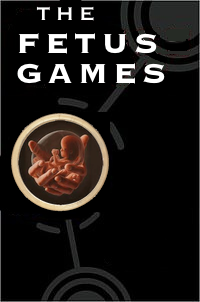
Dystopian novels seem to be the hot thing right now considering The Hunger Games trilogy.
Though I have to wonder why we have to go to fictional stories to get our dystopian fill? Imagine If fifty years ago somebody had written a novel of a future where we killed over a millions unborn each each year, judges overriding the people to institute same-sex marriage, Catholics loosing first amendment rights in the name of reproductive “rights”, a growing number of states with assisted-suicide, increasing number of cases involving euthanasia where a blind-eye is turned, increased divorce rates and declining marriage rates along with sub-replacement population rates? How would that novel have been received? Probably would have been seen as imaginative fiction and as an unlikely dystopia. Slippery slope arguments becoming absurd.
Yet we are living in that dystopia also known as the Culture of Death.
So maybe we like dystopian novels that remind us of a different dystopia then the one we are living in? The Hunger Games trilogy in some ways reminds me of the culture of death and involves some of the same attitudes.
In The Hunger Games kids are killing kids and not only it is alright according to the government, it is required. We also have kids killing kids. Many teenage mothers decide the only solution is to abort their children. The government does not have a problem with this and they declare it as a right that must be supported by the taxpayer in the case of abortion-inducing drugs. While The Hunger Games allows one of 24 tributes to survive, we have a much smaller percentage surviving the million-plus surgical abortions each year.
We also have our form of gladiatorial combat known as IVF. When multiple embryos are implanted it is hoped that one will survive. So there are plenty of “tributes” selected hoping that one will survive, if not just select some more “tributes” and try again. Or how about so-called pregnancy reductions? Again one is picked to survive the arena. Talk about Hunger Games, drugs making implantation difficult cause the embryo to starve to death.
In The Hunger Games we have the cruel President Coriolanus Snow wants to keep the status quo of gladiatorial combat among children. In the dystopia we live in we also have a president who wants to keep the status quo of murdering children and not only voted for infanticide, but has been the greatest advocate of abortion to ever sit in the Oval Office.
We can look at The Hunger Games and be outraged by this future society, just as long as we don’t look too closely at our own.
While The Hunger Games trilogy is rather dark and gets darker as it goes, it is not without hope and the plot involves overcoming of the culture that generated the games. We are also never without hope despite the darkness of our own culture. God can bring good out of evil. There should be a lot of good coming because we are certainly producing a lot of raw materials of evil for God to work with. Thankfully though we are not living in the dystopian that would have resulted without grace.
Greg and Jennifer Willits of the radio show “The Catholics Next Door” have a book out called not-suprisingly The Catholics Next Door: Adventures in Imperfect Living
This book, much like their show, gives inner glimpses into a Catholic family living their faith. Sections in the various chapters are alternatively written by Greg and Jennifer and each section gives their view of the topic and chapter at hand. This is not a book written predominately to tell their conversion/reconversion stories or the history of their various apostolates, but to write about those daily conversion involved in marriage and family. As Greg mentions at one point you can’t learn parenthood from a book, and they don’t attempt to do it themselves — but provide their experience in growing in faithfulness and struggling on the path of holiness.
Considering the HHS mandate their chapter discussing contraception is quite timely. We constantly hear how contraception is never mentioned in homilies, yet it was a homily they heard on contraception from a Deacon that started them on the road to rejecting what is seen as wisdom by the culture of death. They managed to persevere in seeing contraception as a sin despite being told by a priest who gave them the standard Jiminy Cricket response. They were also very open in regards the struggles in accepting what the Church teaches as both their hearts and intellects came to the truth.
What I enjoyed most about the book is its good humor and honesty about living the faith. There are many fun and instructive stories along the way and I think the book is very good for both the audience of those who have come to accept Church teaching and for those also who are struggling in believing what the Church teaches. Their writing style invokes the conversational tone they have on the show and you do feel as reading the book to be involved in a form of conversation. Recommended.
For this Lent I started out with the daily meditations from St. Thomas Aquinas named appropriately Meditations For Lent
Halfway through Lent I became aware of Amy Welborn’s Reconciled to God – Daily Lenten Devotions