
The Curt Jester
  • Home
  • About
  • Rome Depot
  • WikiCatechism
  • Free Catholic eBooks
  • Home
  • About
  • Rome Depot
  • WikiCatechism
  • Free Catholic eBooks

The Curt Jester

"It is the test of a good religion whether you can joke about it." GKC

The Weekly Francis

The Weekly Francis – Volume 454

by Jeffrey Miller March 15, 2023March 15, 2023
written by Jeffrey Miller
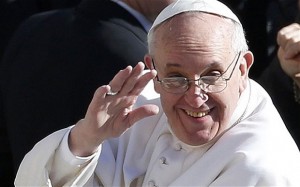
pope-francis2-300x187

The Weekly Francis is a compilation of the Holy Father’s writings, speeches, etc., which I also cross-post on Jimmy Akin’s blog.

This version of The Weekly Francis covers material released in the last week, from 9 March 2023 to 15 March 2023.

Angelus

  • 12 March 2023 – Angelus

General Audiences

  • 15 March 2023 – General Audience – Catechesis. The passion for evangelization’ the apostolic zeal of the believer 7. The Second Vatican Council. 2. Being apostles in an apostolic Church

Speeches

  • 9 March 2023 – To the Delegation of the ‘Joint Working Group for Dialogue’
  • 11 March 2023 – To Participants in the meeting promoted by the ‘Strategic Alliance of Catholic Research Universities’ (SACRU) and the Centesimus Annus Pro Pontifice Foundation

Papal Tweets

  • “Almsgiving, practised far from the spotlight, gives peace and hope to the heart. It reveals to us the beauty of giving, which then becomes receiving, and thus enables us to discover a precious secret: our hearts find more joy in giving than in receiving (Acts 20:35). #Lent” @Pontifex, 9 March 2023
  • “Fasting helps us to keep our spirit in shape. It makes us appreciate things for their true worth; it reminds us that life must not be made dependent upon the fleeting landscape of the present world. #Lent” @Pontifex, 10 March 2023
  • “In this Season of #Lent, let us learn to allow the Holy Spirit to form us so that our #prayer might become a living testimony of God’s tenderness for every person experiencing difficulty.” @Pontifex, 11 March 2023
  • “Let us remain united in faith and solidarity with the people who suffer because of war. Let us especially not forget the battered people of Ukraine.” @Pontifex, 12 March 2023
  • “Thirsty for love, Jesus quenches our thirst with love. As with the Samaritan woman, he comes to meet us in our daily life, he shares our thirst, he promises us living water that makes eternal life well up within us. #GospelOfTheDay (Jn 4:5–42)” @Pontifex, 12 March 2023
  • “Thank you for having accompanied me with your prayers. Please continue to do so.” @Pontifex, 13 March 2023
  • “Just as we recognize a tree by its fruit, so a life filled with good deeds is enlightening and carries the fragrance of Christ into the world.” @Pontifex, 14 March 2023
  • “The treasure we have received with our Christian vocation, we are obliged to give: it is the dynamic nature of the vocation, the dynamic nature of life.” @Pontifex, 15 March 2023
  • “I am close to the people of #Malawi, of Mozambique, and of South Africa, who have been struck in recent days by a powerful cyclone. Let us #PrayTogether for the deceased, the injured, the displaced. May the Lord sustain the families and communities most affected by this disaster.” @Pontifex, 15 March 2023

Papal Instagram

  • Franciscus
March 15, 2023March 15, 2023 0 comment
0 FacebookTwitterGoogle +Pinterest
My Reflection on Sunday’s Gospel John 4:5–42
Scripture

My Reflection on Sunday’s Gospel John 4:5–42

by Jeffrey Miller March 12, 2023March 12, 2023
written by Jeffrey Miller

John 4:5–42

5  So he came to a town of Samaria called Sychar, near the field that Jacob had given to his son Joseph. 6  Jacob’s well was there; so Jesus, wearied as he was from his journey, was sitting beside the well. It was about the sixth hour.

7  A woman from Samaria came to draw water. Jesus said to her, “Give me a drink.” 8  (For his disciples had gone away into the city to buy food.) 9  The Samaritan woman said to him, “How is it that you, a Jew, ask for a drink from me, a woman of Samaria?” (For Jews have no dealings with Samaritans.) 10  Jesus answered her, “If you knew the gift of God, and who it is that is saying to you, ‘Give me a drink,’ you would have asked him, and he would have given you living water.” 11  The woman said to him, “Sir, you have nothing to draw water with, and the well is deep. Where do you get that living water? 12  Are you greater than our father Jacob? He gave us the well and drank from it himself, as did his sons and his livestock.” 13  Jesus said to her, “Everyone who drinks of this water will be thirsty again, 14  but whoever drinks of the water that I will give him will never be thirsty again. The water that I will give him will become in him a spring of water welling up to eternal life.”15  The woman said to him, “Sir, give me this water, so that I will not be thirsty or have to come here to draw water.”

16  Jesus said to her, “Go, call your husband, and come here.”17  The woman answered him, “I have no husband.” Jesus said to her, “You are right in saying, ‘I have no husband’; 18  for you have had five husbands, and the one you now have is not your husband. What you have said is true.” 19  The woman said to him, “Sir, I perceive that you are a prophet. 20  Our fathers worshiped on this mountain, but you say that in Jerusalem is the place where people ought to worship.” 21  Jesus said to her, “Woman, believe me, the hour is coming when neither on this mountain nor in Jerusalem will you worship the Father. 22  You worship what you do not know; we worship what we know, for salvation is from the Jews. 23  But the hour is coming, and is now here, when the true worshipers will worship the Father in spirit and truth, for the Father is seeking such people to worship him. 24  God is spirit, and those who worship him must worship in spirit and truth.” 25  The woman said to him, “I know that Messiah is coming (he who is called Christ). When he comes, he will tell us all things.” 26  Jesus said to her, “I who speak to you am he.”

27  Just then his disciples came back. They marveled that he was talking with a woman, but no one said, “What do you seek?” or, “Why are you talking with her?” 28  So the woman left her water jar and went away into town and said to the people, 29  “Come, see a man who told me all that I ever did. Can this be the Christ?”30  They went out of the town and were coming to him.

31  Meanwhile the disciples were urging him, saying, “Rabbi, eat.”32  But he said to them, “I have food to eat that you do not know about.” 33  So the disciples said to one another, “Has anyone brought him something to eat?” 34  Jesus said to them, “My food is to do the will of him who sent me and to accomplish his work.35  Do you not say, ‘There are yet four months, then comes the harvest’? Look, I tell you, lift up your eyes, and see that the fields are white for harvest. 36  Already the one who reaps is receiving wages and gathering fruit for eternal life, so that sower and reaper may rejoice together. 37  For here the saying holds true, ‘One sows and another reaps.’ 38  I sent you to reap that for which you did not labor. Others have labored, and you have entered into their labor.”

39  Many Samaritans from that town believed in him because of the woman’s testimony, “He told me all that I ever did.” 40  So when the Samaritans came to him, they asked him to stay with them, and he stayed there two days. 41  And many more believed because of his word. 42  They said to the woman, “It is no longer because of what you said that we believe, for we have heard for ourselves, and we know that this is indeed the Savior of the world.”

John 4:5–42 ESV – Bible Gateway


Jesus is wearied from his journey and stops off at Jacob’s well in a town in Samaria and sits beside it. This well is very near the tomb of Joseph and the “well is very deep, exceeding a depth of one hundred feet, and the water is cool and delicious even to this day.”[1] While Jesus is wearied, his intent in not primarily to refresh himself with water from the well, but ultimately to refresh everyone from a well of living water. Jesus’ examples remind us that when exhausted, while we must attend to our physical needs, to never forget those around us and the mission we are ordered to.

There are some obvious themes here in this Gospel and the other reading for today, but also some deeper ones from a Jewish context.

Peter Kreeft mentions one theme:

Water is mentioned in three of the four Scripture passages in the Mass today: first, the Old Testament passage from Exodus about the water that flowed out of the rock that Moses struck at Massah and Meribah, and second, the mention of that event in the Psalm, and third, the Gospel reading about Jesus and the woman at the well.[2]

John Bergsma mentions a more hidden one connected to water in the reading from Romans:

St. Paul here speaks of being “justified by faith.” We know that justification is a fruit of Baptism (1 Pet 3:21). But for Baptism to be effective, it must be received in faith. Lack of faith can impede the subjective effects of the sacrament. Justification is by faith though not by faith alone. St. Paul goes on to allude to baptism again: “Hope does not disappoint, because the love of God has been poured out into our hearts through the Holy Spirit who has been given to us.”[3]

The other major theme is full of nuptial images, and that Jesus is the divine bridegroom.

This story is so full of nuptial images, it is difficult to explore them all. First, there is the very fact that Jesus meets this woman at a well. This happens three times in the Old Testament—it is how the Patriarchs met their wives. Think of Isaac and Rebekah (Gen 24— although this betrothal was by a proxy); Jacob and Rachel (Gen 29); and Moses and Zipporah (Exod 2). Conditioned by the Old Testament narratives, we actually expect a woman to show up as soon as Jesus sits down by the well, and so she does! … Interestingly, the only other place in the Gospel of John where Jesus will request a drink is from the Cross[4]

Brant Pitre develops this theme.

The reason John tells this story is because he recognizes that in it the woman at the well is like a bride and that Jesus is the divine bridegroom and that he has come into the world not to marry this individual woman in a natural marriage, but to enter into a supernatural marriage, a relationship as Savior between himself, and not just her as an individual, but with all the people of the world. So this woman, the Samaritan woman, is a kind of image of the Church, St. Augustine said, because she’s not just Israelite, she’s also pagan, so she kind of represents all of humanity in herself, both the Jews and the Gentiles, both the Israelites and the pagans, who are waiting for a savior to come and to save them. From what? To save them from their sin. To save them from their brokenness. To save them from their past. To save them from their adultery, because what did Israel do? They took all these false gods, they entered into relationships of spiritual adultery with all the false gods of the Canaanites and of the other peoples of the land.[5]

He fully develops this theme in his book “Jesus the Bridegroom: The Greatest Love Story Ever Told”

CCC 1617 The entire Christian life bears the mark of the spousal love of Christ and the Church. Already Baptism, the entry into the People of God, is a nuptial mystery; it is so to speak the nuptial bath[6] which precedes the wedding feast, the Eucharist. Christian marriage in its turn becomes an efficacious sign, the sacrament of the covenant of Christ and the Church. Since it signifies and communicates grace, marriage between baptized persons is a true sacrament of the New Covenant.,[7] [8]

When a woman from Samaria comes to draw water from the well, it surprised her when Jesus asks her to draw him water. “The Samaritan woman probably recognized that Jesus was Judean by his distinctive Jewish traditional clothing and his accent…”[9] “Centuries of animosity between Jews and Samaritans loom in the background of this episode”[10], and she would not have expected that Jesus would talk to her for multiple reasons beyond the cultural bias. St. John references the time as being noon and this would not be the normal hour that women would come to the well to draw water. “This is a woman with a checkered personal history, which is no doubt why she is coming to the well at noon, to avoid the other women in the town who came at the usual times of dawn and dusk.”[11]

As Jesus asks her to draw water for him, he also draws her into a deeper conversation, moving from physical to spiritual nourishment. There is a parallel between how this woman understands what Jesus says and the Apostles. That the first understanding is the more literal and not the more mystical intent of Jesus’ words. Jesus explains further, and she is still clinging to the lower interpretation. She thought if she was provided this living water and would not be thirsty again, she wouldn’t have to make this trek to the well when nobody is there. This is quite understandable since in our own lives we often diminish Jesus’ promises to us to a more material realm.

Jesus asks her to “Go, call your husband, and come here.” When she answers, she does not equivocate and answers Jesus with the truth, as she sees it, that she has no husband. Her discernment regarding who Jesus is, is also deepening. Jesus lauds her answer by replying “… for you have had five husbands, and the one you now have is not your husband. What you have said is true.”

the woman’s five husbands symbolize the pagan gods of five nations mentioned in 2 Kings 17. Jesus thirsts not only for water but, more important, for a permanent union between the Samaritans and the Father.[12]

The woman’s personal life parallels the historical experience of the Samaritan people. According to 2 Kings 17:24–31, the five foreign tribes who intermarried with the northern Israelites (Samaritans) introduced five male deities into their religion. These idols were individually addressed as Baal, a Hebrew word meaning “lord” or “husband”. The prophets denounced Israel for serving these gods, calling such worship infidelity to its true covenant spouse, Yahweh. Hope was kept alive, however, that God would show mercy to these Israelites and become their everlasting husband in the bonds of a New Covenant (Hos 2:16–20). This day has dawned in the ministry of Jesus, the divine bridegroom (3:29), who has come to save the Samaritans from a lifetime of struggles with five pagan “husbands”.[13]

Since the Samaritan women replied truthfully, she could also receive more, but she was also still at the level of concentrating on the doctrinal disagreements between the Jewish and Samaritan people.

The Ignatius Catholic Study Bible has this note on the term living water introduced in verse 4:10.[14]

An expression with two levels of meaning. The woman takes it to mean “flowing” water, i.e., a preferable alternative to stagnant well water (4:11–12). Jesus, however, is speaking of the life and vitality of the Spirit (7:38–39; CCC 728, 2560).

Several prophetic texts depict the blessings of the Lord as life-giving “water” (Is 12:3; 44:3; Ezek 47:1–12; Zech 14:8). See note on Jn 3:5.

Christian tradition associates living water with baptismal waters, which lead us to “eternal life” (4:14). Paul, in fact, describes Baptism in terms of drinking from the Spirit (1 Cor 12:13; CCC 694).

Samaritan belief was an admixture of Jewish faith and pagan idolatry. They accepted only the Pentateuch. Samaritan belief likely was varied, with different ideas about a messiah as a prophet as taken from the Pentateuch. She reveals her belief in a coming messiah who will be an anointed one and Jesus more fully reveals himself to her, saying “I who speak to you am he.”

At this prominent moment, the disciples return and were scandalized that Jesus was talking to a woman alone at the well, although they kept this thought to themselves. This woman’s conversion to belief in Jesus is sudden and in her haste to evangelize her fellow Samaritans, she leaves her water jar at the well.

Returning to Peter Kreeft’s commentary:

The other point in the story that I want to mention is about the jar or bucket that held the water. Those jars were much more important, and much more expensive, in ancient Israel than in today’s society. If you didn’t have a bucket you couldn’t draw water, and if you didn’t get water, you died. Yet this woman, this very worldly and practical woman, when she met Jesus, completely forgot her jar and left it at the well where Jesus was when she ran off to tell everyone in town that the Messiah had come. Jesus had taught her the lesson that the spiritual water that he gives is more important than the physical water that Jacob’s well gave, just as the soul is more important than the body.[15]

She becomes a witness to Jesus sharing what she had experienced, and that Jesus knew her and all that she ever did. Her testimony must have been rather amazing since she could convince people, despite her low state, in the order of their society. That they looked beyond this and did not dismiss her words, but were prompted to investigate what she said themselves. When they later returned, “They said to the woman, “It is no longer because of what you said that we believe, for we have heard for ourselves, and we know that this is indeed the Savior of the world.”

“Modern man listens more willingly to witnesses than to teachers, and if he does listen to teachers, it is because they are witnesses,”[16]

In verses 4:31–38, the disciples show their own obtuseness in not recognizing the food the Jesus truly hungers for, “The Father’s will is always the driving force behind Jesus’ mission (5:19; 6:38; 12:49; 14:10; etc.).” [17]

Sources

  • St. John’s Gospel: A Bible Study Guide and Commentary for Individuals and Groups: Ray, Stephen K.
  • Peter Kreeft, Food for the Soul: Reflections on the Mass Readings Cycle A
  • The Word of the Lord: Reflections on the Sunday Mass Readings for Year A – John Bergsma
  • Catholic Productions, Commentaries by Brant Pitre
  • Jesus and the Samaritan Woman – Israel Study Center
  • The Ignatius Catholic Study Bible꞉ The New Testament
  • The Gospel of John (Catholic Commentary on Sacred Scripture)
  • St. Pope Paul VI put it in 1975
  • Catechism of the Catholic Church, 2nd Edition
  • Photo by Ben White on Unsplash

  1. St. John’s Gospel: A Bible Study Guide and Commentary for Individuals and Groups. Steve Ray, 2002  ↩
  2. Peter Kreeft, Food for the Soul: Reflections on the Mass Readings Cycle A, Third Sunday of Lent  ↩
  3. The Word of the Lord: Reflections on the Sunday Mass Readings for Year A, John Bergsma, Third Sunday of Lent  ↩
  4. ibid  ↩
  5. Catholic Productions, Brant Pitre, Third Sunday of Lent, Year A  ↩
  6. Cf. Eph 5:26–27.  ↩
  7. Cf. DS 1800; CIC, can. 1055 § 2.  ↩
  8. Catholic Church. (2000). Catechism of the Catholic Church (2nd Ed). United States Catholic Conference, Paragraph 1617  ↩
  9. Dr. Eli Lizorkin-Eyzenberg, Jesus and the Samaritan Woman  ↩
  10. Ignatius Catholic Study Bible: New Testament  ↩
  11. The Word of the Lord: Reflections on the Sunday Mass Readings for Year A, John Bergsma, Third Sunday of Lent  ↩
  12. Francis Martin, William M. Wright IV, The Gospel of John (Catholic Commentary on Sacred Scripture)  ↩
  13. Ignatius Catholic Study Bible: New Testament  ↩
  14. ibid  ↩
  15. Peter Kreeft, Food for the Soul: Reflections on the Mass Readings Cycle A, Third Sunday of Lent  ↩
  16. Evangelii Nuntiandi, December 8, 1975, St. Pope Paul VI  ↩
  17. Ignatius Catholic Study Bible: New Testament, Verse 4:34  ↩
March 12, 2023March 12, 2023 0 comment
0 FacebookTwitterGoogle +Pinterest
Punditry

The Weekly Francis – Volume 453

by Jeffrey Miller March 8, 2023
written by Jeffrey Miller
pope-francis2-300x187

The Weekly Francis is a compilation of the Holy Father’s writings, speeches, etc., which I also cross-post on Jimmy Akin’s blog.

This version of The Weekly Francis covers material released in the last week, from 30 January 2023 to 8 March 2023.

Angelus

  • 5 March 2023 – Angelus

General Audiences

  • 8 March 2023 – General Audience – Catechesis. The passion for evangelization’ the apostolic zeal of the believer. 6. The Second Vatican Ecumenical Council. 1. Evangelization as ecclesial service

Letters

  • 30 January 2023 – Chirograph of the Holy Father for the new Statutes of the Institute for the Works of Religion

Speeches

  • 4 March 2023 – To the Editorial Board of the television program ‘A sua immagine’
  • 6 March 2023 – To the Community of the ‘Saint Mary Seminary’ of the diocese of Cleveland, United States of America

Papal Tweets

  • “Let us #PrayTogether for those who have suffered because of the wrongs done to them by members of the Church. May they find within the Church herself a concrete response to their pain and suffering. #PrayerIntention #ClickToPray Video” @Pontifex, 2 March 2023
  • “Our whole life of faith is a shared experience, for we follow Jesus together. Our Lenten journey is “synodal”, since we travel together along the same path, as disciples of the one Master. #Lent” @Pontifex, 4 March 2023
  • “The #GospelOfTheDay (Mt 17:1–9) teaches us how important it is to remain with Jesus. In fact, it is by staying with him that we learn to recognize on his face the luminous beauty of love he gives us, even when it bears the marks of the cross.” @Pontifex, 5 March 2023
  • “These past days, my thought has been often gone to the victims of the train accident that happened in Greece. Many were young students. I am praying for the deceased. I am near the wounded and their relatives. May Our Lady comfort them.” @Pontifex, 5 March 2023
  • “I am praying for the numerous victims of the shipwreck that took place off of Cutro, near Crotone. I renew my appeal that similar tragedies may not be repeated. Let the human traffickers be stopped so they do not continue to dispose of the lives of so many innocent people!” @Pontifex, 5 March 2023
  • “The path of poverty and self-denial (fasting), concern and acts of love for wounded humanity (almsgiving), and familiar dialogue with the Father (prayer) make it possible for us to incarnate a sincere faith, a living hope, and active charity. #Lent” @Pontifex, 6 March 2023
  • “In this Season of #Lent, let us exercise interior clarity, placing ourselves before the #WordOfGod in #prayer, so that an advantageous struggle against the evil that enslaves us, a struggle for freedom, may take place within us.” @Pontifex, 7 March 2023
  • “Let us #PrayTogether so that #women, every woman, may be respected, protected and esteemed. Violence against women and mothers is violence against God himself, who from a woman, from a mother, took on our human condition.” @Pontifex, 8 March 2023
  • “Every baptized person is sent to announce the Good News by loving and serving others. We cannot remain mere spectators. Apostolic zeal impels us to always seek new ways of proclaiming and witnessing to God’s love. #GeneralAudience” @Pontifex, 8 March 2023

Papal Instagram

  • Franciscus
March 8, 2023 0 comment
0 FacebookTwitterGoogle +Pinterest
A Bird Pecking Away
Spirituality

A Bird Pecking Away

by Jeffrey Miller March 7, 2023March 7, 2023
written by Jeffrey Miller

Sometimes I have heard this metaphor used to grasp the idea of eternity.

They took it from a story in the Brothers Grimm where a shepherd boy has to answer several riddles, one of which is “how many seconds of time are there in eternity?” The boy answers by telling the story of a bird who sharpens its beak every hundred years on a mountain. When the mountain is gone, one second of eternity will have passed.”

I was thinking about this regarding confession and confessing the same sins repeatedly. I need a regular confessor, so I can just say “ditto.” While I recognize that these repeated sins are being reduced, interiorly, it feels like the bird pecking away on them.

Yet, I am also thankful that there is progress, however minute. I think of St. Paul’s repeated prayer that was denied and Jesus telling him, “My grace is sufficient for you, for my power is made perfect in weakness.”

I recently ran across this aspect of confession I had not considered before in “Divine Intimacy” by Father Gabriel of St. Mary Magdalen, O.C.D.

“It is well to remember that the efficacy of the absolution is not limited merely to sins that have already been committed, but that it even extends into the future. By means of the particular sacramental grace, the soul is strengthened beforehand against relapses and it is offered the fortitude to resist temptations and to carry out its good resolutions. The Blood of Christ is, in this sense, not only a remedy for the past, but also a preservative and a strengthening help for the future. The soul which plunges into it, as into a healthful bath, draws from it new vigor and sees the strength of its passions extinguished little by little. We see then the importance of frequent confession for a soul desirous of union with God, a soul which must necessarily aspire to total purification.”

March 7, 2023March 7, 2023 0 comment
0 FacebookTwitterGoogle +Pinterest
My Reflection on Sunday’s Gospel Matthew 17:1–9
Scripture

My Reflection on Sunday’s Gospel Matthew 17:1–9

by Jeffrey Miller March 5, 2023March 5, 2023
written by Jeffrey Miller

17 And after six days Jesus took with him Peter and James, and John his brother, and led them up a high mountain by themselves.2  And he was transfigured before them, and his face shone like the sun, and his clothes became white as light. 3  And behold, there appeared to them Moses and Elijah, talking with him. 4  And Peter said to Jesus, “Lord, it is good that we are here. If you wish, I will make three tents here, one for you and one for Moses and one for Elijah.” 5  He was still speaking when, behold, a bright cloud overshadowed them, and a voice from the cloud said, “This is my beloved Son, with whom I am well pleased; listen to him.” 6  When the disciples heard this, they fell on their faces and were terrified.7  But Jesus came and touched them, saying, “Rise, and have no fear.” 8  And when they lifted up their eyes, they saw no one but Jesus only.

9  And as they were coming down the mountain, Jesus commanded them, “Tell no one the vision, until the Son of Man is raised from the dead.”

Matthew 17:1–9 ESV – Bible Gateway


This passage references that this event occurred eight days after the previous passage in In Matthew 15:28 “Truly, I say to you, there are some standing here who will not taste death until they see the Son of Man coming in his kingdom.”, the parallel passage shows six days. This discrepancy is something some Church Fathers reconcile, but what is important here is how the promise about some of them seeing the kingdom of God is unlocked. Peter, John, and James saw this revealed in the Transfiguration. Each of the Synoptic Gospels provides this time cue to help us connect the dots.

From St. Thomas Aquinas’ Commentary on the Gospel of St. Matthew:

But why is it stated here, After six days, and in Luke (9, 28) it is stated, “After eight days”? It is apparent that Luke numbers the day on which He spoke these words, and also the day of the transfiguration; but Matthew numbers only the intermediate days; for that reason, when the first and the last days have been subtracted, there remain but six days. By six days are signified the six Ages, after which we hope to arrive at the glory to come. Likewise, in six days, the Lord finished His works; and so, the Lord chose to show Himself after six days, because, unless we are raised up to God above all the creatures that the Lord created, we cannot reach the kingdom of God.[1]

There is a lot to digest regarding trying to understand the transfiguration at just the surface layer and, more so, the spiritual depths.

Dr. John Bergsma gives a tight summary of how the Fathers viewed this:

As the Fathers long recognized, the Transfiguration is a foretaste or glimpse of the glory of Christ in his resurrected state. The sight of his glory is given to Peter, James, and John to encourage them to persevere through the difficult times that lay in front of them before they witness Christ’s Resurrection. For us now hearing this Gospel proclaimed at Mass, it is meant to encourage us to persevere not only in Lenten mortification and asceticism until we sacramentally experience Christ’s triumph at Easter, but more broadly in embracing the sufferings of the Christian life until our lowly bodies become like his glorious body (Phil 3:21).[2]

One question I have heard asked multiple times is how did Peter, James, and John know this was Moses and Elijah? My guess would be that Elijah’s clothing and appearance was rather well-known, which is why they recognized John the Baptist as coming in the manner of Elijah. I would also surmise that once they recognized Elijah, it would not take too much effort for them to determine the other figure was Moses. The Catholic Commentary on Sacred Scripture points out “both figures were associated with Jewish eschatological hopes, for the Old Testament proclaimed the return of Elijah (Mal 3:23–25) and the coming of a prophet like Moses (Deut 18:15–19).”[3] These were two important and dominant figures in salvation history and expected their return in some manner.

There is also a good deal of speculation regarding why Jesus revealed this to Peter, James, and John only? That only they were led up the mountain and witness this overshadowing by the cloud of God’s glory, this theophany. There are many possibilities here regarding God’s wisdom in doing this. Still, we can scratch the surface with some conjecture. For example, I like this take from St. Thomas Aquinas, “And why did He take only three disciples? It was to signify that no one can reach God’s kingdom except in the faith of the Trinity.”[4]

Turning to a Doctor of the Church, St. John of Damascus:

Matthew and Mark indeed say that the transfiguration took place on the sixth day after the promise made to the disciples, but Luke on the eighth. But there is no disagreement in these testimonies, but they who make the number six, taking off a day at each end, that is, the first and the last, the day on which He makes the promise, and that on which He fulfilled it, have reckoned only the intervening ones, but He who makes the number eight, has counted in each of the two days above mentioned. But why were not all called, but only some, to behold the sight? There was only one indeed who was unworthy to see the divinity, namely Judas, according to the word of Isaiah, Let the wicked be taken away, that he should not behold the glory of God. (Isai. 26:10 LXX.) If then he alone had been sent away, he might have, as it were from envy, been provoked to greater wickedness. Henceforward He takes away from the traitor every pretext for his treachery, seeing that He left below the rest of the company of the Apostles. But He took with Him three, that in the mouths of two or three witnesses every word should be established. He took Peter, indeed, because He wished to shew him that the witness he had borne to Him was confirmed by the witness of the Father, and that he was as it were to preside over the whole Church. He took with Him James, who was to be the first of all the disciples to die for Christ; but He took John as the clearest singer of the sacred doctrine, that having seen the glory of the Son, which submits not to time, he might sound forth, In the beginning was the Word. (John 1:1.) [5]

There are other intriguing reasons that display the depth of parallelism that the Holy Spirit breathes into sacred scripture.

Dr. Brant Pitre brings up this example:

but he brings up Peter and then James and John who were also brothers just like Nadab and Abihu. Why does he bring these three up? Because he’s preparing them for an experience like Moses had. When Moses went up the mountain to meet God, he brought Aaron, Nadab and Abihu; Jesus brings Peter, James and John up the mountain for the same reason.[6]

Jesus is transfigured in his glory “and his face shone like the sun, and his clothes became white as light,” Peter has his typical reaction of engaging tongue before engaging his brain. As Mark 9:6 says regarding Peter’s reaction, “For he did not know what to say.” This is a lesson for all of us. How often when we have a partial glimpse of God’s glory and his action in our life that our first response is not well-considered? I can certainly think of all of my superficial responses when I have encountered this in my life. We have a tendency to want to condense mystery into a soundbite. To transform it into bullet points, we could present. It is good for us to draw this in and to make sense of it. To make initial conclusions, but to take the time to realize how little of the picture we see and instead to draw this out in contemplation in awe and wonder. Sometimes in the face of recognizing God’s glory, our proper response is to do as these apostles did, “they fell on their faces and were terrified.” It is an act of love and humility to be overwhelmed by God’s glory, we were made for his glory, to recognize our own sinfulness, and how much we want to please God by repenting of this.

One benefit of the Lenten season is taking stock of the barnacles and accretions we have accumulated and allowed to take hold on us. To fall on our face so that ultimately we can see the face of God. That terror at our own sins is rectified when we do as God the Father says here regarding to Jesus, “listen to him.” Jesus approaches the apostles who have prostrated themselves by saying, “Rise, and have no fear.” We properly pursued holiness with humility along with the recognition that Jesus has called us to sonship, that he has called us friends. We should be filled with gratitude and thankfulness for what he has done in our lives and the grace he is giving us to be more like him. As St. Paul writes, “that he who began a good work in you will bring it to completion at the day of Jesus Christ. (Philippians 1:6)”

“And when they lifted up their eyes, they saw no one but Jesus only.”

This event was overwhelming for Peter, James, and John. Seeing Jesus transfigured along with the appearances of Moses and Elijah would have been pointing them to fulfillment of the Kingdom of God and all the eschatological aspects this entailed. Was all this culminating in the end of the world? We all see signs in the ages in which we live. What do all these world events portend? Jesus lifts these fears when we fix our eyes on him and see “Jesus only.”

From the Catechism of the Catholic Church:[7]

555 For a moment Jesus discloses his divine glory, confirming Peter’s confession. He also reveals that he will have to go by the way of the cross at Jerusalem in order to “enter into his glory.”[8] Moses and Elijah had seen God’s glory on the Mountain; the Law and the Prophets had announced the Messiah’s sufferings.[9] Christ’s Passion is the will of the Father: the Son acts as God’s servant;[10] the cloud indicates the presence of the Holy Spirit. “The whole Trinity appeared: the Father in the voice; the Son in the man; the Spirit in the shining cloud.”[11] (2576, 2583; 257)

You were transfigured on the mountain, and your disciples, as much as they were capable of it, beheld your glory, O Christ our God, so that when they should see you crucified they would understand that your Passion was voluntary, and proclaim to the world that you truly are the splendor of the Father. [12]

One final thought regarding the transfiguration brought out by the Catholic Commentary on Sacred Scripture.

The transfiguration scene serves as “a twin of sorts” to the execution narrative in 27:32–54. Davies and Allison beautifully note the parallels. “In the one, a private epiphany, an exalted Jesus, with garments glistening, stands on a high mountain and is flanked by two religious giants from the past. All is light. In the other, a public spectacle, a humiliated Jesus, whose clothes have been torn from him and divided, is lifted upon a cross and flanked by two common, convicted criminals. All is darkness. We have here a pictorial antithetical parallelism, a diptych in which the two plates have similar lines but different colors.” The parallel scenes highlight the horror of Good Friday and the splendor of Jesus’ love for us. It is no ordinary man that will be crucified on Calvary, but the beloved Son of God revealed in glory at the transfiguration. This same glorified Son will freely submit himself to utter humiliation in order to redeem the human family (see Phil 2:5–11).[13]

Sources

  • St. Thomas Aquinas, Commentary on the Gospel of St. Matthew
  • The Word of the Lord: Reflections on the Sunday Mass Readings for Year A – John Bergsma
  • The Gospel of Matthew (Catholic Commentary on Sacred Scripture)
  • Catena Aurea: Commentary on the Four Gospels, Collected out of the Works of the Fathers, Volume 3: St. Luke – Verbum
  • Catholic Productions, Commentaries by Brant Pitre
  • Catechism of the Catholic Church, 2nd Edition
  • Photo by Ben White on Unsplash

  1. Commentary on the Gospel of St. Matthew, Dolorosa Press  ↩
  2. The Word of the Lord: Reflections on the Sunday Mass Readings for Year A, John Bergsma, 2nd Sunday of Lent, Year A  ↩
  3. The Gospel of Matthew, Catholic Commentary on Sacred Scripture, Edward Sri and Curtis Mitch  ↩
  4. Commentary on the Gospel of St. Matthew, Dolorosa Press  ↩
  5. Catena Aurea: Commentary on the Four Gospels, Collected out of the Works of the Fathers: St. Luke, St. John Damascene, Presbyter of Damascus, A.D. 730 (Orat. de Trans fig. §. 8.)  ↩
  6. Catholic Productions, Brant Pitre, 2nd Sunday in Lent (Year A)  ↩
  7. Catholic Church. (2000). Catechism of the Catholic Church (2nd Ed). United States Catholic Conference.  ↩
  8. Lk 24:26.  ↩
  9. Cf. Lk 24:27.  ↩
  10. St. Thomas Aquinas, STh III, 45, 4, ad 2.  ↩
  11. Byzantine Liturgy, Feast of the Transfiguration, Kontakion.  ↩
  12. Cf. Isa 42:1.  ↩
  13. The Gospel of Matthew, Catholic Commentary on Sacred Scripture, Edward Sri and Curtis Mitch  ↩
March 5, 2023March 5, 2023 0 comment
0 FacebookTwitterGoogle +Pinterest
The Weekly Francis

The Weekly Francis – Volume 452

by Jeffrey Miller March 1, 2023March 1, 2023
written by Jeffrey Miller
pope-francis2-300x187

The Weekly Francis is a compilation of the Holy Father’s writings, speeches, etc., which I also cross-post on Jimmy Akin’s blog.

This version of The Weekly Francis covers material released in the last week, from 9 February 2023 to 26 February 2023.

Angelus

  • 26 February 2023 – Angelus

Speeches

  • 9 February 2023 – To a delegation of representatives of the Medical Area of the Health Pastoral Office of the diocese of Rome
  • 17 February 2023 – To a group of businesspeople from Mexico
  • 18 February 2023 – To participants in Study Day on Siblings with Disabilities
  • 23 February 2023 – To a Delegation of the Max Planck Society
  • 23 February 2023 – To the Delegation of of priests and monks of the Oriental Orthodox Churches
  • 24 February 2023 – To the Members of the ‘Pro Petri Sede’ Association
  • 24 February 2023 – Impromptu words of the Holy Father at the end of the screening of the documentary ‘Freedom on Fire’ Ukraine’s Fight for Freedom’
  • 25 February 2023 – Inauguration of the Judicial Year of Vatican City State Tribunal
  • 25 February 2023 – To Rectors, professors, students and staff of the Roman Pontifical Universities and Institutions

Papal Tweets

  • “#Lent is the “favourable time” to return to what is essential, to divest ourselves of all that weighs us down, to be reconciled with God, and to rekindle the fire of the Holy Spirit hidden beneath the ashes of our frail humanity.” @Pontifex, 23 February 2023
  • “One year ago the absurd war against Ukraine began. Let us remain close to the tormented Ukrainian people, who continue to suffer, and let us ask ourselves: has everything possible been done to stop the war? Peace built on rubble will never be a true victory.” @Pontifex, 24 February 2023
  • “During #Lent we are called to respond to God’s gift by accepting his word, which is “living and active” (Heb 4:12). Regular listening to the #WordOfGod makes us open and docile to his working and bears fruit in our lives.” @Pontifex, 25 February 2023
  • “I renew my appeal to make dialogue prevail over hatred and vengeance in the Holy Land, and I pray to God for Palestinians and Israelis, that they may find the path to fraternity and peace, with the help of the international community.” @Pontifex, 26 February 2023
  • “Let’s #PrayTogether for the people of Burkina Faso, so that the violence they have suffered does not make them lose faith in the path of democracy, justice and peace.” @Pontifex, 26 February 2023
  • “Jesus teaches us to repel the attacks of the devil who, as his name says, wants to sow division in us, between us and God, between us and others. How do we repel him? Not by negotiating with him, but by opposing him in faith with the divine word. #GospelOfToday (Mt 4:1–11)” @Pontifex, 26 February 2023
  • “Let’s #PrayTogether also for the victims of the shipwreck this morning, off the Calabrian coast, including many children, and for the other surviving migrants. I thank those who have brought relief and are providing shelter.” @Pontifex, 26 February 2023

Papal Instagram

  • Franciscus
March 1, 2023March 1, 2023 0 comment
0 FacebookTwitterGoogle +Pinterest
Our Cosmic Insignificance
Spirituality

Our Cosmic Insignificance

by Jeffrey Miller February 28, 2023February 28, 2023
written by Jeffrey Miller

Sometimes you hear someone talking about our insignificance as compared to the vastness of space. As it revealed more and more of the universe that in comparison we should reflect on our overall insignificance.

Stephen Hawking said that we are “just a chemical scum on a moderate-sized planet, orbiting round a very average star in the outer suburb of one among a hundred billion galaxies.”

This morning after reading the first reading for Mass today I was reflecting on “So shall my word be/ that goes forth from my mouth;/ It shall not return to me void,/ but shall do my will,/ achieving the end for which I sent it.” from Isaiah 55.

This had me thinking about along the ends of which God has created us to give him glory. We do not invent our purpose, but discover it in his will for us. The vastness of the universe and all creation are of little importance compared to the love that we receive and give. It is God’s love for us that is so vast that is the genuine wonder that should make us fall to our knees in gratitude. Reflecting on creation and the universe shows us God’s creative love that has no bounds. We can find beauty looking at the material aspects of the cosmos and, more so, turning to its author.

The Gospel reading for today is where Jesus teaches us the “Our Father.” Let us be stunned by the vastness of the universe, but more stunned that we are called to this relationship to the Trinity. There is nothing insignificant about this regarding every single person called to this. The universe has nothing for us compared to the transforming union that God calls us to.

February 28, 2023February 28, 2023 0 comment
0 FacebookTwitterGoogle +Pinterest
My Reflection on Sunday’s Gospel Matthew 4:1-11
Scripture

My Reflection on Sunday’s Gospel Matthew 4:1-11

by Jeffrey Miller February 26, 2023
written by Jeffrey Miller

Matthew 4:1–11

4  Then Jesus was led up by the Spirit into the wilderness to be tempted by the devil. 2  And after fasting forty days and forty nights, he was hungry. 3  And the tempter came and said to him, “If you are the Son of God, command these stones to become loaves of bread.”4  But he answered, “It is written,

“‘Man shall not live by bread alone,
    but by every word that comes from the mouth of God.’”

5  Then the devil took him to the holy city and set him on the pinnacle of the temple 6  and said to him, “If you are the Son of God, throw yourself down, for it is written,

“‘He will command his angels concerning you,’

and

“‘On their hands they will bear you up,
    lest you strike your foot against a stone.’”

7  Jesus said to him, “Again it is written, ‘You shall not put the Lord your God to the test.’” 8  Again, the devil took him to a very high mountain and showed him all the kingdoms of the world and their glory. 9  And he said to him, “All these I will give you, if you will fall down and worship me.” 10  Then Jesus said to him, “Be gone, Satan! For it is written,

“‘You shall worship the Lord your God
    and him only shall you serve.’”

11  Then the devil left him, and behold, angels came and were ministering to him

Matthew 4.1–11 ESV – Bible Gateway


As we enter the first Sunday of Lent, the lectionary pairs the Gospel with the First Reading to set the scene and to prepare us.

The only way the Gospel writers could possibly have learned about Christ’s three temptations in the wilderness was from Christ himself. They were not there. He was alone. So this story is right from the lips of Jesus Christ, not from human witnesses and interpreters.[1]

One of the first questions people intuitively ask about event recorded in the synoptic Gospels is the devil’s knowledge of who Jesus is? Jimmy Akin in his commentary on the parallel passage in the Gospel of Luke responds:

It could be that the devil is trying to put pressure on Jesus out of sheer spite, without hoping to actually corrupt him. On the other hand, the devil may have the irrational arrogance to think that he could corrupt the infinitely holy Son of God.

Or it could be something else: The Greek verb used here (peirazō) means not only tempt but also test. The devil can be seen as testing Jesus—putting pressure on Jesus to see whether it is possible to get him to give in to sin.

Why would he do that? If the devil knows that it is impossible to get the Son of God to sin then, presumably, he would be doing it to find out if Jesus is the Son of God. By passing the test, Jesus shows that he is.[2]

The Catechism[3] points out:

394 Scripture witnesses to the disastrous influence of the one Jesus calls “a murderer from the beginning,” who would even try to divert Jesus from the mission received from his Father. “The reason the Son of God appeared was to destroy the works of the devil.” In its consequences the gravest of these works was the mendacious seduction that led man to disobey God.

395 The power of Satan is, nonetheless, not infinite. He is only a creature, powerful from the fact that he is pure spirit, but still a creature. He cannot prevent the building up of God’s reign. Although Satan may act in the world out of hatred for God and his kingdom in Christ Jesus, and although his action may cause grave injuries—of a spiritual nature and, indirectly, even of a physical nature—to each man and to society, the action is permitted by divine providence which with strength and gentleness guides human and cosmic history. It is a great mystery that providence should permit diabolical activity, but “we know that in everything God works for good with those who love him.”

Jimmy also replied to this question on a recent episode of Catholic Answers Live where he also notes that the even if the devil knew he was the Christ, he could have just been being malicious.

The Gospel writer presents this event with the imagery of “a new Exodus with Jesus as the new Israel.”[4]

Dr. Brant Pitre ties together our first reading from Genesis with the three temptations presented here:

So that’s the threefold lust: the lust of the flesh, the lust of the eyes and the pride of life. Well what do those mean? So if you correlate these three with the three temptations of Adam and Eve, you can see that they go together. The lust of the flesh is the disordered desire for pleasure, so like when Eve sees the fruit, she saw that it was “good for food.” That’s the lust of the flesh, her desire to eat of that fruit even though it had been forbidden, so the desire for the pleasure of eating. Second, the lust of the eyes, goes back to Eve seeing the fruit, that it wasn’t just good for fruit, but that it was a “delight to the eyes.” In other words, it was beautiful, it was some good-looking fruit. So she saw it and even though it didn’t belong to her, she wanted to possess it. So the lust of the flesh is the disordered desire for pleasure and the lust of the eyes is a disordered desire to possess things that don’t belong to us. And then finally, the pride of life, St. John describes, goes back to the third reason. Eve took of the fruit because it was “desirable to make one wise.” What does that mean? In other words, to make one wise like God. Because what the devil said to her was “you will not die when you eat of it, the day you eat of it you will become like God,” or in the Hebrew literally like Elohim (plural), you will become like gods. So there’s a temptation there to be like God but apart from God. So this is what we call the sin of pride or vanity. So those are the three temptations: pleasure, possessions and pride or vanity. The lust of the flesh, the lust of the eyes and the pride of life.[5]

St. Thomas Aquinas in his commentary on Matthew notes the difference in ordering of the three temptations/testings.

“… according to Augustine: for everything which is narrated here is also narrated in Luke nor is it related in Luke either that this was the first or the second temptation. But Rabanus says that Luke observes the order of history; and thus he ordered the account according to which it happened. On the other hand, Matthew followed the nature of the temptations, because after the temptation of gluttony and of vainglory follows the temptation of ambition: for thus was Adam tempted…”[6]

There is so much that you can take from the devil’s questions and Jesus replies, but I found this an interesting irony, as presented by Dr. Brant Pitre:

This is a really interesting temptation because in it, the devil quotes Scripture also. We have seen that Jesus is quoting Scripture, so the devil gets into the game and he quotes Psalm 91, which does in fact say that “God will give his angels charge of you and they will bear you up less you strike your foot against a stone.” But what is interesting about this Psalm in a first century Jewish context, is that the Psalm was also the Psalm of exorcism. So in other words, Psalm 91 was the Psalm that Jewish exorcists would sing when they were casting out demons. They used this Psalm to cast out the devil. So it is kind of funny. I like to tell my students sometimes that “the devil knew this Psalm really well,” he had heard it before in other words. So he takes a couple of the verses out of context and then he throws them back at Jesus.
… So is this a real temptation? Well I think yes because what the devil is basically doing is trying to tell Jesus to commit the sin of pride. In other words, he’s trying to say “if you’re really the son of God then why don’t you just prove it.”[7]

He also notes an important conclusion to this testing and one that is good to dwell on.

The triumph of Jesus in the wilderness is much more than a personal victory. It is also a triumph for the people of God. In part, this is because Jesus overcomes temptation with his human will. He could have vanquished the tempter with his divine might, but this was not his chosen approach. Instead, Jesus faced his trial in a human way, in full solidarity with humanity. He never ceased to be the Son of God, and yet he won the battle as a man.[8]

Dr. Peter Kreeft concurs in this when he wrote:

Jesus was fully human, like us in every way except sin. Therefore, he was tempted, really tempted, because he had a completely human nature. Adam and Eve were tempted even before they had any sin, when they were completely holy and completely innocent. So was the perfect and innocent Jesus. Adam and Eve gave in; Jesus did not.[9]

This example from Jesus is one for us to draw upon in our lives. The Ignatius Catholic Study Bible summarizes this aspect.

Morally (St. John Chrysostom, Hom. in Matt. 8): Jesus’ victory sets an example for Christian obedience. Earthly life is a wilderness trial for God’s people en route to the land of heaven. Through this probationary period, God wills the faithful to overcome temptations from the world, the flesh, and the devil. Triumph is possible through penance and obedience to God’s word. Rather than earthly bread and power, the faithful must desire the food of God’s will and the humility of Christ (11:29; Jn 4:34). The battle successfully won merits heavenly comfort in the company of angels (4:11). The Church annually reminds us of this life-long vocation during the 40 days of Lent (CCC 540, 2849).[10]

One last point on these temptations regarding Jesus. Returning to St. Thomas Aquinas’s commentary, where he references St. Gregory the Great.

Gregory says that there are three stages of temptation, namely, by suggestion, pleasure and consent. The first is from without, and can be without sin; the second is from within, in which it begins to be a sin, and which indeed is completed by consent. The first stage could have been in Christ, but not the others.[11]

Returning to Dr. Brant Pitre:

In the end, Jesus has proven himself the loyal Son of God. Neither the pangs of hunger nor the prospect of worldwide kingship have been able to bend his will away from the Father’s. In a final scene, we are told that angels from heaven came and ministered to him. Most likely this means that Jesus was fed by the angels, much as Elijah was in the Old Testament (1 Kings 19:4–7).[12]

I love this paragraph from the Catechism on the role of Angels in Jesus’ life. To reflect on the role of our Guardian Angel in our own life.

333 From the Incarnation to the Ascension, the life of the Word incarnate is surrounded by the adoration and service of angels. When God “brings the firstborn into the world, he says: ‘Let all God’s angels worship him.’” Their song of praise at the birth of Christ has not ceased resounding in the Church’s praise: “Glory to God in the highest!” They protect Jesus in his infancy, serve him in the desert, strengthen him in his agony in the garden, when he could have been saved by them from the hands of his enemies as Israel had been. Again, it is the angels who “evangelize” by proclaiming the Good News of Christ’s Incarnation and Resurrection. They will be present at Christ’s return, which they will announce, to serve at his judgment.[13]

Sources

  • Peter Kreeft, Food for the Soul: Reflections on the Mass Readings Cycle A
  • Jimmy Akin’s Studies on Mark (3 vols.) – Verbum
  • Catholic Productions, Commentaries by Brant Pitre
  • Catechism of the Catholic Church, 2nd Edition
  • St. Thomas Aquinas, Commentary on the Gospel of St. Matthew
  • The Ignatius Catholic Study Bible꞉ The New Testament
  • Photo by Ben White on Unsplash

  1. Peter Kreeft, Food for the Soul: Reflections on the Mass Readings Cycle A, # FIRST SUNDAY OF LENT  ↩
  2. Jimmy Akin. (2014). Mark, A Commentary.  ↩
  3. Catholic Church. (2000). Catechism of the Catholic Church (2nd Ed). United States Catholic Conference. Paragraphs 394, 395.  ↩
  4. Catholic Productions, Brant Pitre, 1st Sunday in Lent (Year A)  ↩
  5. ibid  ↩
  6. Commentary on the Gospel of St. Matthew, Dolorosa Press  ↩
  7. Catholic Productions, Brant Pitre, 1st Sunday in Lent (Year A)  ↩
  8. ibid  ↩
  9. Peter Kreeft, Food for the Soul: Reflections on the Mass Readings Cycle A, # FIRST SUNDAY OF LENT  ↩
  10. Ignatius Catholic Study Bible: New Testament  ↩
  11. Commentary on the Gospel of St. Matthew, Dolorosa Press  ↩
  12. Catholic Productions, Brant Pitre, 1st Sunday in Lent (Year A)  ↩
  13. Catholic Church. (2000). Catechism of the Catholic Church (2nd Ed). United States Catholic Conference. Paragraph 333.  ↩
February 26, 2023 0 comment
0 FacebookTwitterGoogle +Pinterest
The Weekly Francis

The Weekly Francis – Volume 451

by Jeffrey Miller February 22, 2023
written by Jeffrey Miller
pope-francis2-300x187

The Weekly Francis is a compilation of the Holy Father’s writings, speeches, etc., which I also cross-post on Jimmy Akin’s blog.

This version of The Weekly Francis covers material released in the last week, from 25 January 2023 to 22 February 2023.

Angelus

  • 19 February 2023 – Angelus

Apostolic Letter

  • 14 February 2023 – Regulation of the Independent Supervisory Commission of the Vicariate of Rome

General Audiences

  • 15 February 2023 – General Audience – Catechesis. 4. The first apostolate
  • 22 February 2023 – General Audience – Catechesis. The passion for evangelization’ the apostolic zeal of the believer. 6. The protagonist of the proclamation’ the Holy Spirit

Homilies

  • 22 February 2023 – Holy Mass, Blessing and Imposition of the Ashes

Messages

  • 25 January 2023 – Lent 2023’ Lenten Penance and the Synodal Journey

Speeches

  • 10 February 2023 – To Participants in the Forum of Indigenous Peoples
  • 16 February 2023 – To a delegation from the United Bible Societies
  • 17 February 2023 – To Participants in the General Chapter of the Congregation of Marian Fathers of the Immaculate Conception of the Most Blessed Virgin Mary
  • 18 February 2023 – To Participants at the Conference promoted by the Dicastery for Laity, Family and Life
  • 18 February 2023 – To Participants in the formation course for legal practitioners, organized by the Tribunal of the Roman Rota
  • 20 February 2023 – To the Members of the Pontifical Academy for Life
  • 20 February 2023 – To the Members of the ‘Circolo San Pietro’

Papal Tweets

  • “Let us not forget those suffering from the earthquake in #Turkey and #Syria. Let us continue to pray for the victims and their loved ones and make a concrete commitment to help the survivors. May the Lord give consolation to the people affected by this terrible tragedy.” @Pontifex, 15 February 2023
  • “The proclamation of the Gospel does not begin from us, but from the beauty of what we have freely received: meeting Jesus, knowing Him, and discovering that we are loved and saved. It is such a great gift that we cannot keep it to ourselves, we feel the need to spread it.” @Pontifex, 15 February 2023
  • “The #WordOfGod, which is addressed to all, calls us to conversion. When we are filled with the Word, it transforms our hearts and minds; it changes us and helps us direct our lives to the Lord.” @Pontifex, 16 February 2023
  • “#Lent is a time of grace to the extent that we listen to Jesus. He speaks to us in the Word of God and through our brothers and sisters, especially in the faces and stories of those who are in need. @VaticanIHD
    VUYft Message” @Pontifex, 17 February 2023
  • “God never leaves us on our own. God waits for us to ask Him to give us a hand. We need to learn how to distinguish God’s voice through silent #Prayer and intimate dialogue with Him, treasuring in our hearts that which does us good and gives us peace.” @Pontifex, 18 February 2023
  • “In the #GospelOfToday (Mt 5:38–48), the Lord invites us not to respond to evil with evil, but to dare to do good, even if we receive little or nothing in return. For it is this love that slowly transforms conflicts, overcomes enmities and heals the wounds of hatred.” @Pontifex, 19 February 2023
  • “I am close to the people of New Zealand, struck in recent days by a devastating cyclone. Let’s #PrayTogether” @Pontifex, 19 February 2023
  • “Let us not forget those who are suffering. I think of Syria and Turkey, of the very many victims of the earthquake; of the dear Ukrainian people and the many populations who suffer as a result of war of poverty, lack of freedom, or environmental devastation.” @Pontifex, 19 February 2023
  • “#SocialJustice demands that we fight against the causes of poverty: inequality and the lack of labour, land, and lodging; against those who deny social and labour rights; and against the culture that leads to taking away the dignity of others.” @Pontifex, 20 February 2023
  • “In God, no act of love, no matter how small, and no generous effort will ever be lost.” @Pontifex, 21 February 2023
  • “Dear brothers and sisters, may the Holy Spirit sustain us this #Lent2023 in our ascent with Jesus. May we experience His divine splendour and thus, confirmed in faith, persevere in our journey with Him, the glory of His people and light of the nations.
    VUYft Message” @Pontifex, 22 February 2023
  • “The Spirit sheds light on the path of the Church. He is not only the light of hearts, He is the light that orients the Church: He brings clarity, helps to distinguish, to discern. This is why it is necessary to invoke Him often; let us also do so today, at the beginning of #Lent” @Pontifex, 22 February 2023
  • “Let us not neglect the grace of this holy season, responding generously to the powerful promptings of #Lent. At the end of the journey, we will encounter with greater joy the Lord of life, who alone can raise us up from our ashes.” @Pontifex, 22 February 2023
  • “Almsgiving, charity, will be a sign of our compassion toward those in need, and help us to return to others. Prayer will give voice to our profound desire to encounter the Father, and will bring us back to him.” @Pontifex, 22 February 2023
  • “Fasting will be the spiritual training ground where we joyfully renounce the superfluous things that weigh us down, grow in interior freedom and return to the truth about ourselves.” @Pontifex, 22 February 2023

Papal Instagram

  • Franciscus
February 22, 2023 0 comment
0 FacebookTwitterGoogle +Pinterest
The Weekly Francis

The Weekly Francis – Volume 450

by Jeffrey Miller February 14, 2023February 14, 2023
written by Jeffrey Miller
pope-francis2-300x187

The Weekly Francis is a compilation of the Holy Father’s writings, speeches, etc., which I also cross-post on Jimmy Akin’s blog.

This version of The Weekly Francis covers material released in the last week, from 28 January 2023 to 14 February 2023.

Angelus

  • 12 February 2023 – Angelus

General Audiences

  • 8 February 2023 – General Audience – Catechesis. The Apostolic Journey to the Democratic Republic of the Congo and South Sudan

Messages

  • 8 February 2023 – Video message of the Holy Father on the occasion of the Ninth International Day of Prayer and Awareness Against Human Trafficking
  • 11 February 2023 – Message of the Holy Father for the twinning of the Shrines of Guadalupe

Speeches

  • 28 January 2023 – To the Priests engaged in youth pastoral ministry of the archdiocese of Barcelona, Spain
  • 5 February 2023 – Apostolic Journey to South Sudan’ Press Conference on the return flight to Rome
  • 9 February 2023 – To the Members of the Vatican Amateur Sports Association
  • 10 February 2023 – To Managers and athletes of the Italian Federation of Modern Pentathlon
  • 13 February 2023 – To a Delegation from the Sulkhan-Saba Orbeliani University (Tbilisi, Georgia)
  • 13 February 2023 – To a Delegation from the Italian Federation for Rare Diseases (UNIAMO)

Papal Tweets

  • “May we work together against human trafficking, walking with those who are destroyed by the violence of sexual and labour exploitation, as well as with migrants and displaced persons. May we courageously reaffirm the value of human dignity! #PrayAgainstTrafficking” @Pontifex, 8 February 2023
  • “Let’s #PrayTogether for the peoples of Türkiye and Syria hard hit by the earthquakes that have caused thousands of deaths and injuries. I thank those who are working to provide relief, and I encourage everyone to offer their solidarity.” @Pontifex, 8 February 2023
  • “Today the Church celebrates the memorial of the Sudanese Saint Josephine #Bakhita, whose testimony of life fills us with Christian hope. Trusting in her intercession, we pray for a future of justice and peace for our brothers and sisters in #Africa.” @Pontifex, 8 February 2023
  • “Now is the time for compassion and for solidarity. We must put aside hatred, wars, and divisions that lead to self-destruction. Let us unite in our sorrow to help those who suffer in #Turkey and #Syria. May we build peace and fraternity in our world.” @Pontifex, 9 February 2023
  • “We are all fragile and vulnerable. We all need that compassion which knows how to pause, come close, heal us, and raise us up.” @Pontifex, 10 February 2023
  • “Today is the #WorldDayOfTheSick. Like the Good Samaritan, let us stop and care for people who are ill and suffering. May #OurLadyOfLourdes bless all the sick and those who care for them with love. @VaticanIHD” @Pontifex, 11 February 2023
  • “Through the experience of vulnerability and illness, we can learn to walk together according to the style of God, which is closeness, compassion, and tenderness. #WorldDayOfTheSick @VaticanIHD
    https://t.co/AvGBBjPkrh Message” @Pontifex, 11 February 2023
  • “Let’s #PrayTogether for all those who are suffering in #Nicaragua, for Bishop Álvarez of Matagalpa, whom I care about greatly, and for the people who have been deported. May the Lord open the hearts of political leaders and all citizens to the sincere search for peace.” @Pontifex, 12 February 2023
  • “Let us continue to stay close, with prayer and concrete support, to the earthquake victims in #Syria and #Turkey. And let us not forget tormented Ukraine: may the Lord open ways of peace and give those responsible the courage to follow them. Let’s #PrayTogether” @Pontifex, 12 February 2023
  • “God loves us first, freely, taking the first step towards us without us deserving it; and so we cannot celebrate his love without in our turn taking the first step towards reconciliation with those who have hurt us. #GospelOfToday” @Pontifex, 12 February 2023
  • “In the #GospelOfToday Jesus shows that religious rules are only the beginning. Formal observance is satisfied with the bare minimum, whereas Jesus invites us to aspire to the maximum possible. True love is never satisfied: love goes beyond, one cannot do without.” @Pontifex, 12 February 2023
  • “Where love becomes tangible, become closeness, becomes tenderness, becomes compassion, God is there.” @Pontifex, 13 February 2023
  • “Each one of us needs other people. Even weakness, if endured together with others, can become a strength that will make the world better.” @Pontifex, 14 February 2023

Papal Instagram

  • Franciscus
February 14, 2023February 14, 2023 0 comment
0 FacebookTwitterGoogle +Pinterest
Newer Posts
Older Posts

About Me

Jeff Miller is a former atheist who after spending forty years in the wilderness finds himself with both astonishment and joy a member of the Catholic Church. This award-winning blog presents my hopefully humorous and sometimes serious take on things religious, political, and whatever else crosses my mind.

Conversion story

  • Catholic Answers Magazine
  • Coming Home Network

Appearances on:

  • The Journey Home
  • Hands On Apologetics (YouTube)
  • Catholic RE.CON.

Blogging since July 2002

Recent Posts

  • A Litany of Gratitude

  • The Spiritual Life and Memes

  • What is your distance from Jesus on the Cross?

  • Feast of St. Thomas, Apostle

  • Gratitude and Generosity

  • “The Heart and Center of Catholicism”

  • Post-Lent Report

  • Stay in your lane

  • Echoing through creation

  • Another Heaven

  • My Year in Books – 2024 Edition

  • I Have a Confession to Make

  • A Mandatory Take

  • Everybody is ignorant

  • Sacramental Disposal, LLC

  • TL;DH (Too Long;Didn’t Hear)

  • A Shop Mark Would Like

  • The Narrow Way Through the Sacred Heart of Jesus

  • Time Travel and Fixing Up Our Past

  • The Weekly Leo

  • The Weekly Leo

  • The Weekly Leo

  • The Weekly Leo

Meta

I also blog at Happy Catholic Bookshelf Entries RSS
Entries ATOM
Comments RSS
Email: curtjester@gmail.com

What I'm currently reading

Subscribe to The Curt Jester by Email

Endorsements

  • The Curt Jester: Disturbingly Funny --Mark Shea
  • EX-cellent blog --Jimmy Akin
  • One wag has even posted a list of the Top Ten signs that someone is in the grip of "motu-mania," -- John Allen Jr.
  • Brilliance abounds --Victor Lams
  • The Curt Jester is a blog of wise-ass musings on the media, politics, and things "Papist." The Revealer

Archives

About Me

Jeff Miller is a former atheist who after spending forty years in the wilderness finds himself with both astonishment and joy a member of the Catholic Church. This award winning blog presents my hopefully humorous and sometimes serious take on things religious, political, and whatever else crosses my mind.
My conversion story
  • The Curt Jester: Disturbingly Funny --Mark Shea
  • EX-cellent blog --Jimmy Akin
  • One wag has even posted a list of the Top Ten signs that someone is in the grip of "motu-mania," -- John Allen Jr.
  • Brilliance abounds --Victor Lams
  • The Curt Jester is a blog of wise-ass musings on the media, politics, and things "Papist." The Revealer

Meta

I also blog at Happy Catholic Bookshelf Twitter
Facebook
Entries RSS
Entries ATOM
Comments RSS 2.0" >RSS
Email: curtjester@gmail.com

What I'm currently reading

Subscribe to The Curt Jester by Email

Commercial Interuption

Podcasts

•Catholic Answers Live Subscribe to Podcast RSS
•Catholic Underground Subscribe to Podcast RSS
•Catholic Vitamins Subscribe to Podcast RSS
•EWTN (Multiple Podcasts) Subscribe to Podcast RSS
•Forgotten Classics Subscribe to Podcast RSS
•Kresta in the Afternoon Subscribe to Podcast RSS
•SQPN - Tons of great Catholic podcasts Subscribe to Podcast RSS
•The Catholic Hack Subscribe to Podcast RSS
•The Catholic Laboratory Subscribe to Podcast RSS
•The Catholics Next Door Subscribe to Podcast RSS
•What does the prayer really say? Subscribe to Podcast RSS

Archives

Catholic Sites

  • Big Pulpit
  • Capuchin Friars
  • Catholic Answers
  • Catholic Lane
  • Crisis Magazine
  • New Evangelizers
  • Waking Up Catholic

Ministerial Bloghood

  • A Jesuit’s Journey
  • A Shepherd’s Voice
  • Ad Majorem Dei Gloriam
  • Adam’s Ale
  • Archbishop Dolan
  • Bonfire of the Vanities
  • Cardinal Sean’s Blog
  • Da Mihi Animas
  • Domine, da mihi hanc aquam!
  • Father Joe
  • Fr. Roderick
  • Godzdogz
  • Laus Crucis
  • Omne Quod Spirat, Laudet Dominum
  • Orthometer
  • Priests for Life
  • Servant and Steward
  • Standing on My Head
  • The hermeneutic of continuity
  • This Week at Vatican II
  • Waiting in Joyful Hope
  • What Does The Prayer Really Say?

Bloghood of the Faithful

  • A Catholic Mom Climbing the Pillars
  • A Catholic Mom in Hawaii
  • A Long Island Catholic
  • A Wing And A Prayer
  • Acts of the Apostasy
  • Ad Altare Dei
  • AdoroTeDevote
  • Against the Grain
  • Aggie Catholics
  • Aliens in this world
  • Always Catholic
  • American Chesterton Society
  • American Papist
  • Among Women
  • And Sometimes Tea
  • Ask Sister Mary Martha
  • auntie joanna writes
  • Bad Catholic
  • Bethune Catholic
  • Big C Catholics
  • Bl. Thaddeus McCarthy's Catholic Heritage Association
  • Catholic and Enjoying It!
  • Catholic Answers Blog
  • Catholic Fire
  • Catholic New Media Roundup
  • Charlotte was Both
  • Christus Vincit
  • Confessions of a Hot Carmel Sundae
  • Cor ad cor loquitur
  • Courageous Priest
  • Creative Minority Report
  • CVSTOS FIDEI
  • Dads Called to Holiness
  • Darwin Catholic
  • Defend us in Battle
  • Defenders of the Catholic Faith
  • Disputations
  • Divine Life
  • Domenico Bettinelli Jr.
  • Dominican Idaho
  • Dyspectic Mutterings
  • Ecce Homo
  • Ecclesia Militans
  • Eve Tushnet
  • Eye of the Tiber
  • feminine-genius
  • Five Feet of Fury
  • Flying Stars
  • For The Greater Glory
  • Get Religion
  • GKC’s Favourite
  • God’s Wonderful Love
  • Gray Matters
  • Happy Catholic
  • Ignatius Insight Scoop
  • In Dwelling
  • In the Light of the Law
  • InForum Blog
  • Jeff Cavins
  • Jimmy Akin
  • John C. Wright
  • La Salette Journey
  • Laudem Gloriae
  • Lex Communis
  • Life is a Prayer
  • Man with Black Hat
  • Maria Lectrix
  • Mary Meets Dolly
  • MONIALES OP
  • Mulier Fortis
  • Musings of a Pertinacious Papist
  • My Domestic Church
  • Nunblog
  • Oblique House
  • Open wide the doors to Christ!
  • Over the Rhine and Into the Tiber
  • Patrick Madrid
  • Pro Ecclesia * Pro Familia * Pro Civitate
  • Recta Ratio
  • Saint Mary Magdalen
  • Sonitus Sanctus
  • Southern-Fried Catholicism
  • St. Conleth's Catholic Heritage Association
  • Stony Creek Digest
  • Testosterhome
  • The Ark and the Dove
  • The B-Movie Catechism
  • The Crescat
  • The Daily Eudemon
  • The Digital Hairshirt
  • The Four Pillars
  • The Inn at the End of the World
  • The Ironic Catholic
  • The Lady in the Pew
  • The Lion and the Cardinal
  • The New Liturgical Movement
  • The Pulp.it
  • The Sacred Page
  • The Sci Fi Catholic
  • The Scratching Post
  • The Weight of Glory
  • The Wired Catholic
  • Two Catholic Men and a Blog
  • Unam Sanctam Catholicam
  • Video meliora, proboque; Deteriora sequor
  • Vivificat
  • Facebook
  • Twitter
  • Instagram
  • Pinterest
  • Email
  • Reddit
  • RSS

@2025 - www.splendoroftruth.com/curtjester. All Right Reserved. Designed and Developed by PenciDesign


Back To Top